The Problem Is Rarely the Budget. It Is the Spread.
Most Vancouver owners working with a small marketing budget are not underspending. They are spreading.
A little on Instagram. A little on Google Ads. A website refresh someone talked them into. A directory listing that quietly renews every year. Each piece is too small to produce anything, and none of them can be judged, because none of them ever got a real run.
A small budget is not a smaller version of a large one. It is a different problem. A large budget can afford to run five channels and find out which two matter. A small budget has to choose first, and be right often enough to keep going.
This guide is about that choice. How to find the one channel worth funding, how to run it properly once you have picked it, and how to decide whether to run it yourself or pay someone else to.
If your problem is the opposite, several channels already running and none of them talking to each other, that is a different guide. Start with how a 360° marketing strategy fits the pieces together.
Find the Channel That Is Already Working
The Pareto Principle says roughly 80% of results come from 20% of effort. It is a rule of thumb rather than a measurement, but it describes small-business marketing accurately: one or two things bring in nearly all the customers, and the rest are habit.
Before you spend anything new, find the 20% you already have.
- Ask every new customer how they found you and write it down for a month. Not a survey. One question, asked at the counter or on the first call.
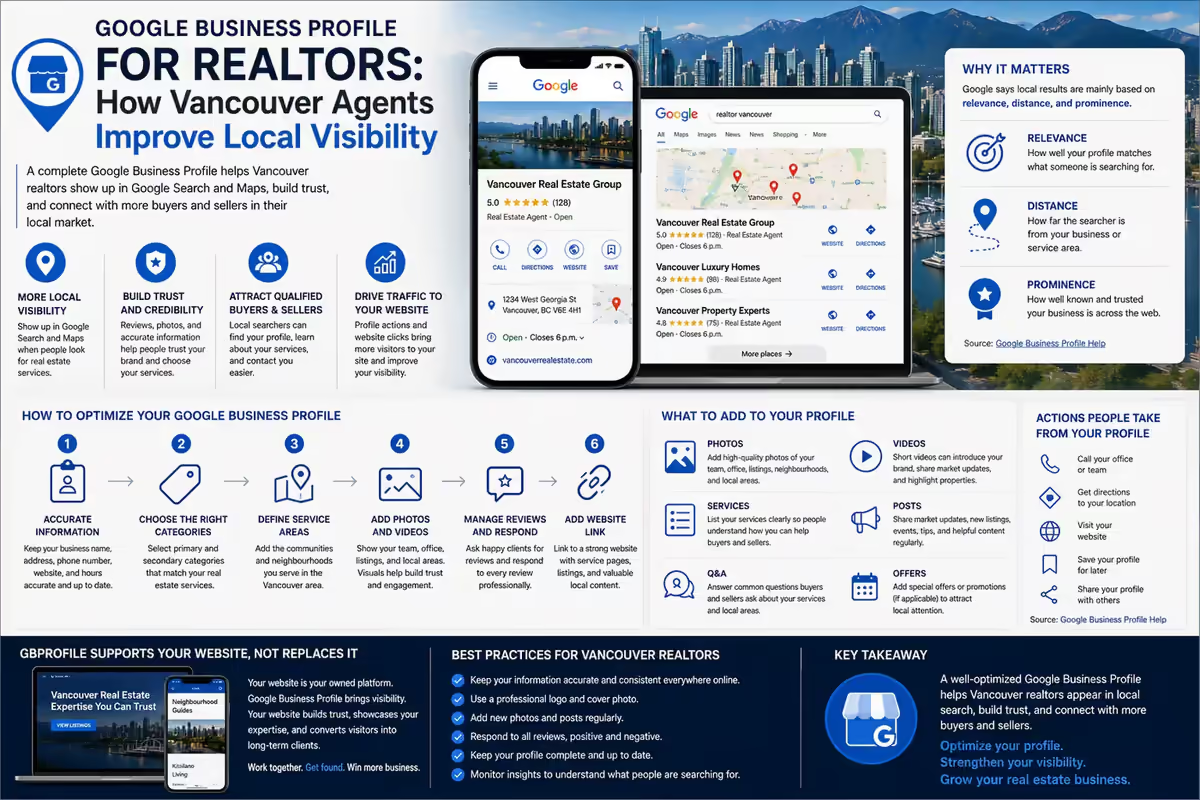
- Open your Google Business Profile insights. Calls, direction requests, and website clicks are customers. Impressions are not.
- Check which pages people land on before they contact you.
- Count enquiries per channel, not traffic per channel.
A month of this usually produces an uncomfortable answer: one channel is carrying the business and two or three others are costing money out of momentum.
Then do the hard part. Stop funding the rest.
Not "reduce". Stop. A small budget only becomes a real budget when it is concentrated. Cancelling three underperforming channels is often the single largest funding decision available to a small business, and it costs nothing.
Give the surviving channel enough money to actually run, and enough time to be measured. A channel that has never had a proper run has not failed. It has not been tested.
Which Channel to Fund First
If the audit above gives you a clear winner, fund it. If you are starting from nothing, the choice usually comes down to one question: are people already searching for what you sell?
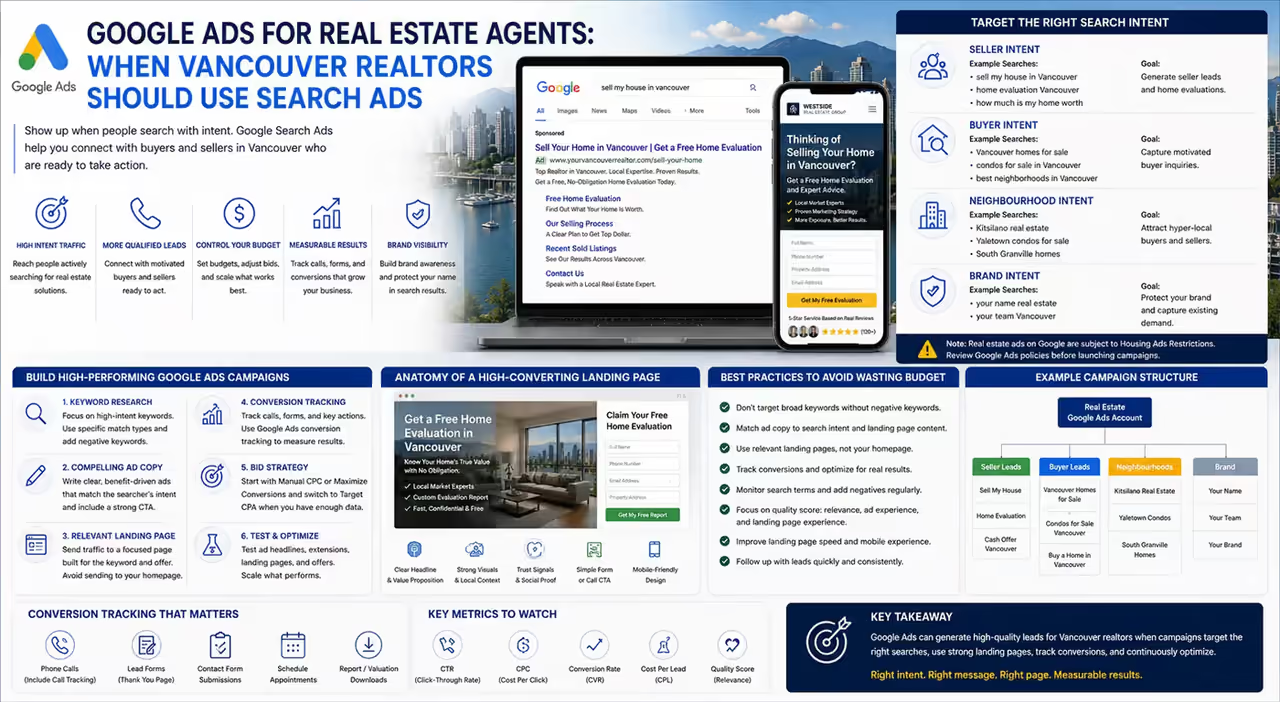
They Are Already Searching: Google Ads
Google Ads is intent-based. Nobody types "emergency plumber Burnaby" out of curiosity. The person searching has the problem right now, and the only question left is who they call.
That makes search advertising the most direct option for trades, professional services, repair, urgent care, and anything people look up at the moment they need it.
How to run it on a limited budget:
- Bid on the words that describe a job someone needs done, not the words that describe your industry. "Emergency plumber Burnaby" and "pest control Kitsilano" convert. "Home services" burns money.
- Keep the geography tight. A radius around the neighbourhoods you actually serve beats targeting the whole Lower Mainland, because you pay for every click from areas you would decline anyway.
- Send the click to a page about that one service. A click on "furnace repair" that lands on your homepage makes the visitor start searching again, this time inside your site.
- Build a negative keyword list from week one. "Jobs", "salary", "courses", "DIY", and "free" are the cheapest savings available.
- Watch cost per enquiry, not cost per click. A more expensive click that books a job is a bargain.
Search advertising is the channel where a small budget performs closest to a large one, because you are not buying reach. You are buying a queue position in front of people who already decided to buy.
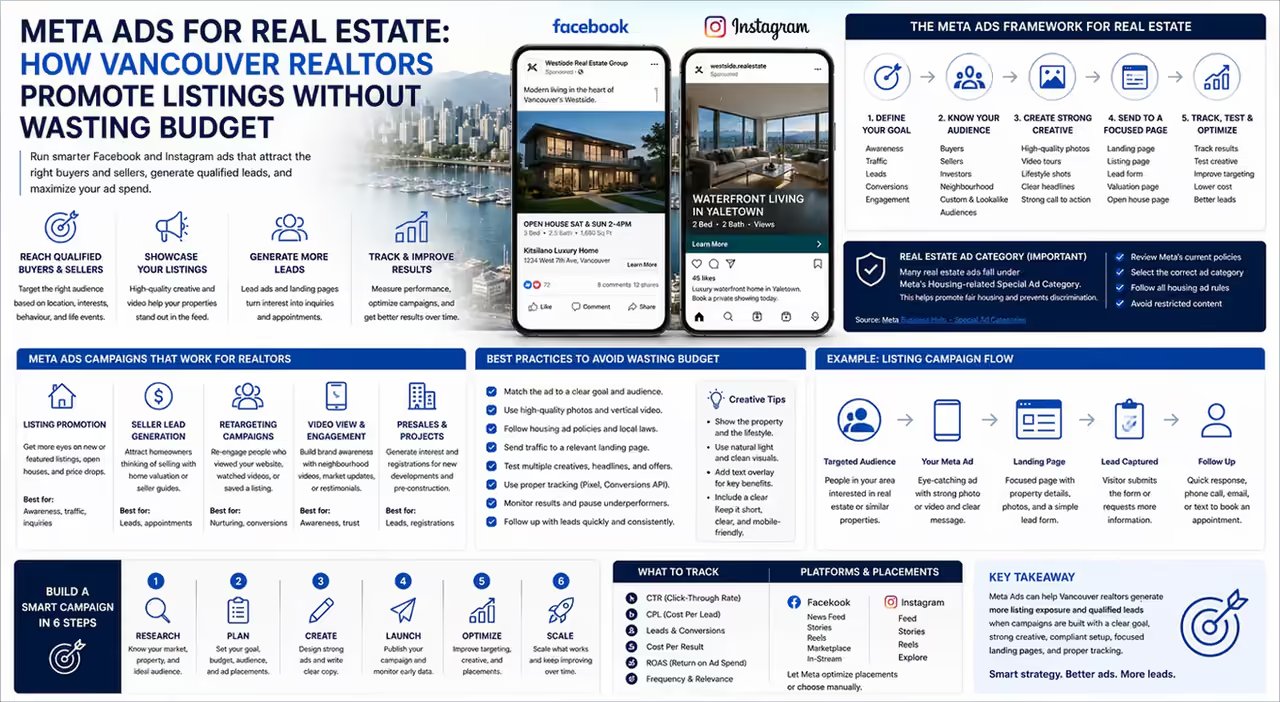
Nobody Is Searching Yet: Meta Ads
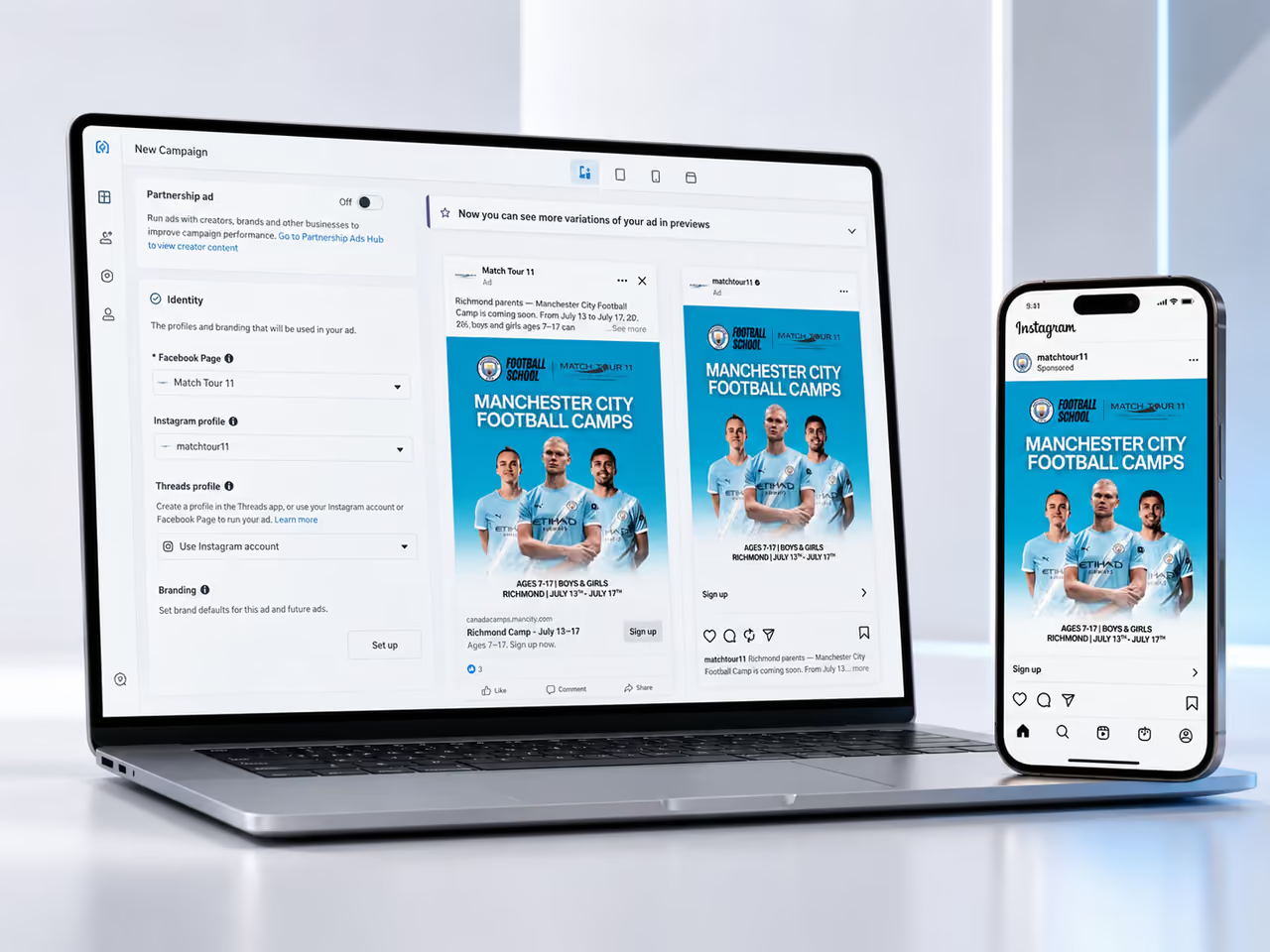
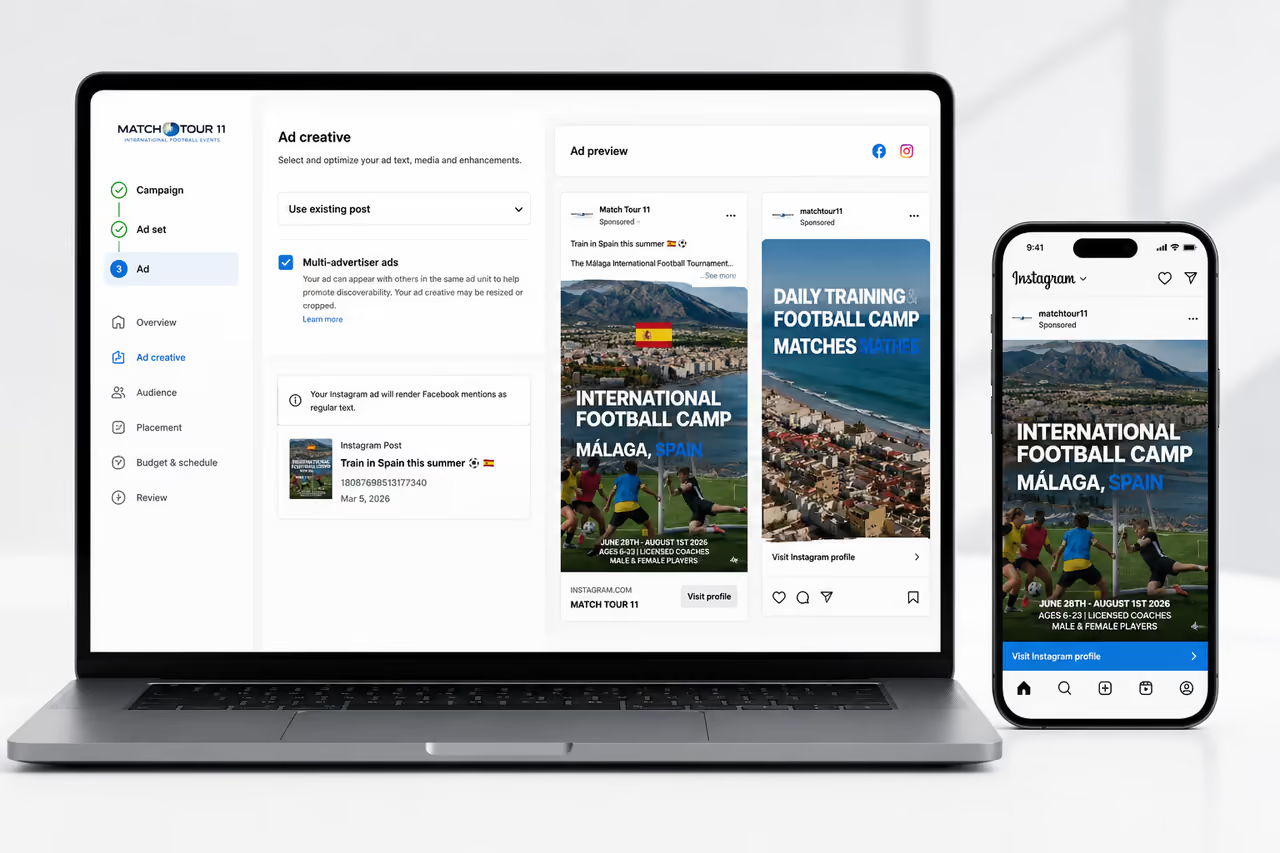
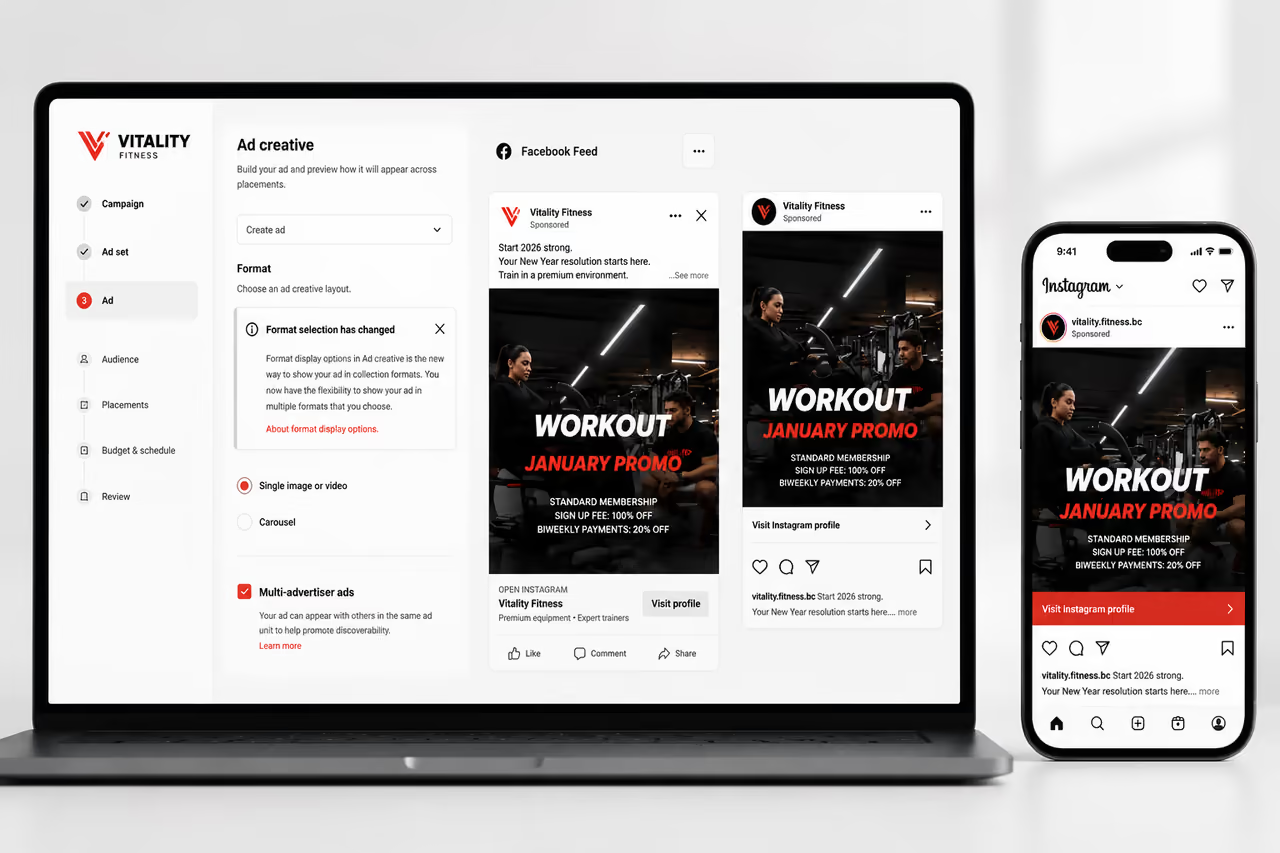
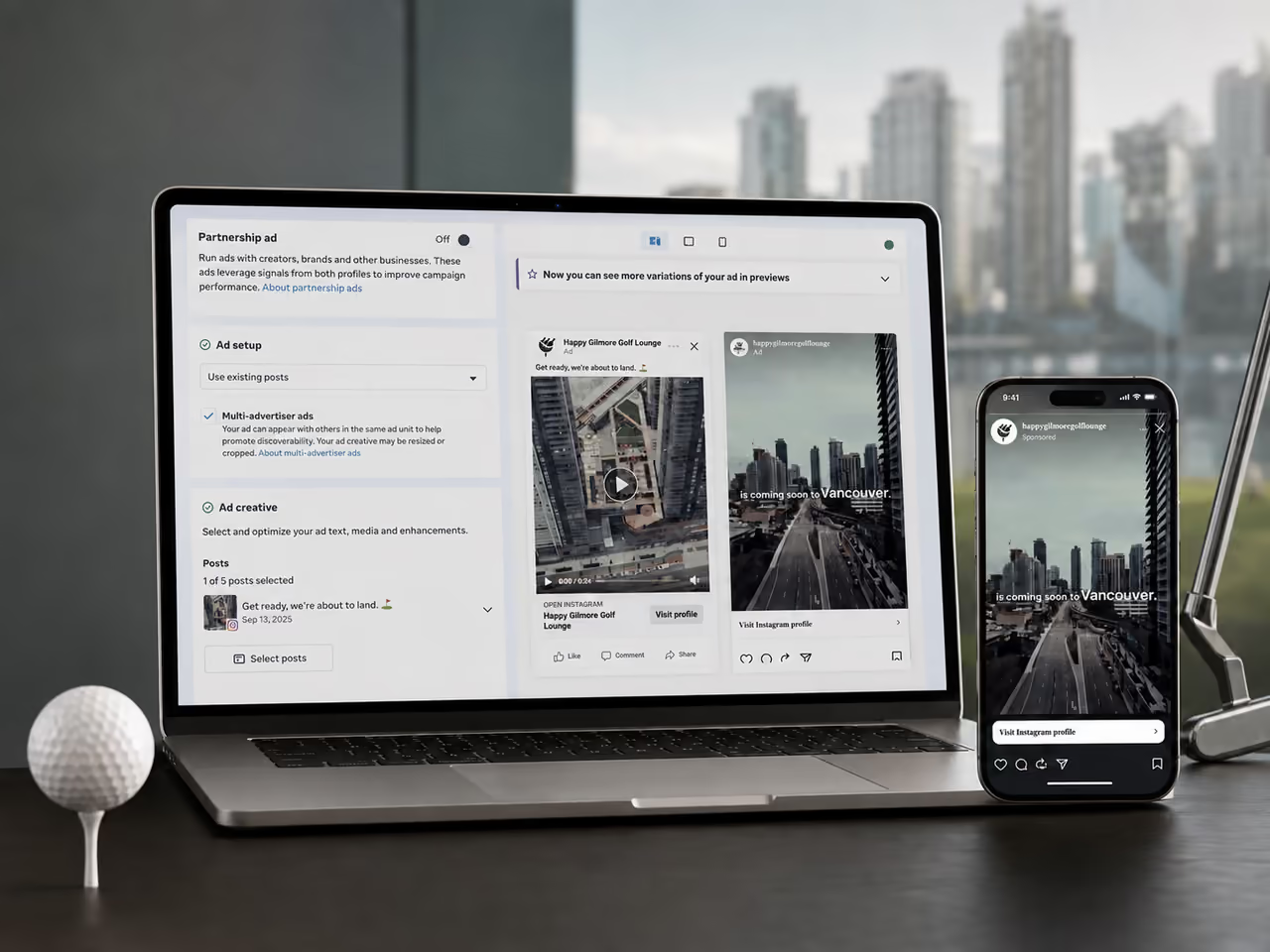
Meta Ads, meaning Instagram and Facebook, is interest-based. You are interrupting rather than answering, which makes it the right choice when demand has to be created instead of captured.
That covers a new studio nobody knows to search for, a seasonal offer, a restaurant opening, a lifestyle product, and most B2C brands whose customers do not have a word for what they sell yet.
How to run it on a limited budget:
- Target neighbourhoods and interests, not the city. Vancouver as a whole is expensive and vague.
- Put the money into the creative, not the targeting. On paid social a good video with average targeting outperforms perfect targeting with a weak video, every time.
- Give one audience one offer and let it run long enough to gather data. Small budgets split across five ad sets never leave the learning phase.
- Expect to fund a testing period before you fund a campaign. The first spend is buying information about which message works.
If you cannot afford to make something worth watching, this is not the channel to start with. Search advertising asks far less of your creative.
The Channel With No Media Spend: Google Reviews
Reviews cost nothing but attention, which makes them the first thing to fix when a budget is genuinely tight.
For a local business, the review count and rating on your Google Business Profile is often the deciding factor between you and the next result. It works on people who found you through every other channel too, which is why it is worth doing before any paid campaign.
- Ask in person, at the moment the customer is most pleased. Not by email a week later.
- Send the direct review link. Every extra step loses people.
- Reply to all of them, including the negative ones. A calm reply to a bad review persuades more readers than the review discouraged.
- Never buy reviews or offer anything in exchange. It violates Google's policies and the pattern is obvious to customers.
Reviews compound. Ads stop the day you stop paying.
Two Things That Have to Be True Before You Pay for Traffic
Paid traffic magnifies whatever it lands on, so two things need to be in order first.
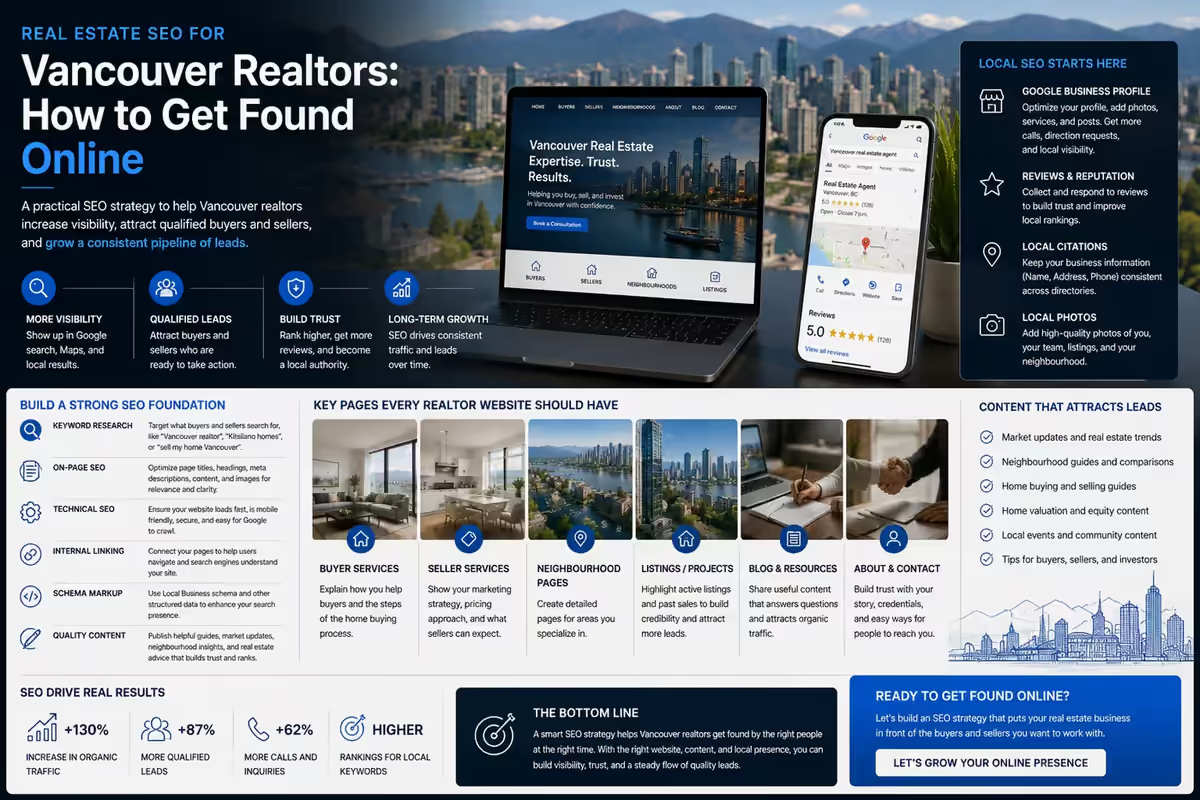
Your website has to load quickly and work on a phone, because a slow site loses the visitor before your offer is ever read, and you paid for that visitor. Your Google Business Profile has to be complete and consistent with your website, because local search is where most of this traffic ends up checking you out.
Neither needs to be elaborate. Both are covered properly in our guide to building a full marketing foundation. Treat them as prerequisites here, not as the campaign.
Do It Yourself, or Hire Someone
This is the decision most owners get stuck on, and the honest answer is that it depends on which part of the work you mean. Marketing is not one job. Some of it is genuinely better done in-house.
When DIY Is the Right Call
Do it yourself when the work rewards proximity to the business:
- Asking for reviews and replying to them. Nobody outside your business does this as convincingly as you do.
- Posting to social media, if you or someone on the team enjoys it. Reluctant posting looks reluctant.
- Keeping your Google Business Profile current: hours, services, seasonal closures, new photos.
- Filming raw footage on a phone. The job, the workshop, the finished result. A studio can edit good raw material and cannot invent it.
- Answering the questions customers actually ask, in writing, on your own website.
These share a trait: they need someone who knows the business, not someone who knows the tools.
When to Hire
Hire when the work rewards repetition and the cost of learning is high:
- Paid advertising. Ad platforms spend your budget while you learn them, and the tuition comes out of the same money as the campaign.
- Anything technical enough that a mistake is invisible: tracking, site performance, a rebuild.
- Production quality your market expects, when your competitors are running polished video and you are not.
- Work you keep postponing. A channel nobody has time to run is not cheaper in-house. It is simply not running.
The real question is not cost. It is what your own hours are worth, and whether the thing you would be learning is something you will use again next year.
The Split Most Small Budgets End Up With
The arrangement that usually works is not all-or-nothing. The owner keeps the parts that need their voice (reviews, relationships, raw footage, knowing which questions customers ask) and hires out the parts that need a specialist's repetitions.
That is also the cheapest arrangement, because you are only paying for the hours where outside expertise genuinely changes the outcome.
Make One Piece of Content Do Five Jobs
Content is where small budgets leak the most, because making something new every week is not sustainable while you are also running the business.
Make one good thing per month instead, then break it down. A single well-shot video of the work becomes several short vertical clips, stills for your website and profile, a blog post answering the question it covers, and a month of social posts. One production session, many placements.
The same applies to writing. The question a customer asked you on the phone this week is a blog post, a social caption, and an FAQ entry on your service page.
Two pieces of automation are worth setting up early, because both work while you are busy: an automatic reply that acknowledges every form submission immediately, and a short email sequence for people who enquired but did not buy. Neither needs an expensive platform.
Knowing When a Channel Has Earned More Budget
You do not need a full analytics program to make budget decisions. You need one number per channel: what it cost, and how many customers it produced.
Divide the first by the second. That is what a customer costs you through that channel. Compare it to what a customer is worth to you over the time they stay, and the decision makes itself: fund what pays for itself, cut what does not, and be honest about how long you gave it.
Followers and impressions do not enter that calculation. Neither does traffic on its own. For the fuller measurement picture, covering attribution, GA4 configuration, and tying campaigns to revenue, see our 360° marketing guide.
One caution: a channel needs a fair run before the number means anything. Judging a campaign after a week measures noise. Judging it after a quarter of proper spend measures the channel.
How Perseus Creative Studio Helps Vancouver Owners Spend a Small Budget Well
Perseus Creative Studio works with Vancouver businesses that need their marketing to earn its place rather than fill a calendar.
That usually starts with the same audit described above: what is already producing customers, what is running out of habit, and what one channel deserves the budget for the next quarter. Sometimes the recommendation is to spend less and concentrate it. Sometimes it is to fix the website before funding a single click.
We also keep the DIY-versus-hire line honest. If the most valuable thing you can do this month is ask your recent customers for a Google review, we will say so, and it will not appear on an invoice.
Explore our digital marketing services, or contact Perseus Creative Studio to work out where your first marketing dollars should go.
Key Takeaway
A small marketing budget fails from being spread, not from being small.
Find the one channel already producing customers and concentrate on it. If you are starting cold, choose by intent: Google Ads when people already search for what you sell, Meta Ads when demand has to be created, and Google reviews first if the budget is genuinely tight. Keep the work that needs your voice in-house and hire the work that needs a specialist's repetitions. Then give the channel a fair run before you judge it.
When several channels are running well and the task becomes connecting them, move on to the 360° marketing strategy guide.