Introduction
Greater Vancouver has more than 30,000 small businesses, and most of them are competing for the same attention. In 2026 the visual identity of a business is not a digital business card. It is often the first and only thing a buyer judges you on.
Good enough media stopped working years ago. Clients in Kitsilano, Yaletown, and Surrey decide in seconds, and they decide on what they can see. Grainy photography or a promotional video that looks like it was cut in 2019 does not just cost you clicks. It costs you the benefit of the doubt.
This guide is for owners building from nothing and for teams scaling a brand that already has history. It covers videography, photography, and the digital storytelling that carries them.
The State of Visual Marketing in Vancouver (2026)
Vancouver is a hub of luxury real estate, a tech-forward city that calls itself Silicon Valley North, and a destination for hospitality and lifestyle brands. Media that works here has to match that.
Why Good Enough No Longer Clears the Bar
The average consumer in BC sees thousands of marketing messages a day, and they have become very good at spotting a template. Most people can tell a stock video from an authentic, cinematically produced brand story in about three seconds.
What we see at Perseus Creative Studio is that Vancouver businesses investing in high-fidelity production get remembered. In a city where luxury and minimalism are the dominant design languages, media needs room to breathe. Showing the product is the easy part. Conveying the atmosphere around it is what signals a business is stable, professional, and attentive to detail.
From 2020 to 2026: The Evolution of Digital Storytelling
Five years ago a business could get by with a vlog-style update or a slideshow. In 2026 the pendulum has swung back toward cinema-grade work.
Rough, unpolished content still belongs on stories. Your primary brand assets do not. The video on your homepage and the photography behind your advertising have to be flawless. The over-produced corporate video is gone, replaced by documentary-style narrative, because people do not want to buy from a faceless company. They want to see the craftsmanship in a custom-built home in West Vancouver, or the energy in a Burnaby fitness studio.
The Impact of High-End Media on Local SEO and Discovery
Visuals are not only for people. They are for the algorithms behind local search. In 2026 Google's multimodal search weighs video and images alongside text.
A high-quality video is an SEO asset as much as a creative one. It holds
visitors on the page longer, which tells Google the page is worth surfacing.
Optimized image metadata and video transcripts also put your business into
visual search results, where most competitors are absent. For hyper-competitive
terms like real estate Vancouver or construction Surrey, video is often what
separates the businesses in the Map Pack from the ones below it.
Why Professional Media Production is Your Best Growth Lever
Plenty of owners treat media production as an expense to minimize. The Vancouver brands doing well in 2026 treat it as capital. Like a good commercial lease, strong media keeps returning value long after it is paid for.
Building Trust in a Skeptical Market
Trust is the hardest thing to earn and the easiest to lose. In Vancouver's professional services and luxury sectors, clients are making expensive decisions, and they are looking for evidence.
Professional photography and videography act as a silent testimonial. When a prospective client sees a cinematic case study of your last project, showing the texture of the materials, the professionalism of your crew, and a satisfied client, the doubt closes on its own. At Perseus Creative Studio we would rather show why you are good at what you do than assert it.
Conversion Rate Optimization (CRO) Through Visuals
Video converts. A well-made brand film on a landing page reduces the work a visitor has to do to understand you, and that shows up in conversion. The specific lift figures circulated online trace back to vendor case studies rather than controlled research, so treat the direction as reliable and the number as something you measure on your own page.
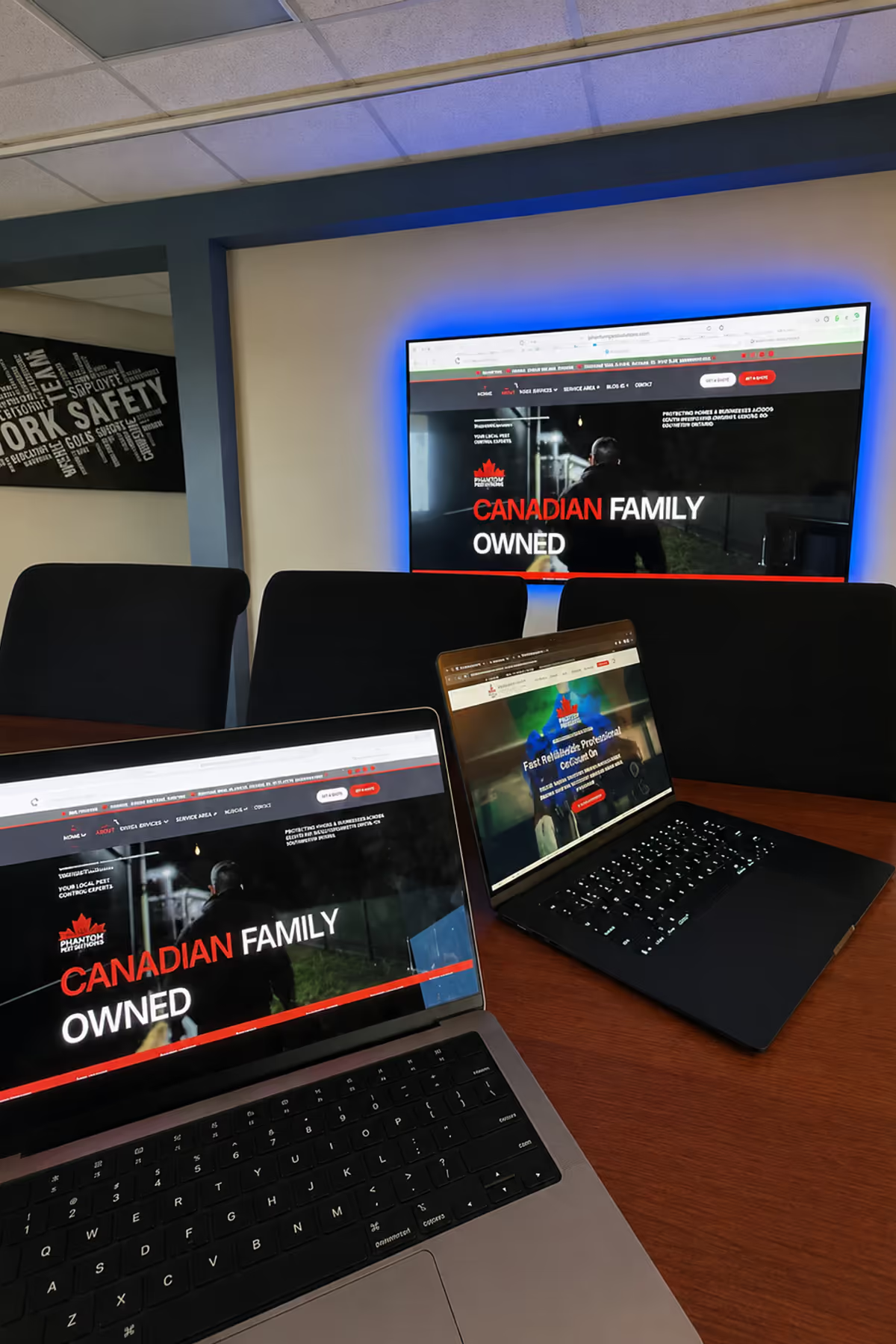
The reason is friction. A well-produced 60-second video explains a complex service better than 2,000 words of text, and it reaches both the logical and the emotional side of a decision. For a Vancouver business that means fewer people leaving and more people asking. When we design and build websites, we place these assets where the visitor is closest to deciding.
Standing Out in Vancouver's Power Industries
Vancouver's economy runs on sectors that are inherently visual:
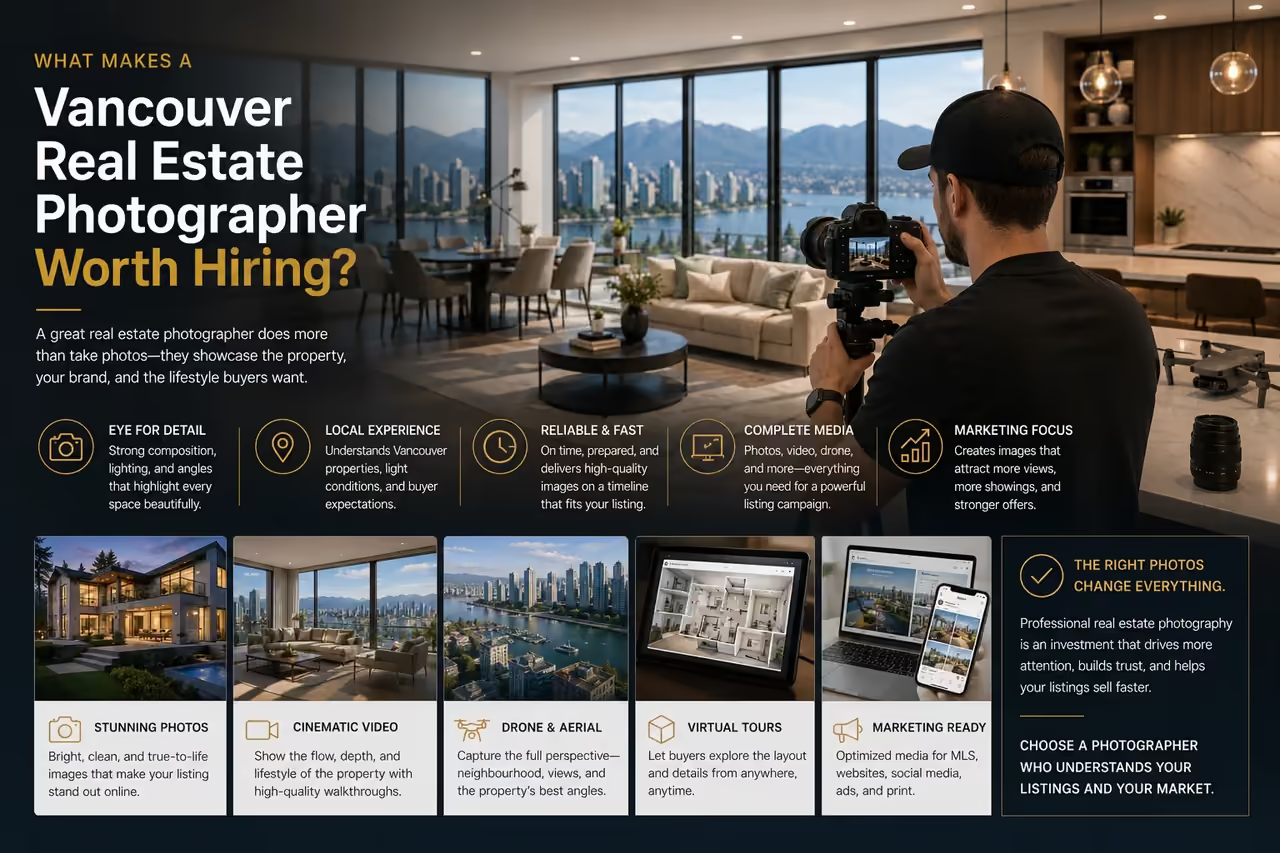
- Real Estate & Development: In a market this expensive, buyers expect 4K walkthroughs and FPV drone tours. Our dedicated post covers why high-end videography sells Vancouver homes faster.
- Construction & Trades: Documenting a build from the forming stage to the final reveal is a narrative of reliability.
- Fitness & Wellness: These sell on atmosphere and community, which only high-frame-rate movement and lifestyle photography capture.
- Luxury & Hospitality: High-end lighting and color grading are what match the price point.
Tailoring production to a sector is what makes media look right for its audience rather than merely competent.
The Perseus Approach: Integrated Brand & Media Strategy
We do not simply film videos or take pictures. We build visual assets that carry a business forward. In the 2026 Vancouver market the line between branding, web design, and media production has dissolved, and when those three are out of step you are leaving money on the table.
Why Branding Must Precede the Camera Lens
Owners often jump straight into production because they feel an urgent need for content. Content without a brand foundation underneath it is expensive noise.
Before anyone presses record, we start with brand identity. What is your value proposition in this market? What should a homeowner in Burnaby or a developer in Surrey feel? When we produced content for Canada Scores Soccer Tournament 2025, the goal was never to show a soccer match. It was to capture the spirit of the Valley. Aligning the color grading, the pace of the edits, and the music with an established brand voice is what makes media feel like part of the business rather than an add-on.
How Web Design and Media Work Together
Your media needs a home that can carry it. In 2026 a slow website is still the most reliable way to lose a conversion, and plenty of agencies deliver beautiful 4K video that quietly damages a site's SEO because the architecture cannot handle the file size.
We pair high-end media with a modern stack and optimize the delivery through:
- Adaptive Bitrate Streaming: Your brand film stays crisp on a 5K iMac in a Yaletown office and on a phone during a Richmond transit commute.
- LCP (Largest Contentful Paint) Optimization: Technical SEO so the hero video loads immediately, which satisfies Google's 2026 algorithms and impatient people alike.
- Interactive Storytelling: Going past the embedded player to build web experiences where video and design react to the reader's scroll.
For more on why this matters, read “Why Vancouver Businesses Need a Strong Website in 2026”.
The Multiplier Effect: Smart Content Repurposing
The biggest mistake Vancouver owners make is treating a shoot as a single event. We plan every shoot around a pillar asset and the micro-content it can feed.
When we run a hero shoot for a client like Vela Homes, we are not chasing one three-minute brand story. We capture enough coverage to produce:
- The Pillar Asset: A cinematic About Us or project spotlight for the homepage.
- Micro-Clips: Five to ten high-impact hooks for Instagram Reels and other social platforms.
- Educational Snippets: Fifteen-second answers to common questions, for LinkedIn.
- High-Resolution Stills: Photography pulled from the 6K/8K footage, or shot alongside it, for Google Business Profiles and digital ads.
Shooting once and using it everywhere is what makes the investment pay out across every channel for months rather than days.
Phase 1: Overcoming the Challenges of Starting from Zero
Booking professional media production for the first time feels like bidding at an auction where nobody has told you what the items are worth. For Vancouver owners launching something new, or moving on from doing it themselves, this stage is usually equal parts excitement and sticker shock.
This section covers the hurdles that stop most businesses before they book a discovery call. In a city where the barrier to entry is high and expectations are higher, starting from zero does not mean settling for amateur. It means being more deliberate with early money than an established company has to be.
We look at why the quote on your desk is higher than you expected, why your marketing intern's phone is not a replacement for a director of photography, and how to handle Canadian copyright and Vancouver lighting without losing a shoot day.
We regularly meet businesses who spent $2,000 three separate times with low-tier freelancers and ended up with nothing usable, when the same total would have bought one brand film that worked.
By the end of this section you will be able to sit down with any studio in Vancouver, ours included, and talk like a producer. You will know how to spot a talent trap, how to protect your assets from Instagram's copyright bots, and what belongs in a production brief so you are paying for results.
Budgeting for the Costs You Cannot See
The friction in this market almost always arrives the moment an owner opens a proposal and sees thousands of dollars for what looks like a two-minute video. It reads as an astronomical hourly rate for someone to stand behind a camera. The shoot day is the part above the waterline. Most of what you are paying for sits under it: the technical, creative, and administrative labour that decides whether the result looks like a trailer or a school project.
Here is where the time and money actually go.
1. Pre-Production: The Blueprinting Phase
Hours of strategy happen before a single frame is captured. In a market this competitive you cannot just show up and film. Pre-production covers:
- Creative Direction & Scripting: Less about writing lines than mapping the emotional beats, so a viewer stays with it through to the call to action.
- Storyboarding: Visualizing the edit in advance saves thousands on set, because the crew never burns time on shots that will not survive the cut.
- Location Scouting & Logistics: A construction site in Coquitlam and a luxury storefront in Gastown need completely different prep, from natural light cycles to power availability to background noise.
2. The Gear and What It Really Costs
Even when an agency owns its equipment, depreciation and maintenance are in the budget. A professional 2026 kit usually includes:
- Cinema Cameras: Not consumer DSLRs. High-dynamic-range sensors such as RED or Arri that record raw data for proper color grading later.
- Optics (Lenses): One set of cinema primes can cost more than a mid-sized car. They are what give a brand film its soft backgrounds and its sharpness.
- Lighting & Grip: The most underrated line on any budget. Lighting a scene to look natural while competing with an overcast Vancouver sky takes powerful LED arrays and modifiers.
3. Post-Production, Where the Hours Go
Most of the hidden work happens here. Every hour of footage shot takes roughly five to ten hours of post.
- The Assembly Edit: Sorting hundreds of takes to find the half-second where the smile lands or the product detail reads.
- Sound Design & Mixing: Sound is half the picture, and it always has been. Removing traffic hum, leveling voices, and adding Foley, the clink of a cup or the rev of an engine, is what makes a video feel like a place.
- Color Grading: Raw footage looks flat and grey. A colorist spends hours getting skin tones right and making brand colors sit correctly, which is most of what people mean when they call something cinematic.
4. What You Pay for Experience
Picasso sketched on a napkin and named a high price. Told it had taken him thirty seconds, he said it had taken him forty years to do it in thirty seconds. In Vancouver you are paying for a crew that solves problems on the spot. A light fails, the weather turns, a speaker freezes, and a professional pivots without losing the day. That is insurance, and it is priced in.
5. Project Management & Overhead
A studio also carries the administrative weight:
- File Management: Storing and backing up 500GB or more of 4K and 8K data across redundant servers, so nothing is ever lost.
- Communication: The meetings, emails, and revision rounds that keep the project pointed at your business goals.
So a four-figure quote for a short video is not two minutes of footage. It is a strategic asset built by specialists who have accounted for every variable that decides whether the video returns anything once it launches.
The Equipment Versus Talent Trap
One conversation comes up in almost every discovery call:
“My marketing intern has the latest iPhone and a gimbal. Why should I hire a professional agency?”
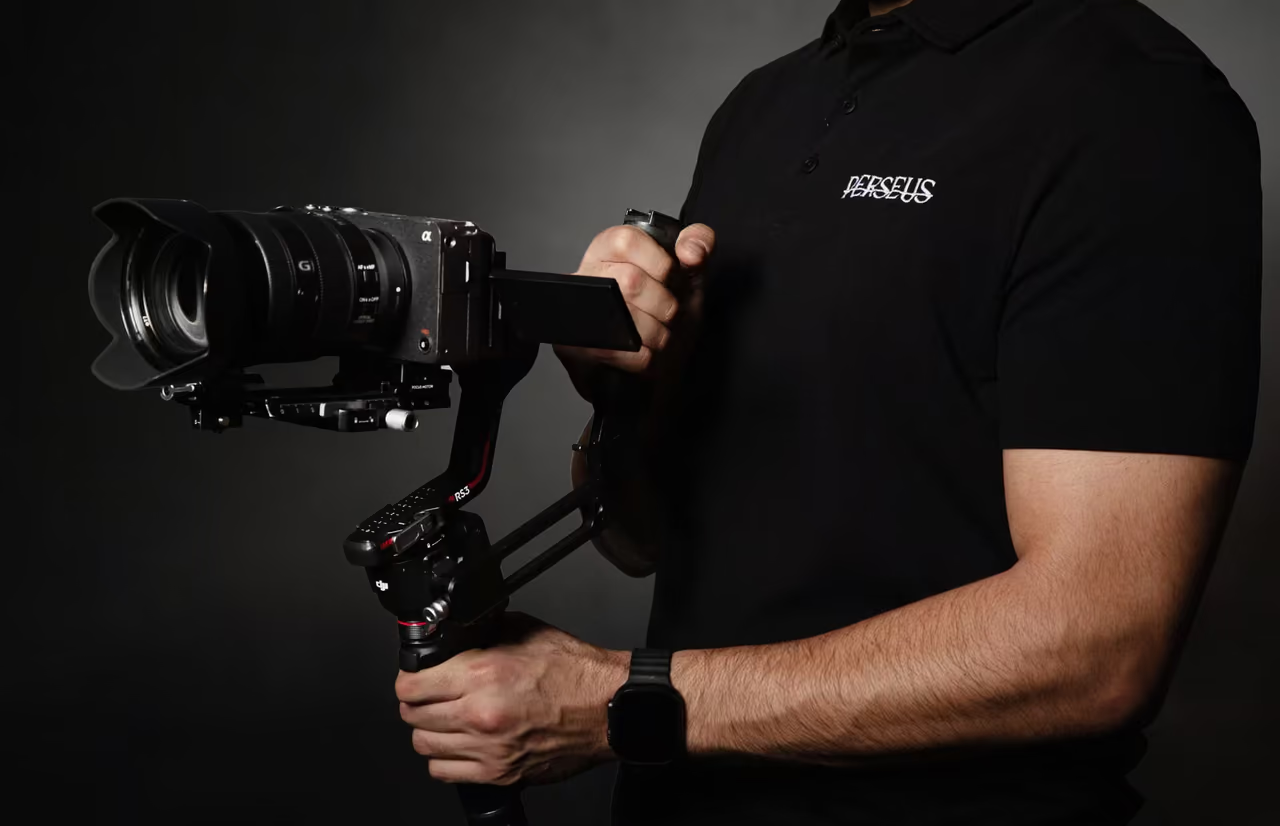
It is a fair question, and the answer has led plenty of promising BC brands into expensive-looking amateurism. In 2026 the gap between the ability to record and the ability to create is wider than it has ever been. A Sony body or an iPhone 17 Pro is remarkable technology. It is still only a tool.
Think of a commercial kitchen. You can buy the same knives and induction ranges a Michelin-starred chef uses in a Gastown restaurant, and you still will not reproduce the tasting menu at home. The skill is not in the oven. It is in heat, timing, and flavour. In production, the equivalent is light, sound, and psychology.
1. Why Auto Mode Falls Short
Consumer cameras are built to be forgiving, which means strong automatic settings. Automatic is the enemy of cinematic storytelling.
- The Talent Gap: A cinematographer shoots manual, making deliberate choices about shutter angle, aperture, and ISO to control motion blur and depth of field.
- The Result: Amateur footage stutters, or the focus hunts back and forth. Our work moves smoothly because the crew is manipulating the physics of light rather than pressing a button.
2. Lighting Decides It
Take a $50,000 cinema camera into a badly lit Vancouver office and the footage will look bad. Hand a master lighting technician a smartphone and it can look like a feature.
- The Trap: Amateurs rely on whatever comes through the window. In Vancouver that is unreliable by definition.
- The Talent: Professionals start at three-point lighting and go further, using negative fill and controlling color temperature. Balancing the blue of a rainy Burnaby afternoon against the orange of your office lamps is what keeps skin tones looking healthy rather than washed out.
3. Composition and Visual Hierarchy
Amateur content usually has no visual hierarchy. An intern films a beautiful office and the eye goes straight to a pile of cables in the corner or a reflection in the glass.
- The Talent: A director of photography uses leading lines, the rule of thirds, and frame-within-a-frame to move the viewer's eye where it needs to go, which is usually your product or your founder's face.
- The Impact: That is the difference between a shot that feels cluttered and one that feels designed.
4. Audio: The Half You Can't See
This is where the equipment trap does the most damage. Most cameras have a decent built-in microphone, and it is built to capture everything.
- The Trap: Hiring one person with a camera and no audio plan. Your message ends up under the hum of an air conditioner or the echo of a high-ceilinged boardroom.
- The Talent: We use lavalier mics on the subject and directional shotgun mics, and we treat the room to control reverb. Viewers will forgive a slightly soft image. They leave within seconds of bad audio.
5. The Psychology of the Interview
Filming your own staff is harder than it sounds, because the camera makes people self-conscious.
- The Trap: An intern or a friend says "just act natural", and the subject goes stiff.
- The Talent: This is directing. We know how to interview an owner so the good material comes out, and how to make someone forget the camera is running. No piece of equipment does that.
6. The Opportunity Cost of Your Own Team
There is also the cost of your team's time. Hand a high-stakes brand film to your marketing intern and you take on three risks:
- Quality Risk: The result can lower how your brand is valued.
- Efficiency Loss: Editing a mediocre version will take them roughly four times as long as a professional needs to deliver a good one.
- Strategic Drain: That intern should be distributing content and talking to your Vancouver audience, not learning an editing program.
Finding a Niche-Specific Creator vs. a Generalist
Working through the Vancouver media market in 2026, you will meet two kinds of production partner: the niche specialist and the versatile generalist. Choosing between them is one of the more consequential decisions an owner makes, because it decides how well the content reads to a specific audience.
In a city running industries as different as high-altitude construction, boutique hospitality, and fiercely competitive real estate, one-size-fits-all video is on its way out. We tend to sit in between, holding deep knowledge in sectors like luxury real estate and construction alongside the broader strategic range of a full agency. The trade-offs are still worth understanding.
1. Knowing the Industry
A niche creator does not just know the camera. They know your business model.
- The Specialist Advantage: For a developer in West Vancouver, a real estate specialist knows which architectural features to lead with and what pacing high-net-worth buyers expect. They already speak the shorthand.
- The Generalist Risk: A generalist can produce something visually excellent and still miss the cues that matter, spending the runtime on a sunset instead of the finishes or the structural work that actually closes the sale.
2. Speaking the Language of Your Audience
Every industry here has its own visual dialect.
- Construction & Trades: Rugged but professional. The creator has to understand PPE and site protocol, and how to convey scale without making a site look chaotic.
- Fitness & Wellness: This sells on atmosphere. A specialist knows high-frame-rate shooting for movement and the urban-minimalist grade that lands with the Kitsilano yoga community or the Gastown crossfit crowd.
- Generalist Strength: A generalist brings ideas from outside your category, taking a storytelling technique that works in hospitality and applying it to a tech startup, which is often how you stand out in a saturated niche.
3. Technical Specialization vs. Creative Flexibility
Sometimes the specialism is a format rather than an industry.
- The Aerial Specialist: Heavy drone work, common in Vancouver real estate and marine, needs someone who knows Transport Canada regulations and can fly cinematically in a city full of restricted airspace.
- The Social-First Specialist: These creators live in vertical video and track the 2026 Instagram Reels changes more closely than anyone. They shoot for engagement, not just for footage.
- Perseus's Hybrid Model: For a scaling business we think the right partner is a specialized generalist: real depth in key Vancouver sectors, such as our real estate work, with the infrastructure to handle branding, web integration, and cross-platform strategy.
4. The Efficiency of a Proven Workflow
Hiring a specialist means not paying for a learning curve.
- Standardized Success: They have probably solved your exact problem ten times this month, and they arrive with the right kit and a library of music and graphics that fit.
- Risk of Stagnation: The flip side is formula. When every real estate video in Vancouver comes from the same three videographers, they all start to look alike and your brand loses its edge.
5. How to Vet Your Choice
Three questions will tell you whether their expertise matches your needs:
- "Can I see a project where you solved a problem specific to my industry?"
- "What are the three visual trends dominating my niche in 2026?"
- "How will this content integrate with my existing branding and website?"
Navigating Music Licensing and Copyright
In the rush to finish a brand film, plenty of Vancouver owners overlook the thing that can take a campaign down overnight: copyright infringement. In 2026, Canadian law and social platform enforcement together mean that not knowing is a liability, and it can end in permanent account bans, fines, and injunctions.
We treat music licensing as part of the production workflow rather than an afterthought. Too many Vancouver businesses have tried to get around it with a popular track or a trending film score, then watched an expensive video get muted by Instagram's detection or flagged by a rights-management collective.
AI-generated music is becoming a workable option for lower-budget productions, though its legal status in Canada is still unsettled. Purely AI-generated music currently has no human author, which leaves its copyright protection unresolved.
Solving Lighting Challenges in Vancouver Commercial Spaces
Vancouver is known for beautiful light, but for anyone filming in a glass-walled Coal Harbour office or a high-ceilinged Mount Pleasant warehouse, that light cuts both ways. Between flat overcast winters and the mixed color temperatures of standard office fixtures, a professional result takes a technical plan rather than a good eye.
We spend a lot of time neutralizing these conditions so your brand looks the same on a rainy Tuesday in November as it does on a bright July afternoon.
1. Working With Vancouver's Overcast Skies
For a good part of the year, natural light here is soft, flat, and slightly blue.
- The Challenge: Soft light flatters skin, but a fully overcast day makes a commercial space read as gloomy rather than professional. Without contrast, subjects sink into the background.
- Our Solution: Rather than fighting the cloud with more flat light, we use negative fill, placing black flags or foam boards opposite the window to subtract light and build shape. That gives a three-dimensional look with the depth of a film set, even on the darkest Burnaby morning.
2. Color Temperature: Orange Lamps Against Blue Windows
Mismatched color temperature is one of the most common giveaways in amateur Vancouver business video.
- The Challenge: Most offices here run warm, orange overhead lights while the light through those big West Coast windows is cool and blue. A camera balancing for both leaves skin tones either sickly yellow or ghostly.
- Our Solution: We bring in high-CRI bi-color LED panels and tune them to the exact Kelvin of your windows, or overpower the overheads entirely. One unified color environment is what keeps brand colors and faces reading correctly.
3. Reflections in Glass-Heavy Offices
The glass tower is Vancouver's architectural signature, and for production it is a problem. A boardroom with floor-to-ceiling windows or a modern co-working space both create the same headache.
- The Challenge: Windows behave like mirrors. Careless framing puts the whole crew, three light stands, and a stray coffee cup in the background. Large windows also blow out, leaving a blinding white void behind a silhouetted subject.
- Our Solution: Circular polarizers cut through the reflections, much as good sunglasses do. For the silhouette problem we use high-output COB lights through large softboxes to lift the subject until they match the bright skyline behind them.
4. Low Winter Sun and Long Shadows
Through a Vancouver winter the sun barely clears the horizon, producing long harsh shadows and glare at an angle standard blinds cannot block.
- The Challenge: Low light like this causes flare and makes people squint, and it moves fast. A shot that worked at 1:00 PM can be unusable by 1:20 PM once the sun drops behind a North Shore mountain.
- Our Solution: We treat the windows with diffusion silk, a professional-grade scrim that turns hard sunlight into a soft wall of light. That holds one consistent look across a four-hour shoot whatever the sun does.
5. Practical Lighting: Using What the Space Already Has
Not every office light is a problem. Many Vancouver spaces now have genuinely good practical lighting: pendants, neon, architectural LED strips.
- The Challenge: They are usually too dim for a camera, or they flicker on video because of their electrical frequency.
- Our Solution: We work with the design instead of against it, sometimes swapping standard bulbs for cine-bulbs we can dim and color-control from a tablet. That keeps the character of your Gastown brick-and-beam office or your Yaletown tech floor while meeting broadcast standards.
6. Adding Depth to a Flat Office with Rim Lighting
Plenty of Lower Mainland offices are functional and visually flat: white walls, grey carpet.
- The Challenge: Someone standing against a white wall reads as a floating head.
- Our Solution: A rim light. A focused light placed behind the subject draws a thin halo across their shoulders, separating them from the background and lifting how the whole business is perceived.
The Uncle Bob Problem: Professionalism over Proximity
In Vancouver's tighter business communities, from family-run construction firms in Surrey to the creative circles on Main Street, there is constant pressure to hire a talented friend, a cousin with a drone, or a family member who is good with a camera, because they are close and affordable.
The intention is usually generous. It is also one of the most common sources of marketing regret in the BC business sector. When digital assets carry your brand's equity, proximity tends to cost more than professionalism does.
Your business deserves a partnership built on accountability rather than affection.
1. The Favor Paradox
Hiring a friend turns a professional transaction into a personal favor.
- The Conflict: When the first cut misses, honest feedback becomes socially awkward. You soften your requirements to protect the relationship, and the final product carries the compromise.
- The Perseus Advantage: Our only goal is your result. We want the critical feedback, because we have a contract to fulfill and a reputation riding on it. The relationship is built on return, not on keeping the peace.
2. The Contractual Safety Net
Professional projects run on a Master Services Agreement and a Statement of Work, which set out exactly what is delivered, when, and for how much.
- The Problem: An informal arrangement rarely has a contract, which is how timelines drift and your project moves to the back burner as soon as a better-paying job appears.
- The Reality: Without one you have no recourse if footage is lost, music turns out to be unlicensed, or the edit is never finished. In this market a three-month delay on a promo can cost you a whole seasonal cycle.
3. Reliability and Redundancy
Production is a high-stakes environment and things do go wrong.
- The Risk: If your friend is ill on the morning of the reveal, or their only camera fails, the shoot is cancelled. You have already paid for staff on site and a cleared location, and none of that comes back.
- The Professional Standard: Agencies carry redundancy: multiple bodies, backup audio recorders, and a team. If one person drops out the work continues. That is operational insurance an individual cannot offer.
4. When the Editing Never Happens
A striking number of Vancouver founders have come to us holding a hard drive of raw footage from someone who then stopped replying.
- Why it Happens: Editing is detailed, unglamorous work, as the costs section above sets out. A hobbyist underestimates the forty-plus hours a project needs for color and sound. Once the enjoyable part is over, the texts go unanswered.
- The Rescue: Handing raw footage to a new agency usually costs more than starting again, because the new editor has to learn the material without the original context. Hiring the right team on day one is cheaper every time.
Overcoming Briefing Paralysis: How to Start a Project
You know you need the media. You have the budget, you have found the team, and you have handled the legal side. Then comes the blank page. Briefing paralysis is the feeling of being outnumbered by the creative options: that if you cannot describe the vision precisely, you will end up with something that does not feel like your brand. Or that you have no vision at all, and should wait for one before calling anybody.
You do not need to be a creative director to start a project. Some of our best collaborations began as a conversation about business goals, with nobody mentioning a lens.
Here is how to break the paralysis and hand a production team something they can work with.
1. Lead With Why, Not What
The most common mistake in a first brief is going straight to technical detail. You do not need to ask for slow-motion drone shots of a construction site. Tell us why you want them. Rather than "I want a 2-minute video of my office", try "I want a video that makes a prospective hire believe our office is the most collaborative space in Mount Pleasant."
Give us the why and the team can propose the what. Sometimes the answer is not a two-minute video at all.
2. The Get / Who / To / By Framework
If structuring your thoughts is the hard part, this industry formula gets a project into one sentence:
- Get: Your target audience (luxury homeowners in West Vancouver)
- Who: The problem they have (frustrated by unreliable contractors)
- To: The action you want (book a consultation)
- By: The core message (by showing our 12-step quality control process)
It strips out the filler and ties every creative decision on the shoot to a business goal.
3. References: What You Like and What You Don't
Visual language is subjective. One person's cinematic is another person's dark and moody.
- Show, Don't Just Tell: Collect three to five links to videos or photos that resonate, including from competitors or from industries nothing like yours.
- The Dislike List: Usually more useful than the likes. "I hate corporate talking heads on white backgrounds" or "I don't want fast-cut TikTok editing" draws the boundaries immediately.
4. Defining the Success Metric
Media is a conversion tool. Instead of asking whether a video is good, ask whether it will work, and decide in advance what working means:
- Brand Awareness (views and shares)?
- Lead Generation (clicks through to a landing page)?
- Talent Acquisition (strong resumes received)?
- Internal Training (shorter onboarding for new hires)?
Define that up front and the creative decisions get easier, because they finally have a target.
5. Don't Wait for the Perfect Time
Businesses wait for the perfect moment: once the new office is finished, once the sun comes out, once the CEO has lost five pounds. Perfect is the enemy of done. Using the lighting techniques above, a professional crew can make an unfinished space look deliberate and a grey day look like a high-end commercial. Starting the brief now buys the pre-production time that solves those problems anyway.
6. Collaborative Discovery at Perseus Creative Studio
If the blank page is still too much, this is what our consultation-first approach is for. We do not expect a polished brief. We start with a discovery call, ask the questions that surface what the brand actually is, and write the brief for your approval.
7. Essential Logistics Checklist
For an accurate quote, and to avoid stalling mid-project, have these five practical constraints ready:
- Timeline: Is this tied to a specific event, such as the Interior Design Show Vancouver?
- Stakeholders: Who gives the final yes on the edit? Settling this early prevents a committee forming around the cut.
- Deliverables: Do you need a 16:9 version for the website and a 9:16 for Instagram?
- Talent: Are you on camera, or do we need to source professional actors?
- Location: Can we film at your place of business, or should we book a studio?
Phase 2: Scaling Success for Established Businesses
Once a Vancouver business is past the starting-from-zero hurdles, the challenge moves from creation to optimization and scale. For brands that already have a baseline of content and feel it has plateaued, Phase 2 is about professionalizing the whole media operation.
In 2026, scaling rarely means shooting more. It means making every production dollar work across more platforms, for longer, with outcomes you can measure. If Phase 1 was about getting the camera rolling, Phase 2 is about pointing it at the opportunities with the most upside.
We usually join businesses at this stage to move them off one-off projects and onto something continuous. That takes different infrastructure. You are no longer managing a videographer. You are managing an asset library, a revision workflow, and a feedback loop that tells you which fifteen-second clip is winning contracts.
What follows covers the mechanics of mature production: how to stop the revision loop draining your team, how to measure return with 2026 metrics rather than view counts, and how to run the horizontal-to-vertical pipeline that decides social authority now.
For an established Vancouver company this is the route from a business that has a video to a business built around media. It covers handling 4K assets at scale, the legal detail of raw footage ownership in BC, and how to turn one day of filming into a quarter of digital presence.
The goal is a production process that behaves predictably. Done properly, media stops being a creative gamble and becomes a business asset that compounds.
Managing the Revision Loop: Efficiency in Post-Production
For an established Vancouver business, time is the expensive part. A startup can afford to spend a week debating the shade of blue in a transition. A scaling company cannot, and this is where the most notorious bottleneck in production sits: the revision loop.
The loop starts when post-production stalls behind too many decision-makers, vague feedback, or no structured approval. We have watched three-week projects stretch to three months on revision fatigue alone. When speed decides relevance, managing feedback matters as much as the shoot.
1. The Cost of Scope Creep
Most creative contracts include a set number of revision rounds, usually two. Scope creep is what happens when requested changes fall outside the brief or beyond those rounds.
- The Scaling Challenge: A minor change, swapping a background person or a music track, is not a five-minute fix. It means re-rendering, re-uploading, and re-checking the sound mix.
- The Perseus Solution: We lock the script and the storyboard before anyone opens the edit suite. With the big decisions settled early, revisions are polish rather than reconstruction.
2. Consolidating the Internal Voice
Conflicting feedback from different departments is the main driver of the loop. The CEO wants prestigious, marketing wants edgy enough for social, legal wants safe.
- The Trap: Five separate emails to the production team carrying contradictory instructions.
- The Efficiency Fix: Name one creative point of contact. That person collects internal feedback and reduces it to a single document. Where the CEO and the marketing manager disagree, it gets resolved before the editor ever hears about it.
3. The Power of Frame-Accurate Feedback
Vague feedback belongs to an earlier era. "Can we make this part faster?" or "the middle feels off" gives an editor nothing to act on.
- The Tool: We work through collaborative platforms such as Frame.io or Wipster.
- The Benefit: Instead of writing an email you click the exact second you want changed and draw on the frame. If the logo should move two inches left at 0:45, you can show it. In practice this is the single biggest thing that shortens a revision round.
4. The Three Stages of an Edit
Scaling efficiently means understanding the hierarchy of an edit. Trying to fix color before the cut is locked wastes hours.
- The Rough Cut: Pacing and story. Ignore music, color, and the flicker in the corner. Is the message right? Is the shot order logical?
- The Fine Cut: Music, graphics, and titles go in. This is where you check typos and timing.
- Picture Lock and Master: With the picture locked we grade the color and finish the audio mix. At this point you are looking for technical faults, not swapping scenes.
5. Avoiding Decision Paralysis
Established brands often try to make one video do everything: an ad, a training piece, and a recruitment tool at once. The video gets pulled in three directions and the revisions never end.
- The Scaling Mindset: One video cannot solve every problem. A very good video that launches on time and earns revenue beats a perfect one that arrives six months late. In this market, speed is a competitive advantage.
6. Give Feedback That Points at the Problem
When something in an edit is wrong, try to name the cause rather than the symptom.
- Weak feedback: "I don't like this shot of the office."
- Useful feedback: "This shot feels too dark and doesn't match the bright, airy identity we agreed in pre-production. Can we use another take or lift it in the grade?" Naming the why lets the editor find a solution you had not thought of.
7. Set Deadlines for Feedback
A predictable calendar is what makes scale possible. When we deliver a draft we set a feedback deadline, usually 48 to 72 hours.
- Why it matters: Editors run several projects at once. If feedback takes two weeks, the editor has lost the thread of your story and has to spend hours picking it back up. Prompt feedback keeps momentum high and costs low.
- The Verdict: Managing the revision loop is the shift from treating production as a creative hobby to running it as an operation. Consolidate feedback, use the right tools, respect the stages of the edit, and the same production window returns considerably more with far less back-and-forth.
We manage your footage and, just as deliberately, your time.
Tracking ROI: 2026 Metrics That Actually Move the Needle
Early digital marketing measured success in likes, shares, and raw view counts. For an established Vancouver business in 2026 those numbers give a hollow sense of progress. If 50,000 people watch your brand film and nobody books a consultation for your North Vancouver development, the return is zero.
Scaling needs numbers you can act on. That means looking past the surface to how media actually moves someone toward a decision, and weighting intent above popularity.
1. Beyond the View: Tracking Intent
A view is no longer a standard unit. On TikTok it is two seconds; on YouTube it is thirty. We look at:
- Video Completion Rate (VCR): How many people watch to the end. A 70% VCR on a two-minute project breakdown means the story is landing. At 10%, the opening is the problem.
- Drop-off Analysis: Heatmaps show the exact second attention goes. Did people leave when the CEO started on company values, or because the call to action took too long to arrive? That data lets us re-edit for return without booking another shoot.
2. Assisted Conversions, the Return You Don't See
Most high-ticket services here, in real estate, legal, and high-end construction, run long sales cycles. Someone may watch your video in January and sign in June.
3. On-Site Engagement Metrics
Once media is built into your website, as covered above, it keeps people on the page.
- Time on Page: We compare how long visitors stay on a page carrying video against that same page's own baseline before the video went live. It is a per-client measurement rather than an industry benchmark, and the size of the lift depends on the page, the offer, and where the traffic came from.
- Scroll Depth: We track whether people who watch are likelier to reach the contact form at the bottom. Usually the correlation is clear.
4. Cost Per Education
For established businesses, return is not only new sales. Often it is efficiency.
- The Problem: Your sales team spends thirty minutes on every introductory call explaining the same concepts, or screening out the same poor-fit enquiries.
- The Solution: One strong educational video handles that screening before the call happens.
- The Metric: If a video costing $10,000 saves a team billing $100 an hour five hours a week, it has covered itself in twenty weeks on operational savings alone, before a single new sale. Run the arithmetic with your own figures.
5. Qualitative ROI: Just Ask
Not every signal shows up in a spreadsheet, and one of the strongest is the simplest.
- The Test: On your next ten sales calls, ask whether they saw the recent project film.
- The Impact: When someone says they saw the West Vancouver build and that is why they called you specifically, that is verified return. In high-value industries one or two of those leads covers the whole production.
6. Social Sentiment and Brand Health
In a market as competitive as the Lower Mainland, being the brand people remember is a defensive position.
- The Metric: We track share of voice and sentiment. Are people tagging friends? Are they saving the video for later, which is a high-intent signal on Instagram? A save is worth far more than a like, because it says the viewer intends to come back.
7. Micro-Testing for Macro-Results
Scaling means testing rather than guessing. We often cut two versions of the first five seconds of the same video.
- A/B Testing: Version A leads on luxury lifestyle, version B on technical precision.
- The Result: A small ad spend behind both tells us within 48 hours which message this market prefers. Then the larger budget goes behind the proven direction.
- The Verdict: Return in 2026 comes from several places at once: technical tracking in GA4, operational arithmetic, and what clients tell you on the phone. Look past vanity metrics and video stops being a cost and starts lowering acquisition costs and shortening the sales cycle.
The Horizontal to Vertical Pipeline: Multi-Platform Mastering
The horizontal versus vertical argument is settled: the answer is both. For an established business, though, shooting two separate campaigns wastes capital. The workable version is horizontal-first with vertical intent, where one cinematic shoot supplies the raw material for every platform.
We treat your primary brand film as the pillar asset and pull everything else out of it, cut for how people actually scroll.
1. Designing for the Safe Zone
The pipeline succeeds on set, not in the edit suite. We center-frame with vertical crops already in mind.
- The Technique: We film cinematic 16:9 for your website and YouTube, while the cinematographer works to on-screen frame guides that keep the core action, your product or your spokesperson, inside the central 9:16 column.
- The Benefit: Nothing gets clipped when the footage is cropped for Reels or TikTok. You get a widescreen film that still feels native on a phone.
2. The AI-Powered Reframe
The manual work of re-editing for vertical has largely been replaced by object-tracking reframe tools that keep the subject centered automatically.
- Why this matters for Scale: Turning a five-minute horizontal mini-doc into ten vertical clips used to take days of keyframing. Batch-processing means far more content for the same production budget, which is how a Vancouver firm stays visible everywhere without doubling its spend.
3. What Each Platform Rewards
- Instagram Reels: Aspirational and visual. This is where the most cinematic slow-motion goes, paired with audio that is current without being cheap.
- TikTok: Authenticity over polish. Behind-the-scenes horizontal footage cropped in works well here, because the audience reads transparency as credibility.
- YouTube Shorts: Education. We pull quick tips and industry insight out of the main interview. YouTube is a search engine, so these clips act as high-intent entry points back to the main channel.
| Format | Platform | Purpose |
|---|---|---|
| 16:9 Cinematic | Website / YouTube | Brand Trust & Authority |
| 9:16 Reel | Aspirational / Lifestyle | |
| 9:16 Short | YouTube Shorts | SEO & Quick-Win Education |
| 1:1 Square | LinkedIn / FB | B2B Professionalism |
4. The Hook Swap
The first three seconds of a horizontal brand film are usually slow and atmospheric. On a vertical feed that gets swiped away.
- The Strategy: We swap the hook, taking the most arresting three seconds from the middle of the video and moving them to the front. Grab attention immediately and you earn the right to the rest of the clip.
5. Silent Discovery: The Caption Layer
Most vertical video is watched with the sound off. Publishers reporting to Digiday put it as high as 85%.
- The Implementation: Every vertical asset ships with burned-in captions. Not plain subtitles: branded, kinetic text that emphasizes the key phrases, so the message lands whether your customer is scrolling on the SkyTrain or sitting in a quiet office.
6. Preserving Quality: The 4K/8K Advantage
Cropping a horizontal video to vertical means zooming into the middle of the frame. Shot in 1080p, the vertical version comes out soft and pixelated, which is not the look for a premium brand.
- The Perseus Standard: We shoot pillar assets in 4K or 6K. That leaves enough pixel data that a vertical crop stays sharp, so the clip looks like it was made for mobile rather than blown up for it.
7. Working Always-On Instead of in Campaigns
The goal for an established business is consistency rather than bursts. Run the pipeline properly and one day of filming yields:
- 1 main brand film (2 to 3 minutes)
- 4 educational shorts (30 to 60 seconds)
- 6 lifestyle reels (15 seconds)
- 10 high-resolution stills for social
Batching like this is the only sustainable way to keep up.
The Verdict: Your content should be as mobile as your customers. Design production with the vertical crop in mind and you extend the life of every asset, on the boardroom monitor and in someone's hand.
Long-Term Asset Management & Digital Archiving
For an established Vancouver business, a growing media library is either an advantage or a liability. A single high-end production now generates terabytes of raw 4K. Without a digital asset management protocol you are not only losing files, you are losing the ability to change direction quickly.
A project is not finished when the video is posted. It is finished when the assets are archived safely and can be found again.
1. Metadata: How You Find Anything Later
Clicking through folders does not scale. Professional archiving runs on metadata.
- The Reality: Hunting for Interview_v2.mp4 across a shelf of drives is pure lost time.
- The Strategy: Every asset is tagged with the shooting date, the location, the key talent, and the expiry of its usage rights.
- The AI Advantage: Automated tagging can watch the footage and label keywords such as architecture, drone, rainy, or modern, which turns a mountain of data into a searchable stock library of your own brand.
2. The 3-2-1 Backup Rule
Data loss can be catastrophic for a scaling business, so we hold every partner to the same standard:
- 3 Copies: Master assets exist in three separate places.
- 2 Different Media: Two storage types, such as a local high-speed SSD and a cloud server.
- 1 Off-Site: One copy lives physically outside your main Vancouver office, so fire, flood, or theft cannot take everything.
3. Tiered Storage: Balancing Speed and Cost
Not all footage needs to be instantly reachable. Splitting the library across three tiers keeps the budget sane:
- Hot Storage (Active): High-speed NVMe SSDs for anything currently in revision, where speed matters most.
- Warm Storage (Near-Line): Network attached storage in your office, holding the last six to twelve months in case a quick social edit is needed.
- Cold Storage (Archive): Deep cloud storage such as Amazon Glacier, or LTO tape. Slow to retrieve and very cheap, which is what you want for long-term insurance on raw footage.
| Tier | Storage Type | Retrieval Time | Best For |
|---|---|---|---|
| Hot | NVMe SSD / Gen5 SSD | Instant | Active 8K Edits, AI Processing, & Proxies |
| Warm | 10GbE NAS / Hybrid Cloud | Seconds | B-Roll, Recent Client Assets, & Shared Projects |
| Cold | LTO-9 Tape / Object Storage | Hours/Days | Historical Archives & Disaster Recovery |
4. One Single Source of Truth
Version chaos is one of the bigger scaling headaches. When the marketing team in Burnaby is using one logo and the sales team in Richmond is using another, the brand quietly loses credibility.
- The Solution: Keep a single source of truth: one central hub holding only the final approved videos, high-resolution stills, and brand guides. If it is not there, nobody should be using it.
5. Format Longevity: Future-Proofing for 2030
Codecs move quickly, and 2026 is already shifting.
- The Trap: Archiving in a proprietary format that will not open in five years.
- The Standard: We archive masters in high-bitrate industry formats such as Apple ProRes 422 HQ or DNxHR, which are visually lossless and will open in every major editing platform for the next decade. We also deliver audio stems, with music, voice, and effects on separate tracks, so the music can change in 2028 without re-recording the voiceover.
6. Governance and Permission Management
As a company grows, you do not want every intern and contractor holding delete access to the primary archive.
- Role-Based Access: Your system should allow permissions per role. A social media manager gets view and download; only a creative director or your point of contact here gets write and delete. That is what prevents an accidental deletion that costs thousands to recover.
7. The Annual Audit and Purge
Digital hoarding is expensive. Once a year, run an asset audit.
- Usage Rights Check: Are you still licensed to use the music in that 2023 video?
- Relevance Check: Is the spokesperson still with the company? Is the office in the footage still your office?
- The Purge: Anything legally expired or factually wrong moves to cold storage, or the raw files go entirely and you keep the final master for the record.
The Verdict: Asset management is the difference between spending on media and investing in it. Treat the footage as a structured, searchable library and your brand can move at the speed this market expects.
We would rather help you build a vault than hand you a download link and wish you luck.
Building an Internal Content Culture for Scale
The last piece of scaling is cultural rather than technical. The Vancouver brands doing best in 2026 are not booking a production team once a quarter. They have built an internal content culture, where staff stop seeing marketing as something an agency does elsewhere and start seeing themselves as part of documenting the work.
When the team is aligned, production becomes proactive. Rather than us hunting for stories, your site supervisors, sales reps, and office managers start flagging moments worth filming as they happen. That is the difference between making a video and owning the conversation in your industry.
1. Make Filming Part of the Job
The biggest obstacle is whether people think they are allowed. Employees often feel that filming a project milestone or a team win looks like slacking off.
- The Cultural Shift: Leadership has to say out loud that documenting the work is part of the work. We help clients write a short content permission policy that does exactly that.
- The Strategy: Ask project managers for rough phone clips of interesting stages of a build or a client interaction. They are not filmmakers, they are scouts, and that raw footage is what our editors turn into polished social assets.
2. Put Your Experts on Camera
People trust people rather than logos. Your lead engineers, head designers, and senior brokers are among your most valuable media assets.
- The Strategy: Identify two or three internal champions who are comfortable on camera, or willing to be coached.
- The Coaching Model: We do not just point a camera at them, we run on-camera training first. Building their standing inside your company is what makes the brand an authority in the Lower Mainland. When your head of design explains the Passive House standards on your new Burnaby project, it carries weight no ad copy can buy.
3. Decentralize the Capture, Centralize the Edit
Scaling does not mean a professional crew on site every day. It means a hybrid.
- The Workflow: Your team captures the daily wins, the site walkthroughs, huddles, and quick tips, and uploads them to the central library from your archiving setup.
- The Role of the Agency: Every two weeks we harvest that footage, clean up the audio, apply your branding, and cut it into a fortnightly wrap-up or a run of expert tips. You get a high-frequency posting schedule at low production cost.
4. Incentivizing Advocacy
A content culture needs something in it for the staff.
- The Incentive: Make it a game. A feature of the month for whoever contributes the best clip or the best idea works well.
- The Result: When people see their work on the company LinkedIn or Instagram, they take ownership of it. That is a very different feeling from working for a company.
5. Share the Results Openly
Content culture dies in the dark. If the team sends footage and never hears what happened to it, they stop sending footage.
- The Feedback Loop: Share the media wins at your monthly or quarterly town halls, and share the return metrics from the previous section alongside them.
- The Impact: Being able to say that the clips the site team shot last month helped land a $2M contract in Surrey connects their extra effort to the company's growth, and to their own security.
6. Set the Brand Guardrails
The fear we hear most often from Vancouver CEOs is: "What if my staff posts something that looks unprofessional?"
The Solution: A short social media style guide. Not a 50-page PDF, a one-page sheet covering:
- The Tone: Professional but approachable, and no slang.
- The Visuals: Keep the background clean and make sure PPE is worn correctly.
- The Disclaimer: Always get the client's permission before filming their property.
Those guardrails are the safety net that lets the culture grow without putting the brand at risk.
7. Always On Rather Than Campaign to Campaign
The campaign is over as an organizing idea; the conversation is continuous. An internal content culture is what keeps a brand from going quiet between major productions.
- The Result: By the time we arrive for the big annual brand film we are not starting from nothing. We are drawing on a year of internal stories and people who are already good on camera. The final piece comes out deeper, more honest, and considerably more effective.
- The Verdict: Technology is a tool; culture is what makes it compound. When your team co-authors the brand's story, you reach a level of scale no amount of ad spend replicates.
The Perseus Methodology: Why We Do & What We Do
The Vancouver market in 2026 has little room left for generalist creative work. Between the Accessible British Columbia Act and the fragmentation of social platforms, businesses need a production partner who understands both high-end aesthetics and technical compliance. This section sets out the framework we use so clients look good, stay legally protected, and remain technically ahead.
Our methodology rests on treating media as a brand's most valuable digital real estate. You would not put up a tower downtown without a structural engineer and a permit. The same logic applies to a brand campaign and the layers of 2026 media that nobody sees.
Below is less how-to than the thinking behind the studio. We cover why we design for accessibility from the start, so video meets 2026 BC standards for hearing and vision inclusivity. We cover representation in a city as multicultural as this one, where authenticity is a business requirement rather than a checkbox. And we cover the engineering that lets work feel like global luxury while staying recognizably Pacific Northwest, which is what local customers actually trust.
For an established business leader, this is the part that explains the difference in outcomes: higher retention on their websites, fewer legal obstacles in their marketing, and a stronger connection with their audience. The aim is to turn media from a cost line into an asset that survives technology shifts and legislative change.
By the end of these sections you will know why brands ready to lead this market choose to work with us.
Pre-Production: The Blueprint for Success
A high-stakes shoot is decided long before the first light goes up, whether it is for a luxury developer like Vela Homes or an athletic organization like Fitbodega Vancouver FC. In a market where locations are expensive and weather is unpredictable, improvising blows the budget. So we blueprint instead.
This phase is about technical and creative alignment, making sure every stakeholder is reading the same map before anyone sets off.
1. Creative Direction: Finding the Through-Line
Every project opens with a discovery session. We do not start by asking what you want to film. We ask what problem you are trying to solve.
- The Perseus Approach: For Vela Homes the direction was never "show a nice house". It was to demonstrate the craftsmanship and trust that justify a multi-million dollar decision.
- The All-in-One Advantage: Because we handle branding and web design alongside video, the creative direction of the shoot matches the interface of your website. That is what makes a brand feel coherent across every touchpoint rather than assembled from parts.
2. Storyboarding: Seeing the Edit Before the Shoot
Frame-by-frame storyboarding takes the risk out of the production.
- Visual Mapping: We sketch shots rather than describe them, which lets us discuss composition, lighting, and movement with you directly. For Vancouver FC that meant mapping the energy of the stadium and deciding which moments would be slow-motion and which would be fast cuts.
- Efficiency: Editing on paper identifies the shots the story does not need, which saves hours on set. It also means the cinematographer knows which lens to have ready for the 2:00 PM sun at a West Vancouver site.
3. Technical Scouting (Tech-Vis)
Vancouver is a city of micro-climates and difficult glass architecture.
- The Site Visit: We scout locations in person, checking power availability, background noise (is there a construction site next to your Burnaby office?), and how the natural light moves through the day.
- The Gear Selection: The gear list is finalized in pre-production. A high-elevation site for a civil construction client might call for wind-stable drones and battery-powered lighting, rather than dragging 200 feet of cable through mud.
4. The Locked Script and Production Book
Most delays trace back to a miscommunication. Once the creative is settled we produce a production book.
- The Script: The script is locked, covering the spoken word, the visual cues, and the audio markers.
- The Schedule: A minute-by-minute call sheet. Everyone from the CEO to craft services knows where to be and when. That is the organization that lets us capture a Fitbodega Vancouver FC match day without getting in the way of the athletes or the crowd.
5. Casting and Wardrobe Coordination
The people in your video are what carries the brand.
- Authentic Talent: Whether we film your team or hire actors, we supply wardrobe guides. On a construction project that can mean new, color-coordinated PPE. For a corporate shoot in Yaletown it means colors that read well against the interior without fighting your brand palette.
6. Legal Prep Done in Advance
Before we arrive we handle the paperwork that stops most self-run projects.
- Permits & Clearances: We secure City of Vancouver film permits and coordinate with building management.
- Talent Releases: Everyone on camera signs a digital release before we roll, which protects you from any later dispute over image rights.
The Verdict: Pre-production is where the stress comes out of production. By the time we arrive we are not attempting a great video. We are running a plan.
Production Day: What to Expect on Set
Production day is where the plan becomes footage. For most owners it is the enjoyable part, though if you have never been on a professional set it can look like a choreographed rush. Our aim is a calm set where the technical complexity stays behind the scenes and you can stay with the vision.
Whether it is a quiet interview for a boutique brand or a multi-camera shoot for a client like Fitbodega Vancouver FC, the day is built for precision and for hospitality.
1. The Call Sheet: Your Command Center
The day starts with the call sheet, delivered 24 hours in advance. It is a logistical and legal map rather than an itinerary.
- The Call Time: When the crew arrives to begin set-up. On a typical Vancouver shoot we get in one to two hours before the talent, so the lighting rig is up and the monitors are calibrated.
- The Client Station: You are not standing in a corner. We set up a dedicated monitor station with seating and refreshments, so you see every frame live, exactly as the director does.
2. Blocking and Lighting
Before anything records, we block the scene.
- The Strategy: The director and the director of photography walk the talent through their movements.
- A Real Example: On the Vela Homes project this was the critical step. The camera had to move through a luxury space in a way that felt open and unforced, while the grip and electric team tuned the lights so the North Vancouver sun was not glaring off the premium finishes.
3. The Rolling Call: Silence and Focus
When the director calls rolling, the set goes quiet.
- Sound Speed: The audio engineer confirms clean sound.
- Camera Speed: The DP confirms the sensors are recording.
- Action: The talent begins.
- The Difference: We run wireless monitoring, so you can wear a headset and hear precisely what is being captured. If a technical term comes out wrong, or a phrase needs changing, you can say so between takes rather than after the shoot.
4. Safety First
Production involves heavy equipment, overhead rigging, and sometimes genuinely hazardous environments such as active construction sites.
- The Protocol: Every shoot opens with a safety briefing covering trip hazards, cable paths, and emergency exits.
- In Practice: Filming inside a finished multi-million dollar home, we use floor protection and corner guards so the equipment never leaves a mark. At a stadium for Fitbodega Vancouver FC we coordinate with team security so the crew is never in the path of athletes or a live crowd.
5. Real-Time Collaboration and Feedback
Nobody should be surprised by the first cut.
- The Digital Slate: Every shot is logged, which keeps track of the takes you liked most.
- The Interaction: Through the day the director will bring you to the monitor to review a shot. That is the moment to say the lighting works but you want more of the kitchen island. Moving a camera on set is far easier than fixing it later.
6. The B-Roll Harvest
Once the interviews and primary action are done, we move into the B-roll harvest.
- What it is: The supplementary shots that give a story texture: close-ups of hands working, cinematic pans across the architecture, slow-motion lifestyle moments.
- The Multi-Platform Intent: This is where the vertical assets from the pipeline above get captured. The main camera stays horizontal while a second, social-first camera collects behind-the-scenes material that can go live on Instagram Stories before the shoot has even wrapped.
7. The Wrap and Data Management
At the end of the day the director calls a wrap, and our work carries on.
- On-Site DIT: We do not wait until we are back at the studio to back up your footage. A checksum-verified backup goes to two separate rugged drives on site, so the data is safe before we leave the parking lot.
- Site Restoration: We leave every location as we found it, and do a final walkthrough with the client to confirm every stand is gone and every piece of furniture is back where it started.
The Verdict: A production day here is disciplined and still enjoyable. By the time you head home the hard part, capturing the material, is done and backed up twice, ready for the edit.
Post-Production: Turning Footage Into an Asset
If pre-production is the blueprint and production is the build, post-production is the interior work and the final walkthrough. For an owner this is often the tense phase, because the raw ingredients do not look finished yet. You see a clip and think "why is the color so flat?" or "what is that hum in the background?"
Our post workflow refines that raw material through three structured stages. The aim is not simply to edit but to finish an asset that does a job. Here is how a hard drive of files becomes something you can put in front of a client.
1. Assembly: Organizing the Footage
Before a single cut, we do media management, the digital equivalent of sorting every brick before laying one.
- The Business Perspective: You never see this stage, and it is the reason we can find a specific two-second clip six months from now. Footage gets tagged by strong takes, key messages, and visual highlights.
- Syncing the Senses: High-end cameras record video and audio separately for quality. We marry those files so the sound is crisp and lands exactly with the speaker's lips.
2. The Rough Cut: Checking the Foundation
This is the first version you actually see.
- The Mindset: When the rough cut arrives, look at the story and the pacing. Ignore the color, a flickering light, the exact volume of the music.
- What to Look For: Does the flow make sense? Is the main point clear? Is it too long? This is the structural stage, and the skeleton has to be right before anything is added on top.
3. The Fine Cut and Picture Lock
Once the story is approved we move to the fine cut, where the timing gets sharpened.
- The Polish: We trim frames until transitions stop announcing themselves, and lay B-roll of your office or team over any edit in the interview.
- Picture Lock: A real milestone. Locking the picture means we both agree the visual story is finished, which lets us move into the technical final stages without any risk of starting over.
| Stage | What We Focus On | What You Focus On |
|---|---|---|
| Rough Cut | Narrative & Message | "Does this tell the right story?" |
| Fine Cut | Timing & Transitions | "Does the rhythm feel right?" |
| Final Master | Color, Sound & Graphics | "Does this look and sound like a million bucks?" |
4. Color Grading: Setting the Mood
Professional cameras record flat images, called LOG, to preserve detail in the shadows and highlights. That is why raw footage looks grey and washed out.
- The Business Perspective: Grading is how a brand earns visual trust. For Vela Homes that meant warm, golden tones for home and luxury. For Fitbodega Vancouver FC, high-contrast and vivid, for energy.
- Consistency: Your brand colors, in a logo or on a uniform, read identically in every shot, whether it was filmed in the rain or under office lights.
5. Sound Design: The Quality Marker Nobody Notices
Viewers will forgive a shaky shot. They will not sit through bad audio.
- The Polish: A final mix removes background noise, balances the music so it never buries the speech, and adds the subtle effects that make a video feel tactile.
- The Emotional Anchor: Music is a guide rather than background. We choose tracks that match the brand's personality, whether that is inventive or steady and established.
6. Motion Graphics & Titles
The last layer of branding.
- Accessibility & Clarity: We add lower thirds carrying a person's name and title, plus call-out graphics for key figures.
- The Final Review: Your last pass for typos. We use Frame.io, so you leave a comment on the exact second rather than writing a long email.
7. Mastering & Delivery: Ready for Every Screen
The final step renders the video for wherever it lives.
- Optimized for Impact: A video for a 4K boardroom monitor needs different settings from one for an Instagram Reel.
- The Hand-off: You get a clean, organized folder of final masters. Bitrates and codecs are our problem. The files are ready to post the moment they download.
The Verdict: Post-production takes hours of raw potential and reduces it to the seconds that carry your brand. Follow this workflow and you are not getting a video. You are getting an asset that matches the standard of the business.
Conclusion: Future-Proofing Your Brand for 2027 and Beyond
Heading into 2027, the distance between content and intentional media keeps widening. Success is not a matter of being on every platform. It is a matter of being on the right ones, deliberately. Shoot once and use it many times, keep the storage tiers in order, respect the three stages of the edit, and video stops being an expense line and starts behaving like an asset.
Intentional media works because it compounds trust. It meets your audience where they already are, in the format they prefer, with a message that looks like it belongs on their screen.
Book Your 2026 Strategy Consultation
Platforms move fast. Your brand's story should not have to. Let's build a production workflow that captures it and scales with you.
Contact Perseus Creative Studio for a proposal built around your 2026 goals.