Why Real Estate Digital Marketing Needs a Better System in 2026
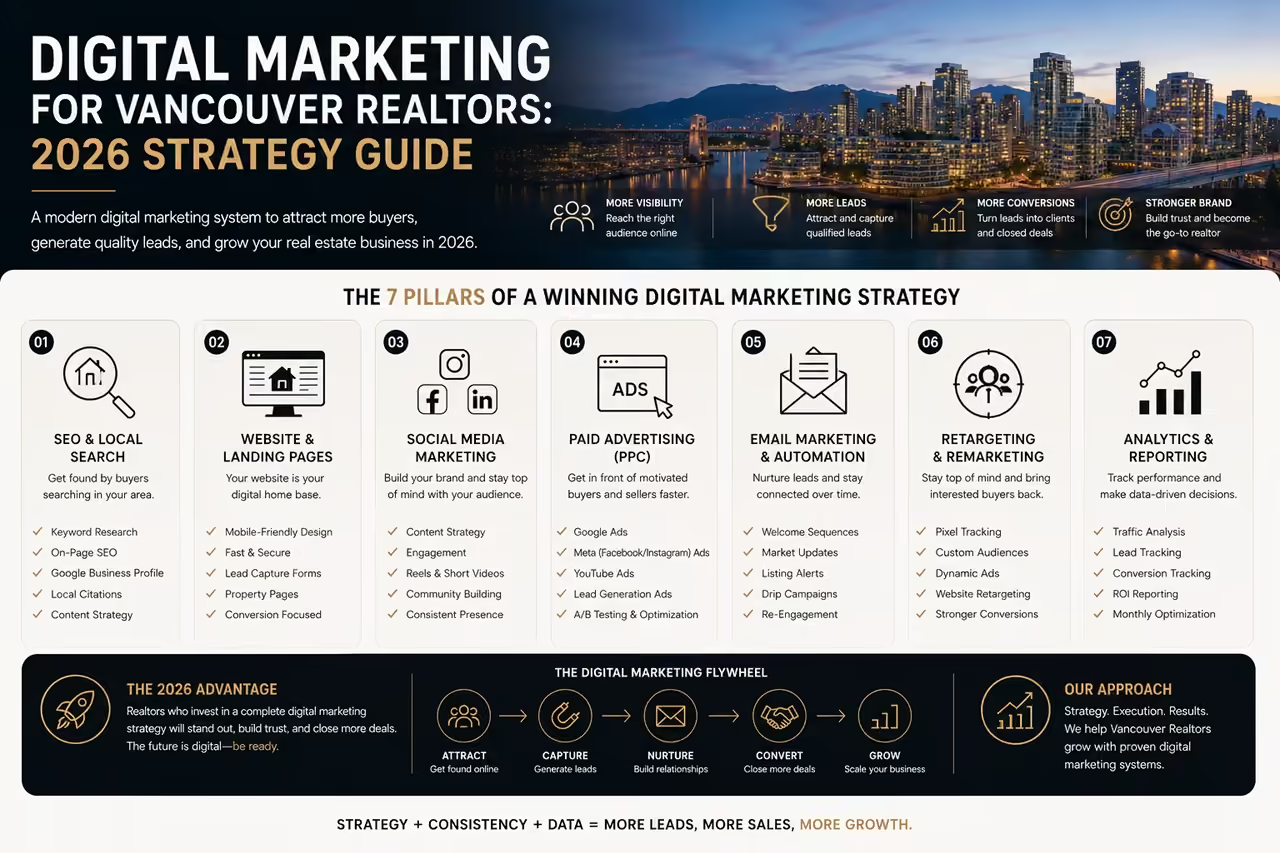
Digital marketing for real estate agents is no longer just posting listings on Instagram or running the occasional ad. In 2026, Vancouver realtors need a connected system that supports visibility, trust, listing promotion, seller education, buyer engagement, and long-term brand growth.
A strong digital marketing plan helps realtors show up before someone is ready to call. It helps buyers understand listings. It helps sellers evaluate the agent’s marketing standard. It gives brokerages stronger brand consistency. It also gives agents better data about what content, pages, ads, and campaigns are actually creating interest.
For Vancouver realtors, this matters because buyer and seller attention is fragmented. People discover agents through Google, Instagram, TikTok, YouTube, referrals, listing portals, paid ads, email, neighbourhood content, and property videos. A potential seller may follow an agent for months before reaching out. A buyer may see a listing video, visit a website, open a retargeting ad, and then book a showing.
That means digital marketing should not be treated as a collection of disconnected tactics. It should work like a funnel.
The goal is not to chase every platform. The goal is to build a clear digital presence, attract the right audience, nurture attention, and convert serious interest into conversations.
What Digital Marketing Means for Real Estate Agents
Digital marketing for real estate agents is the use of online channels to attract, educate, engage, and convert buyers, sellers, investors, developers, and referral partners.
For a Vancouver realtor, this can include:
- A professional real estate website
- Local SEO and neighbourhood content
- Google Business Profile optimization
- Listing landing pages
- Blog content
- Social media strategy
- Short-form video
- Email marketing
- Google Ads
- Meta Ads
- LinkedIn Ads for select campaigns
- Retargeting campaigns
- Analytics and conversion tracking
- CRM follow-up
- Property marketing assets
- Personal brand content
The best real estate digital marketing does two things at the same time.
First, it markets current listings. It helps properties get seen, understood, and remembered.
Second, it markets the agent. It shows potential clients how the agent thinks, communicates, presents property, and understands the local market.
Both matter. Listing content creates proof. Brand content creates familiarity.
Why Realtors Need More Than Listing Promotion
Many agents only become visible when they have a listing. That creates an inconsistent marketing rhythm.
The problem is that buyers and sellers do not make decisions only during your listing window. A homeowner may start paying attention to agents months before listing. A buyer may follow neighbourhood content before getting pre-approved. A developer may evaluate a studio or agent based on several visible examples of past work. A brokerage may judge an agent’s professionalism by how consistently they show up online.
This is why digital marketing should include both listing campaigns and long-term brand content.
Listing campaigns answer: “What property is available right now?”
Brand content answers: “Why should someone trust this agent?”
The strongest Vancouver realtors build both.
Four Benefits of Digital Marketing for Realtors
Digital marketing can support several parts of a real estate business, from awareness to conversion.
1. Better Understanding of Your Audience
A strong digital system gives agents better insight into what people care about.
Website analytics, search data, social engagement, email clicks, ad performance, and lead forms can help reveal which topics, neighbourhoods, property types, and services are earning attention.
This does not mean collecting data carelessly. Agents should use proper consent, privacy-aware tools, and compliant marketing practices. The point is to understand behaviour enough to improve content and campaigns.
For example, if neighbourhood guides consistently earn traffic, the agent may invest more in local SEO. If short listing videos get stronger engagement than static posts, the agent may prioritize video. If seller preparation content generates inquiries, the agent may build more seller-focused landing pages.
Digital marketing becomes stronger when it is informed by behaviour.
2. More Visibility Across the Buyer and Seller Journey
People do not all enter the market at the same stage.
Some are casually researching neighbourhoods. Some are comparing agents. Some are ready to book a showing. Some are preparing to sell. Some are watching mortgage trends. Some are looking for pre-sale opportunities. Some are investors monitoring specific property types.
A good digital marketing system meets people at different stages.
Awareness-stage content may include neighbourhood videos, blog posts, market explainers, and social media education.
Consideration-stage content may include listing pages, seller guides, service pages, portfolio examples, and video walkthroughs.
Decision-stage content may include contact pages, booking forms, testimonials, listing presentation materials, retargeting ads, and direct inquiry CTAs.
When your content supports the full journey, you are not relying on one platform or one post to do everything.
3. Better Timing and Personalization
Digital marketing allows realtors to show different messages to different audiences at different stages.
Someone who watched a listing video may need an open house reminder. Someone who visited a seller guide may need a home valuation CTA. Someone who opened an email about a neighbourhood may be interested in a local listing update. Someone who visited a landing page but did not inquire may need a retargeting ad with a clearer offer.
This does not require invasive marketing. It requires thoughtful sequencing.
The goal is to make the next message relevant.
For real estate agents, relevance is important because trust is built gradually. People are more likely to respond when the content matches what they were already considering.
4. Clearer Measurement
Traditional marketing can be difficult to measure. Digital marketing gives agents more visibility into what is working.
You can track:
- Website traffic
- Search impressions
- Ranking progress
- Google Business Profile actions
- Listing page views
- Video views
- Social engagement
- Email opens and clicks
- Ad clicks
- Lead form submissions
- Cost per lead
- Call tracking
- Conversion rates
- Retargeting performance
Not every metric is equally important. Impressions are not the same as leads. Likes are not the same as appointments. But the right analytics can help agents understand which channels are contributing to meaningful conversations.
Measurement turns marketing from opinion into a process.
Step One: Build a Strong Digital Foundation
Before running ads or posting daily content, realtors need a strong foundation.
The foundation includes the website, local SEO, brand positioning, tracking, and core service pages. Without this foundation, paid ads and social media may send attention to weak pages that do not convert.
A strong digital foundation should answer:
- Who do you help?
- Where do you work?
- What services do you offer?
- What property types do you specialize in?
- Why should someone trust you?
- What listings or projects can you show?
- How can someone contact you?
- What should the visitor do next?
If your website cannot answer those questions quickly, your digital marketing will be less efficient.
Design a Realtor Website That Converts
A real estate website should not be a passive brochure. It should be a conversion asset.
A strong realtor website should include:
- Clear homepage positioning
- Buyer and seller service pages
- Neighbourhood content
- Listing pages or featured properties
- Blog or education hub
- About page
- Contact page
- Portfolio or past marketing examples
- Video and photography examples
- Lead capture forms
- Clear calls to action
- Mobile-friendly design
- Fast loading speed
- Analytics and tracking
The website should make it easy for visitors to understand the agent’s value and take the next step.
For Vancouver realtors, local relevance is especially important. A generic real estate website will usually be weaker than one that clearly communicates neighbourhood expertise, service areas, property types, and local market understanding.
Create Service Pages for Buyers, Sellers, and Listings
Many realtors rely too much on one general homepage. That is a mistake.
Different visitors have different needs. A seller wants to know how you market properties. A buyer wants to know how you help them navigate the process. An investor may want market knowledge. A developer may want project marketing expertise. A luxury seller may want proof of premium positioning.
Separate service pages help address those needs more clearly.
Useful pages may include:
- Sell with us
- Buy with us
- Listing marketing
- Neighbourhood expertise
- Luxury real estate
- Condo buying
- Pre-sale guidance
- Investment properties
- Relocation support
- Real estate media examples
Each page should have a clear purpose, relevant proof, and a CTA.
For agents and brokerages, service pages also support SEO because they give search engines and users clearer topic structure.
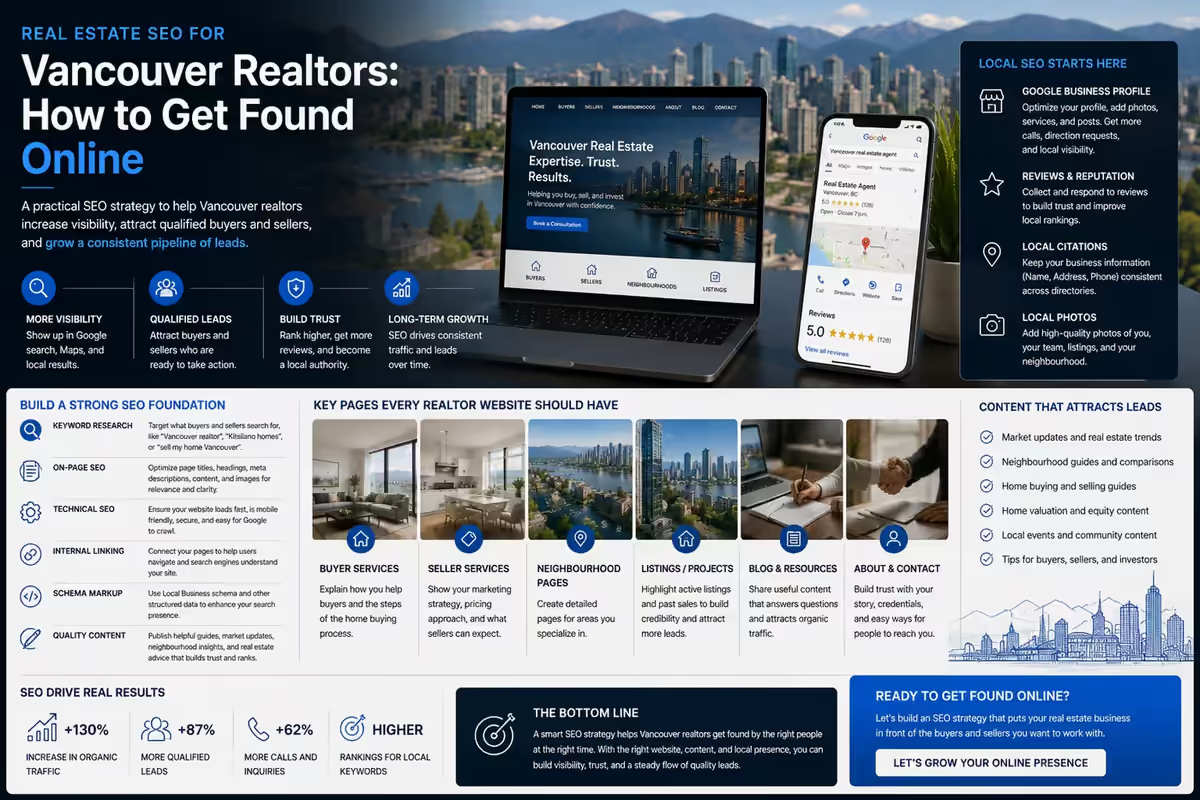
Use SEO to Capture Local Search Demand
SEO helps realtors appear when people search for information, services, neighbourhoods, and property-related questions.
A strong SEO strategy for Vancouver realtors may include:
- Service pages
- Neighbourhood pages
- Blog content
- Listing content
- Google Business Profile optimization
- Internal linking
- Technical SEO
- Image optimization
- Local schema
- Consistent business information
- Helpful content that answers real client questions
SEO is not only about ranking for broad terms like “Vancouver realtor.” Those terms are competitive and may not be the only valuable searches.
Long-tail searches can be more practical:
- how to sell a condo in Vancouver
- best neighbourhoods for families in North Vancouver
- how to prepare a home for listing photos
- Vancouver pre-sale condo guide
- what to know before buying a townhouse in Vancouver
- real estate marketing for luxury homes in Vancouver
These searches reveal intent. A person asking a specific real estate question may be closer to taking action than someone casually browsing.
Build Neighbourhood Pages That Actually Help
Neighbourhood content is one of the strongest SEO and trust-building opportunities for realtors.
A useful neighbourhood page should go beyond generic descriptions. It should explain the area through the lens of buyer and seller decision-making.
A strong neighbourhood page may include:
- Housing types
- Buyer profiles
- Lifestyle fit
- Transit access
- Parks and recreation
- Schools and amenities
- Condo vs detached patterns
- Walkability
- Market positioning
- Common buyer questions
- Local video
- Recent listing examples
- CTA for buyers or sellers
The goal is not to write tourist content. The goal is to help someone evaluate whether that neighbourhood fits their needs.
For Vancouver agents, neighbourhood pages can also support internal linking. Blog posts, listing pages, videos, and service pages can all connect back to relevant local hubs.
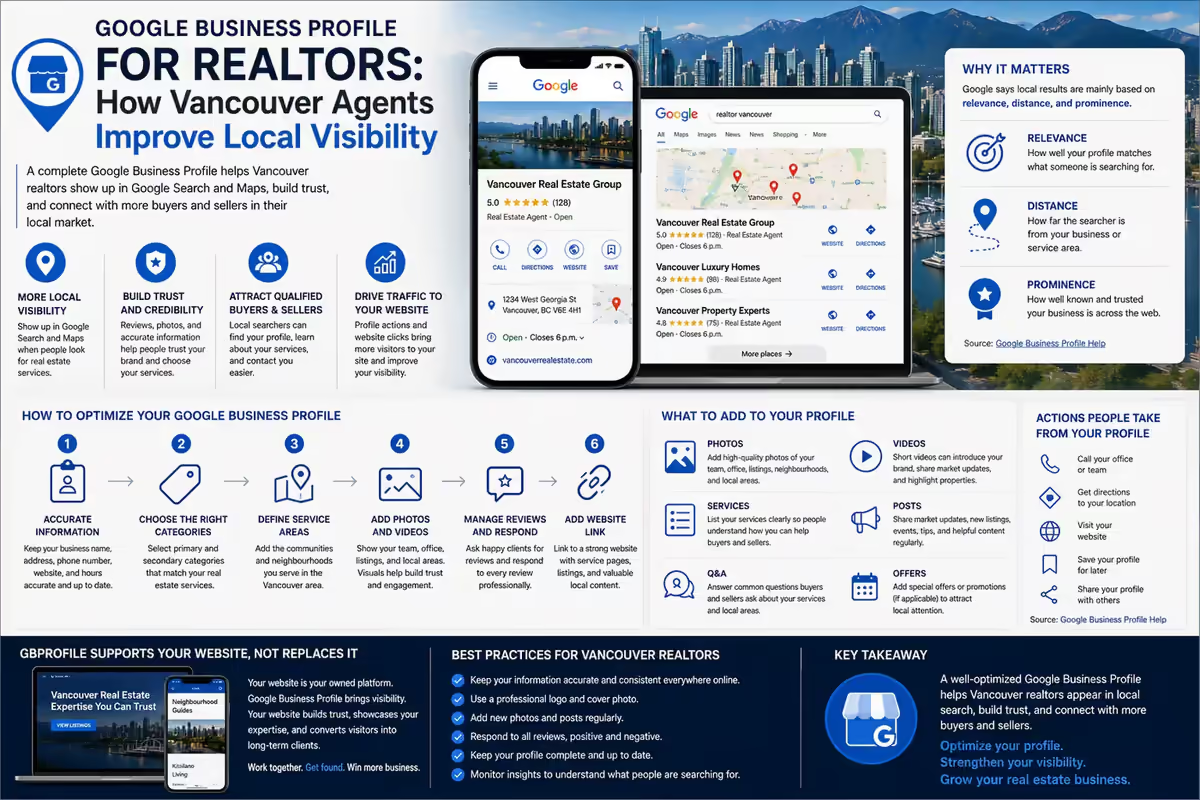
Google Business Profile for Local Visibility
Google Business Profile can help realtors and brokerages strengthen local visibility and credibility.
A complete profile can support discovery through branded searches, local searches, map results, reviews, photos, posts, and service information.
Agents should keep their profile current with:
- Accurate name and contact information
- Service categories
- Service areas
- Photos
- Posts and updates
- Review management
- Website link
- Appointment or contact options
- Business description
- Relevant services
Google Business Profile is not a replacement for a website, but it can support local trust. Many people check business profiles before deciding whether to contact a service provider.
For Vancouver realtors, reviews, photos, and consistent updates can help reinforce credibility.
Step Two: Attract the Right Buyers and Sellers Online
Once the foundation is in place, the next step is audience growth.
This includes SEO, social media, content marketing, video, listing campaigns, and paid acquisition. The goal is to attract people who are likely to become buyers, sellers, investors, developers, or referral partners.
This stage is not just about reach. Reach without relevance is weak.
A strong strategy focuses on the right people, the right message, and the right stage of intent.
Social Media Strategy for Real Estate Agents
Social media works best when it supports both visibility and trust.
For realtors, the strongest social content usually falls into several categories:
- Listing content
- Educational content
- Neighbourhood content
- Personal brand content
- Behind-the-scenes content
- Market commentary
- Client process content
- Property preparation tips
- Open house content
- Short-form video
A realtor who only posts listings can start to feel transactional. A realtor who only posts personal content may not show enough professional proof. The strongest strategy balances property marketing with helpful expertise.
For Vancouver agents, local content is especially useful because people often choose agents based on neighbourhood familiarity.
Short-Form Video Should Be Part of the Plan
Short-form video is one of the most useful formats for real estate marketing because it is mobile-friendly, easy to distribute, and effective for both listings and personal brand content.
Useful short-form video ideas include:
- Quick listing tours
- Three things to know about a property
- Neighbourhood walkthroughs
- Seller preparation tips
- Buyer education
- Market updates
- Open house teasers
- Common mistake videos
- Agent introductions
- Behind-the-scenes clips
- Listing strategy breakdowns
Video helps people understand how the agent communicates. This is important because trust is not built only through credentials. It is also built through repeated exposure to useful, clear communication.
For realtors who are hesitant to appear on camera, start with simple educational clips. Answer the questions clients already ask.
Content Marketing for Realtors
Content marketing helps realtors build authority before the client is ready to contact them.
A strong content system may include:
- Blog posts
- Neighbourhood guides
- Seller guides
- Buyer guides
- Listing preparation checklists
- Market explainers
- Video libraries
- Email newsletters
- Downloadable resources
- Social media education
The best content answers real questions.
Examples:
- How should I prepare my Vancouver condo before listing?
- Is a 2D floor plan enough for a listing?
- Should I use video for a property launch?
- What should sellers know before hiring a realtor?
- How do buyers compare Vancouver neighbourhoods?
- What does a strong listing campaign include?
This content supports SEO, social media, email, and sales conversations. It also gives agents assets they can send directly to prospects.
Paid Ads: Use Them Strategically
Paid ads can help realtors reach more people, promote listings, generate leads, and retarget engaged audiences.
Useful paid channels may include:
- Google Ads
- Meta Ads
- YouTube Ads
- LinkedIn Ads for select audiences
- Display retargeting
- Local search campaigns
- Lead form campaigns
- Landing page campaigns
Paid ads work best when the offer, creative, audience, landing page, and tracking are aligned.
A common mistake is boosting random posts without a clear objective. Another mistake is running ads to a weak website or generic contact page.
Before launching ads, define:
- What is the goal?
- Who is the audience?
- What is the offer?
- What page will traffic land on?
- What action should the visitor take?
- How will performance be tracked?
- What follow-up happens after the lead comes in?
Advertising should not be treated as magic. It is a distribution system. It amplifies the quality of the strategy behind it.
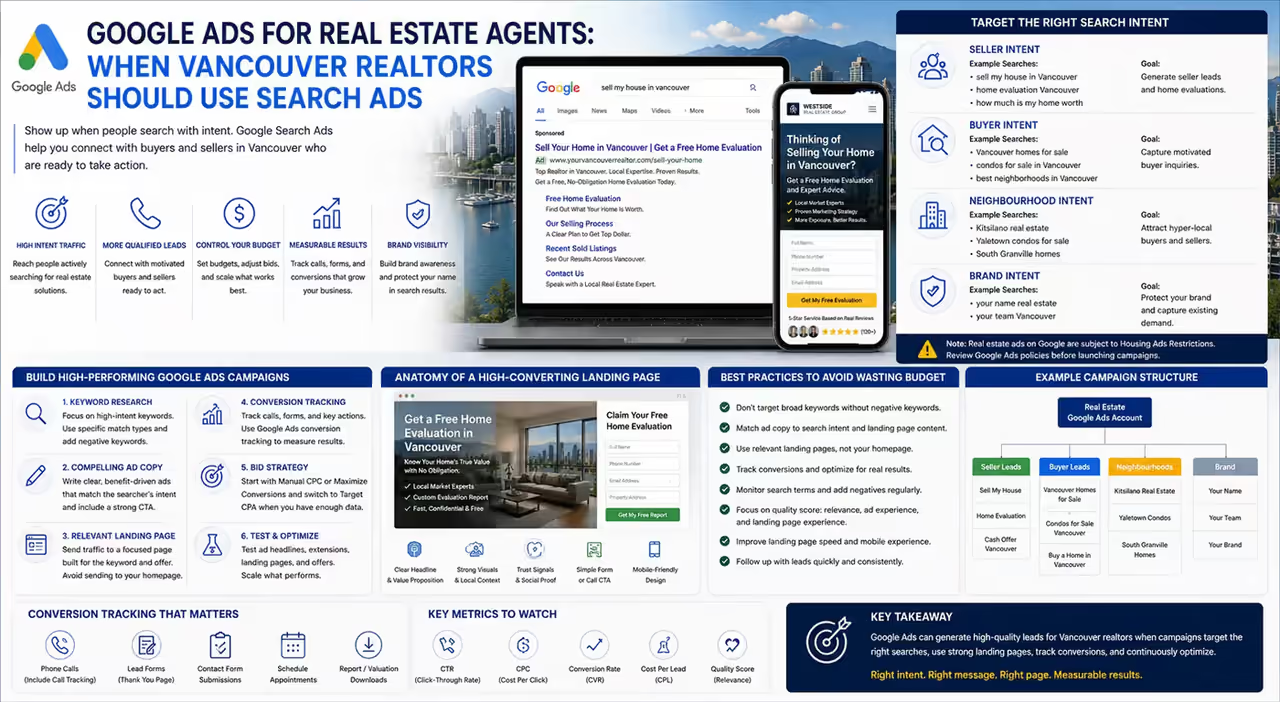
Google Ads for Realtors
Google Ads can be useful when people are actively searching for real estate services, neighbourhood information, listings, or agent support.
Potential campaign types include:
- Search ads for seller intent
- Search ads for buyer guides
- Local service-focused campaigns
- Neighbourhood landing page campaigns
- Branded campaigns
- Listing landing page campaigns
- Display or YouTube retargeting
- Pre-sale project campaigns
Google Ads can work well when paired with specific landing pages. A generic homepage may not convert as well as a page built around the searcher’s intent.
For example, someone searching for help selling a Vancouver condo should land on a page about selling condos, not a general homepage with no clear next step.
Relevance improves the user experience.
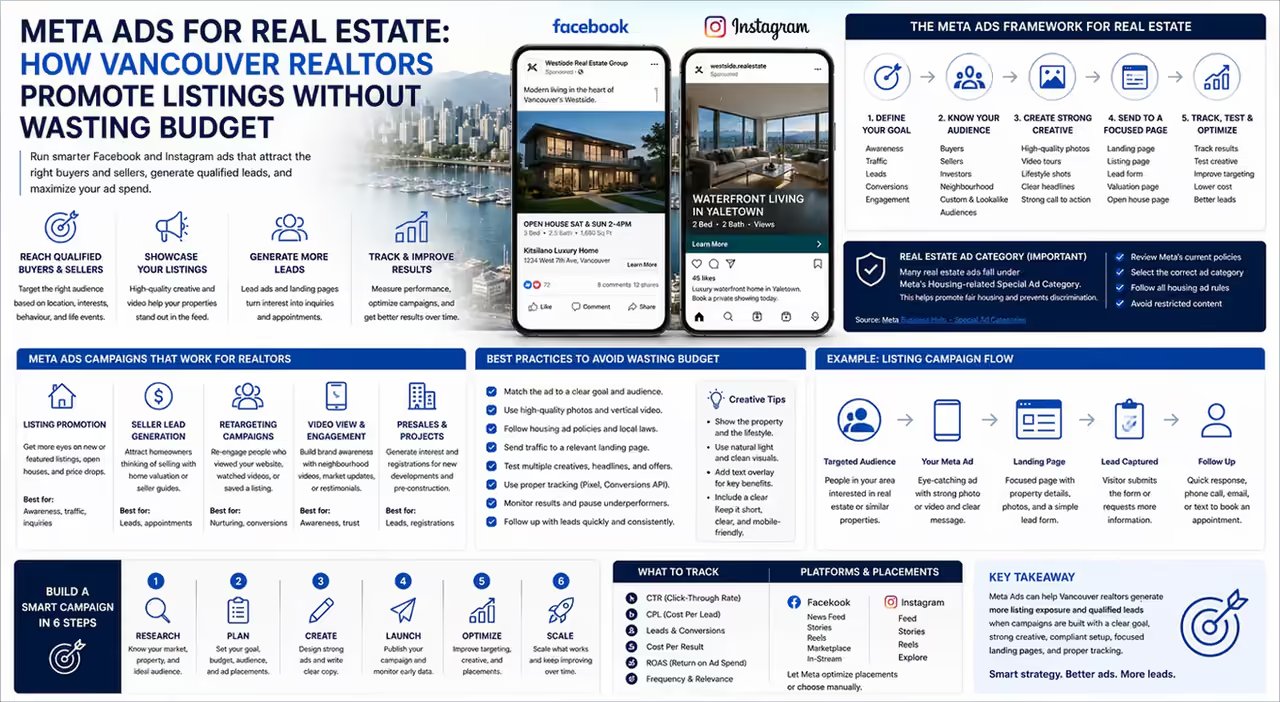
Meta Ads for Real Estate
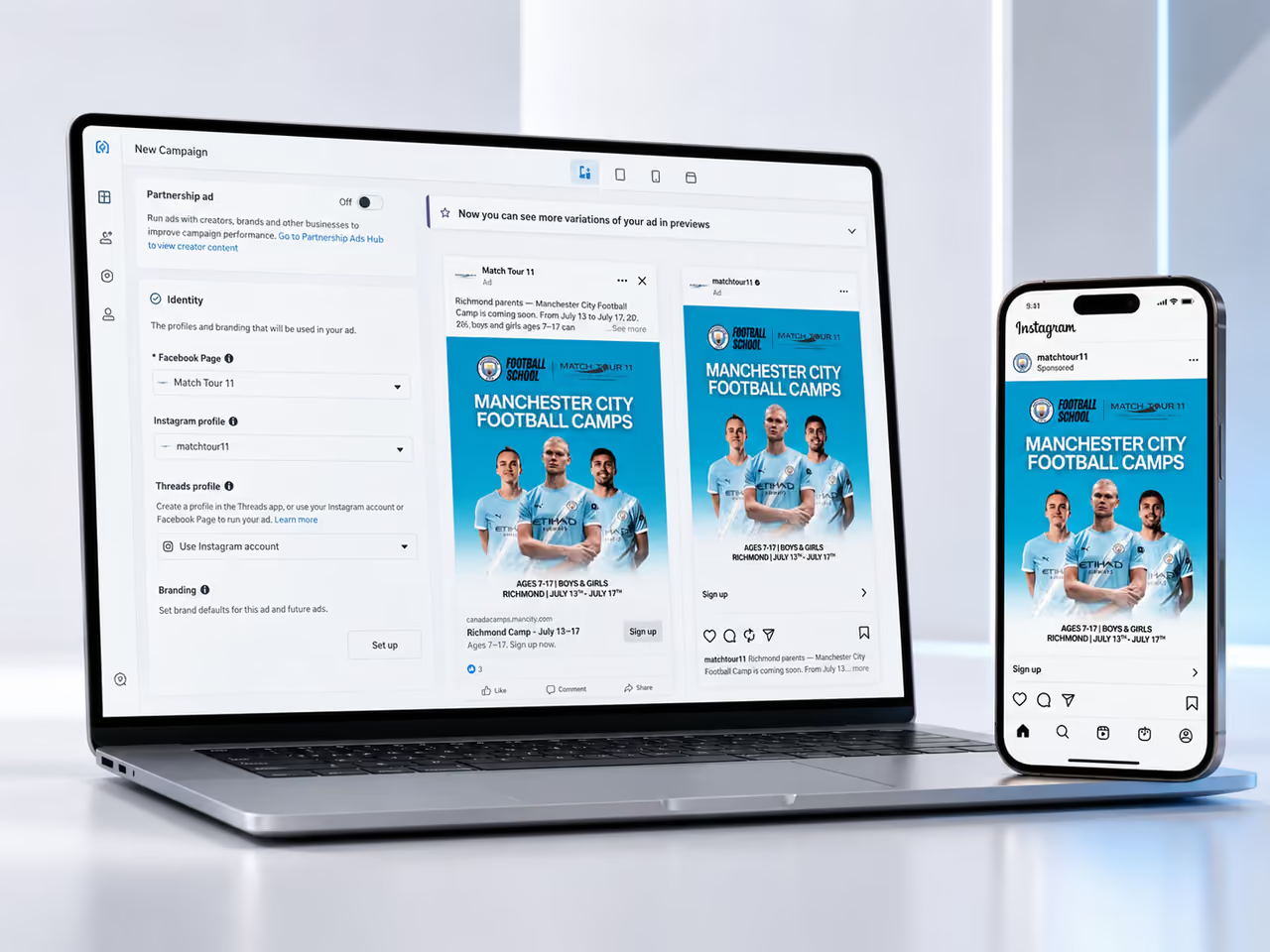
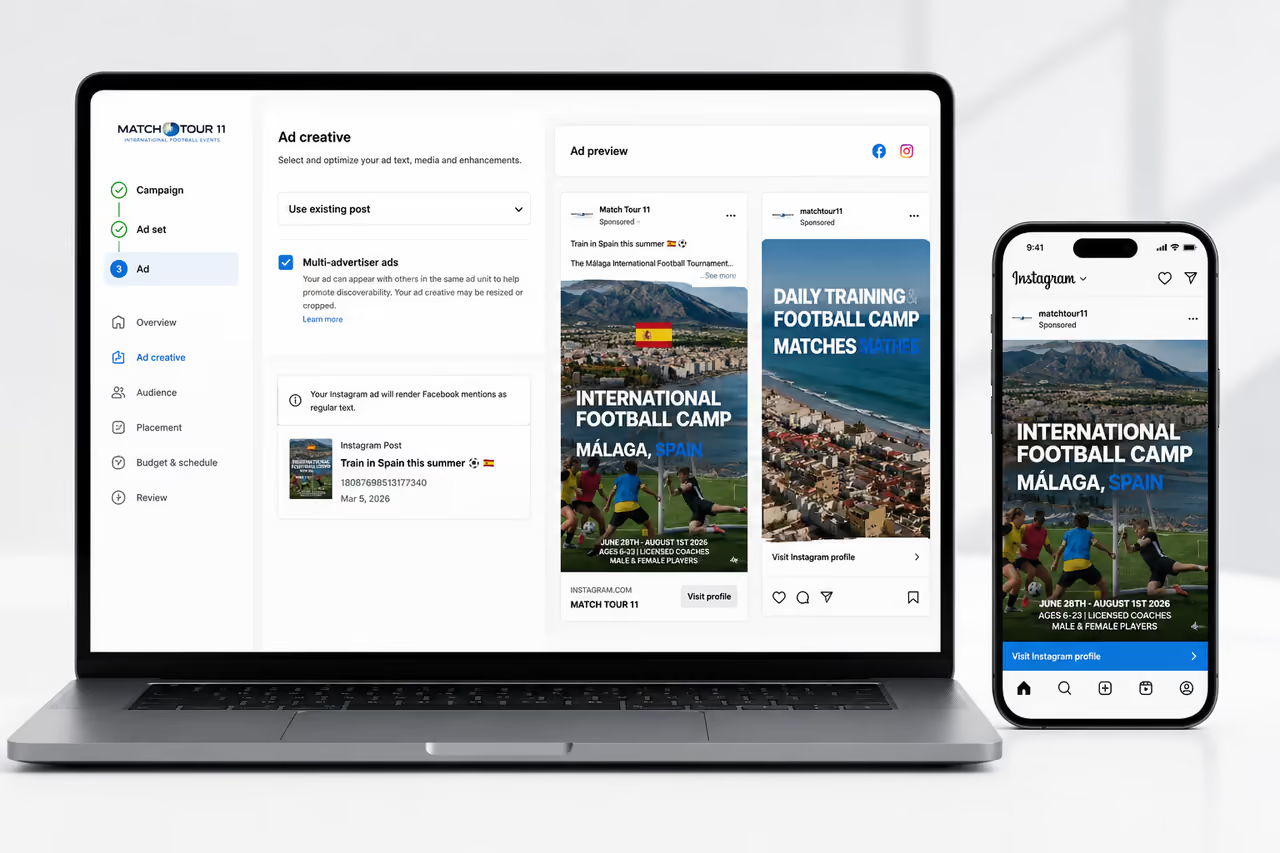
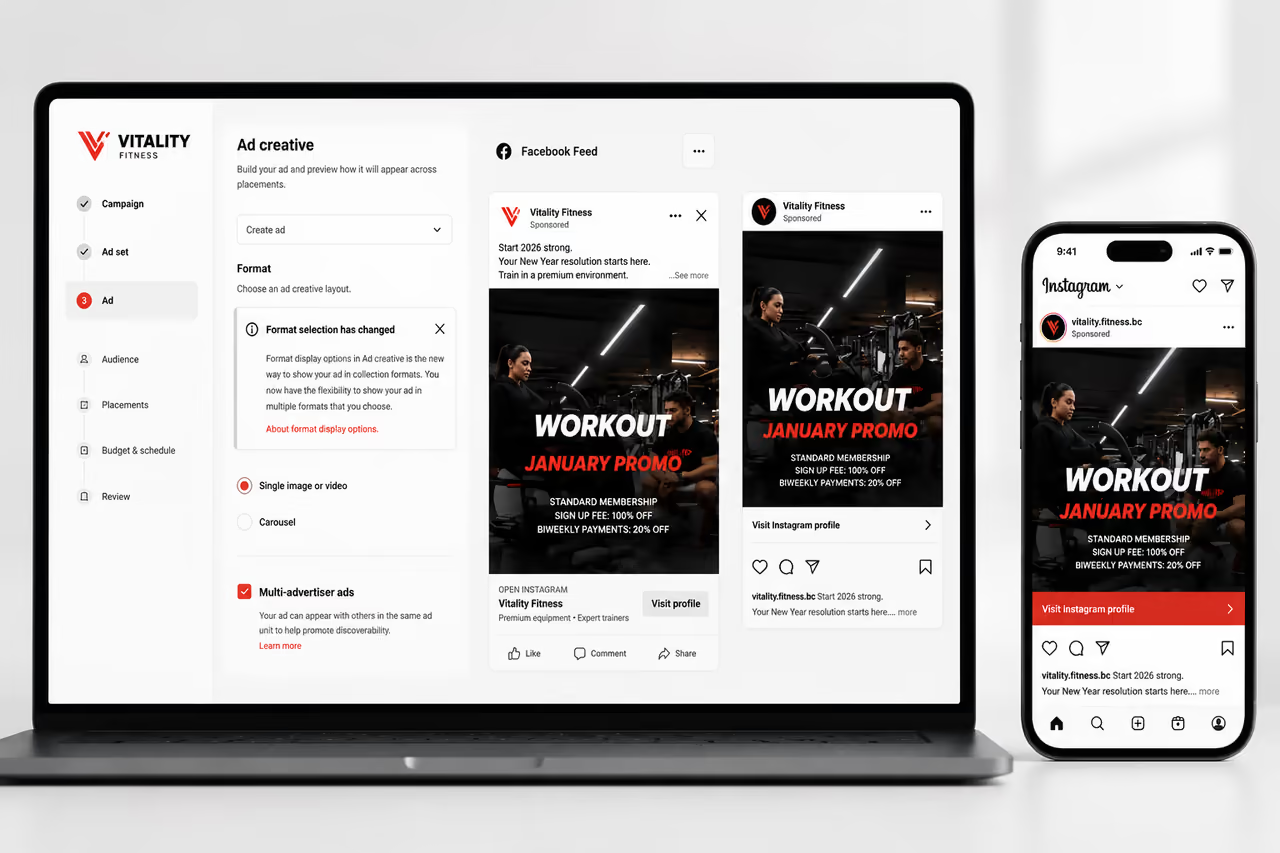
Meta Ads can support visual real estate campaigns across Facebook and Instagram.
They can be useful for:
- Listing promotion
- Open house campaigns
- Seller lead campaigns
- Video views
- Neighbourhood content distribution
- Retargeting
- Brand awareness
- Lead generation
- Pre-sale interest campaigns
Because real estate is tied to housing, agents should stay aware of current ad platform rules and targeting limitations. Housing-related campaigns can require specific category declarations and may have audience restrictions depending on the platform and market. The safest approach is to design campaigns around compliant targeting, strong creative, and clear landing pages rather than relying on overly narrow audience filters.
Meta Ads should be used to amplify strong content, not compensate for weak content.
LinkedIn Ads for Select Real Estate Campaigns
LinkedIn Ads are not usually the first channel for standard residential listings, but they can be useful for certain real estate objectives.
They may make sense for:
- Commercial real estate
- Development marketing
- Investor-focused campaigns
- Brokerage recruitment
- Luxury brand positioning
- Professional audience targeting
- B2B real estate partnerships
- Project marketing
LinkedIn is often more expensive than consumer social platforms, so the audience fit needs to be clear. Do not use LinkedIn only because it feels premium. Use it when the target audience is actually there.
For a Vancouver brokerage, LinkedIn can be useful for thought leadership, recruiting, project credibility, and professional networking.
Step Three: Re-Engage People Who Already Know You
Many realtors focus heavily on new attention and forget about re-engagement.
That is a mistake.
People who have already visited your website, watched your videos, opened your emails, engaged with your posts, or viewed your listings are often more valuable than a cold audience. They already know something about your brand.
Re-engagement helps bring them back.
Useful re-engagement tools include:
- Email marketing
- Retargeting ads
- CRM follow-up
- Website remarketing
- Video viewer audiences
- Social engagement audiences
- Open house follow-up
- Listing update campaigns
- Seller nurture sequences
The goal is not to spam. The goal is to continue the conversation with relevant content.
Email Marketing Still Matters
Email is still useful because it reaches people who have given you permission to stay in touch.
A strong realtor email strategy may include:
- New listing alerts
- Open house reminders
- Monthly market updates
- Neighbourhood insights
- Seller education
- Buyer education
- Recently sold updates
- Listing preparation tips
- Video roundups
- Development updates
- Personal brand newsletters
Email should be useful and concise. It should not only say “contact me.” It should give the reader a reason to keep opening.
A good email connects to the next step:
- View the listing
- Watch the video tour
- Read the guide
- Book a consultation
- Ask for a valuation
- Explore a neighbourhood page
- Register interest
- Reply with a question
For agents, email can be one of the best ways to stay visible with people who are not ready today but may be ready later.
Retargeting Ads for Real Estate
Retargeting helps agents reach people who have already interacted with their digital presence.
Potential retargeting audiences include:
- Website visitors
- Listing page visitors
- Video viewers
- Instagram and Facebook engagers
- Email clickers, where properly tracked
- Lead form openers
- Neighbourhood page visitors
- Blog readers
- Open house page visitors
- Past campaign traffic
Retargeting creative should match the visitor’s behaviour.
Someone who viewed a listing may need an open house reminder or video tour. Someone who read a seller guide may need a home valuation CTA. Someone who watched a neighbourhood video may need a local market update.
Relevance is the difference between useful follow-up and annoying advertising.
Build Landing Pages for Campaigns
A landing page is a focused page designed for one campaign, offer, or audience.
For real estate, landing pages can support:
- Seller lead generation
- Listing campaigns
- Open house registration
- Buyer guides
- Neighbourhood guides
- Pre-sale projects
- Home valuation offers
- Downloadable resources
- Paid ad campaigns
A good landing page should include:
- Clear headline
- Specific offer
- Strong visuals
- Local relevance
- Trust signals
- Simple form
- Clear CTA
- Fast loading speed
- Mobile-first layout
- Tracking
The landing page should match the ad or content that brought someone there. If the ad is about selling a Vancouver condo, the page should be about selling Vancouver condos.
Message match matters.
CRM and Follow-Up Systems
A lead is only useful if it is followed up properly.
Digital marketing often fails because the front-end campaign works but the follow-up process is weak. A person fills out a form, clicks an email, or asks a question, and then the response is slow or generic.
A simple CRM process can help.
Track:
- Lead source
- Inquiry type
- Property interest
- Timeline
- Budget range, when voluntarily shared
- Neighbourhood interest
- Last interaction
- Follow-up status
- Next task
Then create follow-up sequences based on intent.
A seller inquiry should not receive the same follow-up as a buyer inquiry. A pre-sale lead should not receive the same follow-up as a luxury seller. A casual newsletter subscriber should not be treated like a ready client.
Better follow-up improves the value of every marketing channel.
Measure What Actually Matters
Digital marketing creates data, but agents need to focus on the right metrics.
Useful metrics include:
- Organic search traffic
- Local search visibility
- Google Business Profile actions
- Website conversions
- Contact form submissions
- Phone calls
- Listing page views
- Landing page conversion rate
- Email clicks
- Video watch time
- Paid ad cost per lead
- Retargeting performance
- Social saves and shares
- Lead quality
- Appointment bookings
- Closed-loop source attribution, where possible
Avoid relying only on vanity metrics. A post with many views may not generate meaningful leads. A low-traffic page may create high-quality inquiries. A campaign with fewer leads may produce better conversations.
The goal is not to collect more numbers. The goal is to make better decisions.
A Practical 90-Day Digital Marketing Plan for Vancouver Realtors
A good digital marketing plan should be realistic. Most agents do not need an overly complex system on day one.
A practical 90-day plan can work like this.
Days 1 to 30: Build the Foundation
Audit your website, service pages, Google Business Profile, tracking, social profiles, and existing content.
Fix the basics first:
- Clarify positioning
- Improve homepage messaging
- Build or refine buyer and seller pages
- Add clear CTAs
- Set up analytics
- Update Google Business Profile
- Create a content calendar
- Identify top neighbourhoods
- Prepare core video topics
- Review past listing media
This phase is about making sure attention has somewhere useful to go.
Days 31 to 60: Publish and Distribute
Start publishing consistently.
Focus on:
- Weekly short-form video
- Monthly blog or neighbourhood content
- Listing media when available
- Email newsletter
- Google Business Profile posts
- Social carousels
- Educational content
- Project or portfolio examples
At this stage, consistency matters more than perfection. The goal is to build a rhythm.
Days 61 to 90: Add Paid and Retargeting
Once the foundation and content rhythm are in place, add paid distribution.
Start with:
- Retargeting website visitors
- Promoting high-value content
- Testing seller lead campaigns
- Boosting strong video content strategically
- Running listing-specific ads when needed
- Testing landing pages
Measure performance and adjust.
The goal is to make the system smarter every month.
Common Digital Marketing Mistakes Realtors Should Avoid
Many real estate digital marketing problems come from inconsistency or lack of strategy.
Common mistakes include:
- Posting only when there is a listing
- Sending paid traffic to weak pages
- Having no clear seller or buyer service pages
- Ignoring local SEO
- Relying only on social media
- Not using video
- Boosting posts without a goal
- Not tracking conversions
- Letting Google Business Profile go stale
- Writing generic neighbourhood content
- Not following up with leads quickly
- Treating every audience the same
- Not retargeting engaged visitors
- Measuring likes instead of business outcomes
The solution is not to do everything at once. The solution is to build a connected system and improve it over time.
How Perseus Creative Studio Helps Vancouver Realtors With Digital Marketing
Perseus Creative Studio helps Vancouver real estate agents, brokerages, developers, and property-focused businesses build digital marketing systems that support visibility, trust, and lead generation.
Our work connects website design, SEO, social media content, videography, photography, Google Ads, Meta Ads, LinkedIn Ads, landing pages, analytics, and campaign strategy. The goal is to help real estate brands show up clearly across the channels where buyers and sellers already spend attention.
For a Vancouver realtor, that may include:
- Realtor website design
- Local SEO and blog strategy
- Listing landing pages
- Social media content systems
- Short-form video production
- Property marketing campaigns
- Google Ads
- Meta Ads
- LinkedIn Ads for select campaigns
- Retargeting campaigns
- Email campaign support
- Analytics and conversion tracking
- Brand and content strategy
The right plan depends on the agent’s market position, listing volume, audience, budget, and long-term goals.
Explore our digital marketing services, view our real estate and marketing projects, or contact Perseus Creative Studio to build a digital marketing system for your real estate brand.
Key Takeaway
Digital marketing for Vancouver realtors works best when it is built as a system.
Your website creates the foundation. SEO helps people discover you. Social media builds visibility and trust. Video makes your expertise easier to understand. Paid ads extend reach. Email and retargeting bring interested people back. Analytics help you improve each campaign.
The strongest agents in 2026 will not be the ones posting randomly or running disconnected ads. They will be the ones building consistent digital ecosystems that support listings, seller trust, buyer education, and long-term brand growth.