How Better Listing Photos Influence Buyer Interest in Vancouver
Before a buyer books a showing, visits an open house, or contacts a Vancouver realtor, they usually see the property online first. That first impression is visual. The listing photos are often the first point of contact between the property and the buyer.
This is why professional real estate photography matters. High-quality listing photos help buyers understand the home, evaluate its features, and decide whether it deserves their attention. For Vancouver real estate agents and brokerages, strong photography is not just about making a listing look attractive. It is about making the property easier to market, easier to understand, and easier to remember.
Professional photography does not guarantee a faster sale. Pricing, location, condition, market timing, inventory, and buyer demand all matter. But better photos can support stronger listing performance by improving presentation, increasing buyer confidence, and giving agents better assets for MLS, websites, social media, email marketing, paid ads, and listing presentations.
For Vancouver realtors, this is especially important. Buyers are often comparing condos, townhomes, detached homes, and luxury properties across highly visual online platforms. If the photography is weak, dark, cluttered, distorted, or inconsistent, the property can lose attention before the buyer reads the details.
Why Listing Photos Matter Before a Showing
Real estate photography works because buyers make early decisions quickly. They may not decide to buy a home from photos alone, but they often decide whether a home is worth exploring further.
That makes the listing photo package one of the most important parts of the property marketing process. Photos influence how the listing appears on MLS, brokerage websites, realtor websites, social media posts, email campaigns, and paid advertising creative.
A strong photo set helps answer practical buyer questions:
- What does the main living space feel like?
- How bright is the property?
- How are the rooms connected?
- What condition are the finishes in?
- How large do the rooms feel?
- Does the property match the buyer's lifestyle?
- Is the home worth booking a showing for?
When the photography is clear and professional, buyers can evaluate the property with more confidence. When the photography is poor, even a strong home can feel less appealing online.
Achieve Great First Impressions
First impressions in real estate are not only created at the front door. They are created in the listing feed.
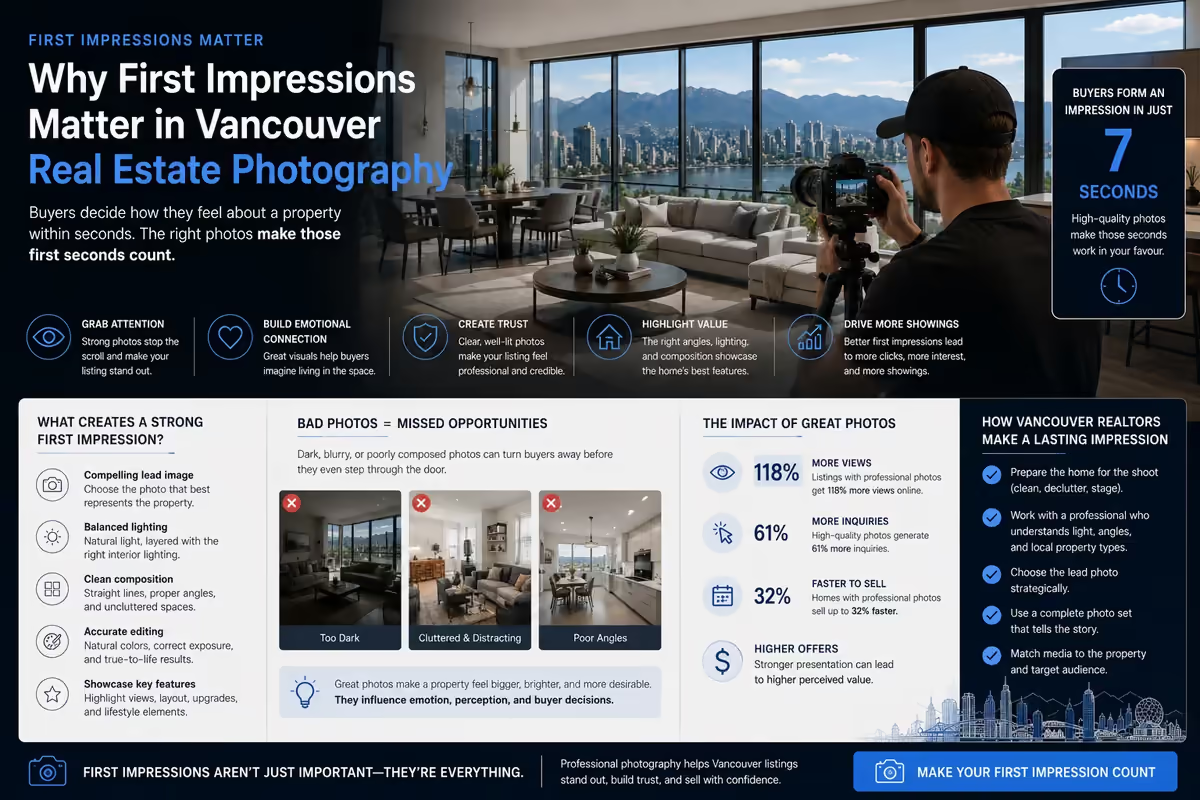
A buyer scrolling through homes in Vancouver may see dozens of properties in one session. The listing photo has to earn attention quickly. Professional real estate photography helps by presenting the property with better lighting, cleaner composition, accurate angles, and a clear visual sequence.
The goal is not to misrepresent the home. The goal is to show the property at its best while keeping the presentation honest and useful.
A strong first impression usually depends on several factors:
- Bright, balanced interior images
- Clean exterior photography
- Accurate colour and exposure
- Well-composed room angles
- Logical photo sequencing
- Attention to key selling features
- Consistent editing across the full gallery
For Vancouver homes, this can be especially important because natural light, views, architectural details, and neighbourhood context often play a major role in buyer interest. A condo with mountain views, a home with strong indoor-outdoor flow, or a townhouse with a functional main floor can all benefit from professional image planning.
Poor photos create friction. Strong photos reduce it.
Why High-Quality Real Estate Photography Matters
High-quality real estate photography matters because it improves how buyers perceive, understand, and remember a property.
A home is not only a set of rooms. It is a combination of layout, light, finishes, scale, location, and lifestyle. Professional photography helps translate those qualities into a clear visual experience.
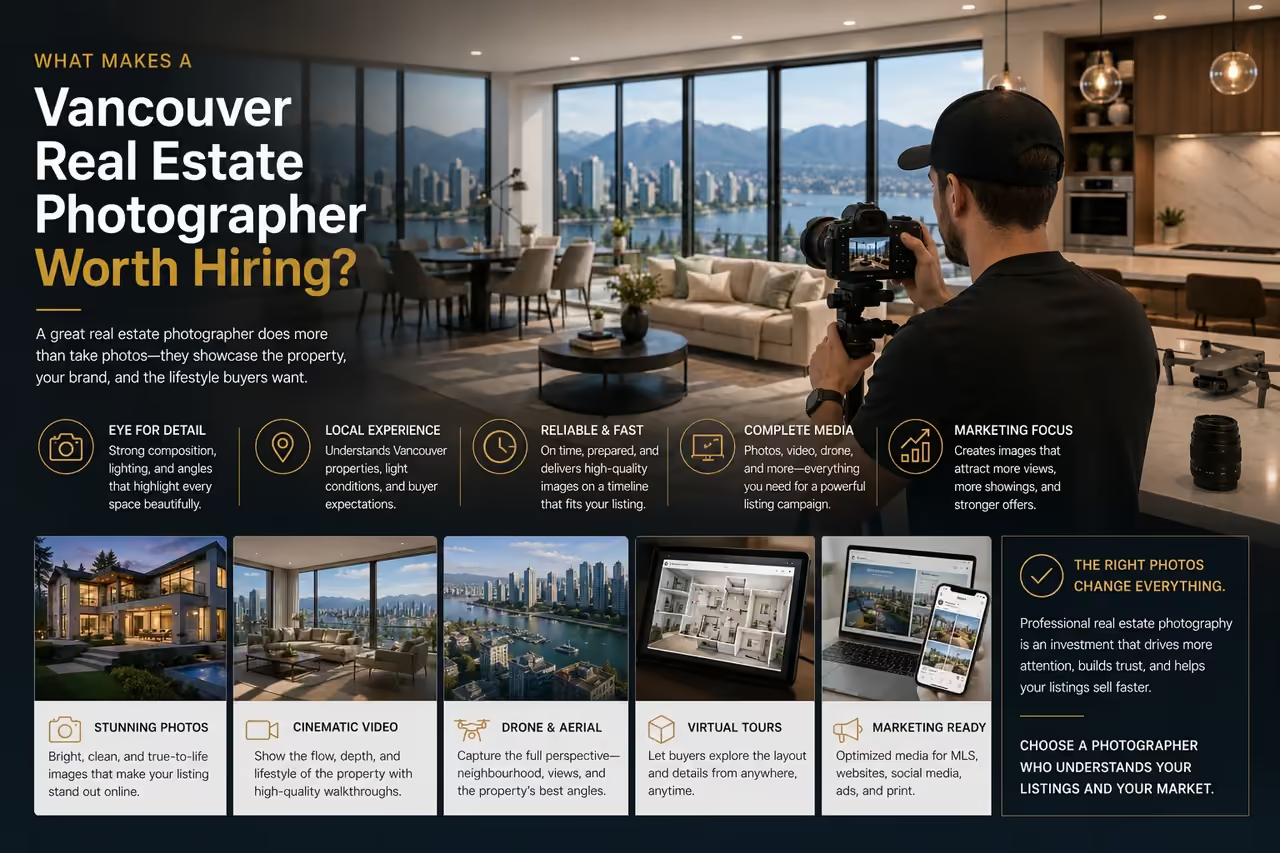
For agents, photography also affects brand perception. Every listing becomes part of the agent's public portfolio. Sellers pay attention to how properties are presented. If an agent consistently markets homes with polished photography, video, aerial production, and strong digital content, that agent appears more prepared, more professional, and more serious about marketing.
That matters when competing for listings. Sellers want to know that their home will be presented well, especially in a market where buyers are comparing properties online before ever making contact.
Professional photography supports three goals at once:
- It helps buyers understand the property.
- It helps sellers trust the marketing process.
- It helps agents build a stronger visual brand.
How Better Photos Can Help a Home Sell Faster
Professional photography can support a faster sale by improving listing engagement and helping the right buyers take action sooner. It does not replace accurate pricing, market knowledge, negotiation, staging, or agent strategy. It strengthens the presentation layer of the listing.
A better photo package can help in several ways.
First, it can improve the listing's ability to attract attention. If the lead image is strong, buyers are more likely to open the listing instead of passing over it.
Second, it can improve buyer comprehension. A well-shot gallery shows the property in a logical order, helping buyers understand the layout before booking a showing.
Third, it can reduce uncertainty. Clear photos of key rooms, finishes, exterior areas, and special features help buyers decide whether the property fits their needs.
Fourth, it gives the agent better marketing material. The same photos can support MLS, social media posts, email campaigns, listing brochures, paid advertising, website landing pages, and brokerage marketing.
The result is not a guaranteed timeline. The result is a stronger launch. In real estate marketing, a stronger launch often matters because early attention can influence showing activity, buyer perception, and seller confidence.
Professional Photography Versus Smartphone Photos
Modern phones can take impressive images, but real estate photography requires more than a good camera. It requires lighting control, lens selection, composition, editing discipline, room sequencing, and an understanding of how buyers evaluate space.
Smartphone photos often struggle with interiors because rooms can have mixed lighting, bright windows, narrow spaces, shadows, reflective surfaces, and colour temperature issues. Without professional technique, images can look dark, distorted, uneven, or smaller than the room feels in person.
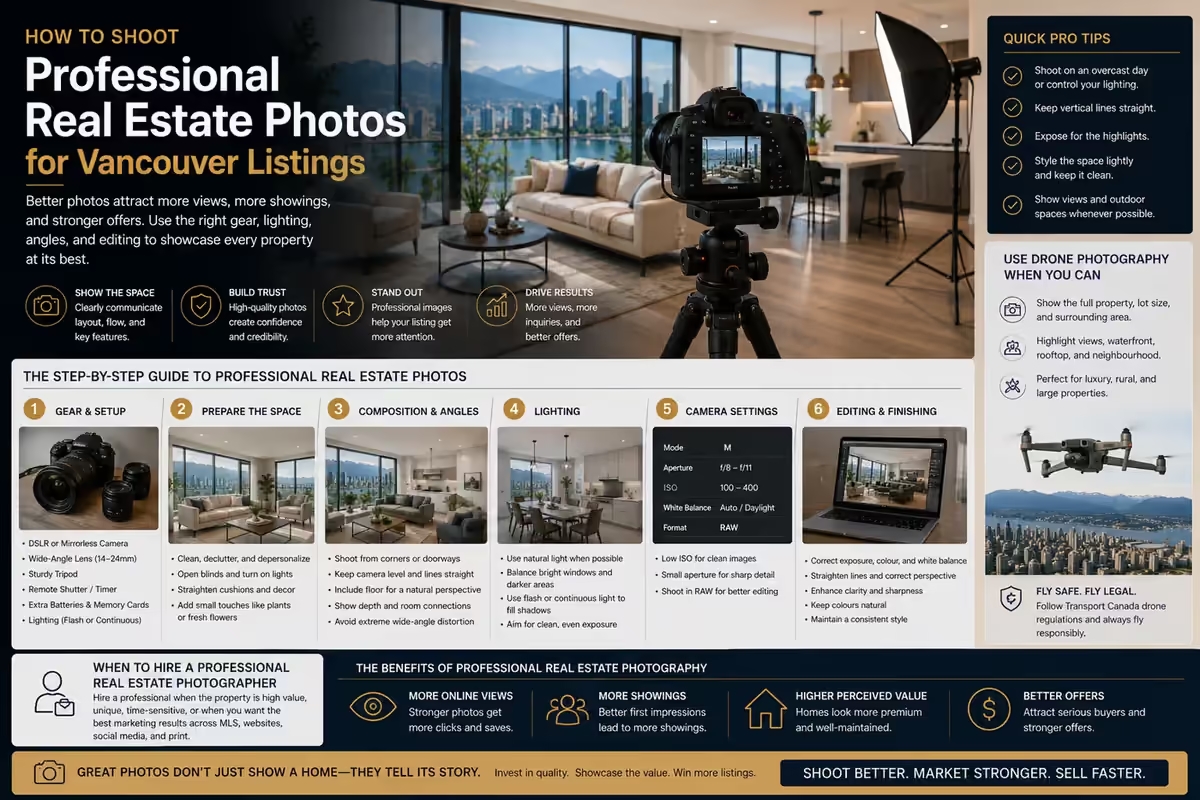
Professional real estate photography is different because it is planned around property presentation. The photographer considers:
- Which angle best explains the room
- How to balance window light and interior light
- How to avoid unnecessary distortion
- Which features deserve close-up detail shots
- How to create a natural flow through the gallery
- How to edit consistently without over-processing
- How the images will look on MLS, mobile, social, and web
This matters because buyers are not just looking for attractive images. They are trying to understand the property quickly.
What Strong Real Estate Photography Should Capture
A high-quality listing gallery should tell a complete visual story. It should not feel random, repetitive, or incomplete.
For most Vancouver listings, the photo package should include a clear mix of exterior, interior, detail, and lifestyle-focused images.
Exterior and Entry
Exterior photography gives buyers an immediate sense of curb appeal, building style, and property context. For detached homes, this may include the front elevation, driveway, yard, deck, garden, or laneway access. For condos, it may include the building exterior, entrance, lobby, amenities, or surrounding streetscape where appropriate.
The entry also matters because it establishes the first step into the home. A clean, well-composed entry image helps the viewer feel oriented.
Main Living Areas
Living rooms, dining areas, and kitchens are often the highest-impact spaces in a listing. These rooms usually carry the strongest emotional and functional value. Professional photography should show how these areas connect, where the natural light enters, and how the space can be used.
For open-concept homes, the photo sequence should make the flow obvious. For smaller condos, the images should show efficient use of space without exaggerating the room.
Bedrooms and Flexible Spaces
Bedrooms should feel calm, clear, and proportional. Home offices, dens, flex rooms, and finished basements should be photographed in a way that communicates practical use.
This is especially relevant in Vancouver, where flexible space can influence buyer interest. A den may support remote work. A basement suite may affect value perception. A flex area may help a condo feel more functional.
Kitchens and Bathrooms
Kitchens and bathrooms often signal condition and renovation quality. Professional photography should show layout, finishes, storage, fixtures, surfaces, and overall condition. Detail shots can help highlight stone counters, custom cabinetry, premium appliances, tile work, lighting, or hardware.
These images should be polished but not artificial. Buyers need an accurate impression of quality.
Views, Balconies, and Outdoor Areas
In Vancouver, views and outdoor space can be major selling features. A balcony with mountain views, a private patio, a rooftop deck, or a landscaped backyard deserves careful planning.
The timing of the shoot can matter. If views, sunlight, or exterior atmosphere are important, the shoot should be scheduled when those features can be captured properly.
The Role of Aerial Production in Real Estate Photography
Aerial production can add significant value when the property benefits from location, scale, land, views, architecture, or neighbourhood context.
Drone photography and aerial video are not necessary for every listing. For some condos or small properties, interior photography may do most of the work. But for many Vancouver properties, aerial production can help buyers understand value that ground-level images cannot fully show.
Aerial production can help show:
- Lot size and orientation
- Proximity to parks or waterfront areas
- Mountain, ocean, skyline, or neighbourhood views
- Outdoor living areas
- Rooflines and architecture
- Surrounding streets and access points
- Nearby amenities or natural features
For luxury homes, development properties, large lots, waterfront homes, and view properties, aerial production can strengthen the marketing package. It gives the listing more context and helps the buyer understand what surrounds the home.
When Photography Should Be Paired With Videography
Photography is the foundation of most real estate listings, but videography can make the property feel more complete.
Photos help buyers scan and compare. Video helps them experience movement, flow, and atmosphere. When used together, they create a stronger listing media package.
Videography is especially useful when a property has:
- Strong room-to-room flow
- A dramatic entry or reveal
- Views that benefit from movement
- Architectural details
- Luxury finishes
- Indoor-outdoor living
- Large outdoor spaces
- A neighbourhood story worth showing
- A lifestyle angle that supports the listing
For agents, videography also creates more content for social media. A full listing video can be edited into shorter clips for Instagram Reels, TikTok, Facebook, YouTube Shorts, email previews, and paid ad campaigns.
This makes the production more efficient. One well-planned shoot can generate photography, video, aerial content, and short-form assets that support the full listing campaign.
Preparing a Vancouver Home for Professional Photography
The quality of the final images depends partly on the shoot and partly on preparation. A well-prepared property photographs better, feels cleaner online, and gives buyers fewer visual distractions.
Before a real estate photography session, agents and sellers should focus on presentation basics.
Clean surfaces. Remove personal clutter. Open blinds where appropriate. Replace burned-out bulbs. Hide cords. Remove fridge magnets. Clear bathroom counters. Straighten bedding. Put away pet items. Remove vehicles from driveways when possible. Make exterior areas tidy.
The goal is not to make the home feel empty or sterile. The goal is to make the space easy to understand.
For Vancouver homes, special attention should be given to windows, balconies, patios, and views. If the property has a strong outdoor feature, that area should be prepared as carefully as the interior.
Agents should also identify the strongest selling points before the shoot. A photographer can do better work when they know what matters most: a view, a renovation, a suite, a rooftop deck, a home office, a large lot, a quiet street, or proximity to a key neighbourhood feature.
Common Real Estate Photography Mistakes to Avoid
Poor photography can weaken a listing even when the property itself is strong. The most common mistakes usually come from rushing the process or treating photos as a basic checklist instead of a marketing asset.
Avoid these issues:
- Dark interior images
- Overexposed windows
- Crooked vertical lines
- Excessive wide-angle distortion
- Inconsistent editing
- Repetitive room angles
- Missing exterior photos
- Cluttered counters and surfaces
- Poor lead image selection
- No clear photo sequence
- Ignoring outdoor space
- No aerial content when location is a major selling point
The lead image deserves special attention. It is often the image that determines whether someone opens the listing. For some properties, the best lead image may be the exterior. For others, it may be a bright living room, a renovated kitchen, a view, or a dramatic aerial shot.
The best choice depends on what makes the property most desirable.
How Photography Supports the Agent's Brand
Real estate photography does not only market the listing. It markets the agent.
When a Vancouver realtor consistently uses strong listing photography, videography, aerial production, and polished digital assets, it creates a visible standard. Potential sellers notice that standard. Brokerages notice it. Buyers notice it across repeated touchpoints.
This is especially valuable for agents who want to compete for better listings, build authority in a neighbourhood, or position themselves as strong marketers.
A listing campaign may end when the property sells, but the content continues to support the agent's brand. Photos can appear in portfolio pages, social posts, market updates, listing presentations, email campaigns, and future seller conversations.
That makes high-quality photography a long-term brand asset, not only a short-term listing expense.
How Perseus Creative Studio Helps Vancouver Realtors
Perseus Creative Studio helps Vancouver real estate agents, brokerages, and property-focused brands create listing media built for modern digital marketing.
Our work connects professional photography, videography, aerial production, post-production, and digital strategy so each property has the right assets for the right channels. For some listings, that may mean a focused photography package. For others, it may include aerial visuals, cinematic video, vertical social content, and supporting creative for paid advertising or website campaigns.
The objective is simple: make the property easier to understand, easier to market, and easier to remember.
For Vancouver realtors, that means the media package should match the listing strategy. A downtown condo, a family home in East Vancouver, a North Shore view property, and a luxury home in West Vancouver should not all be photographed the same way. Each property has different strengths, different buyers, and different marketing requirements.
Professional photography gives the listing a stronger foundation. Videography and aerial production can extend that foundation into a more complete campaign.
Explore our real estate photography, videography, and aerial production services, or contact Perseus Creative Studio to plan media for an upcoming Vancouver listing.
Key Takeaway
High-quality real estate photography helps Vancouver homes make stronger first impressions online. It supports buyer attention, improves listing clarity, strengthens agent branding, and gives realtors better assets for MLS, social media, websites, email, and paid campaigns.
It cannot guarantee a faster sale. But it can help a property enter the market with a stronger visual presentation, which is one of the most important parts of modern real estate marketing.