Start Here Only If the Seller Has Already Said No
This guide covers one conversation. The photos are shot, the seller has seen them, and they do not want to pay for video.
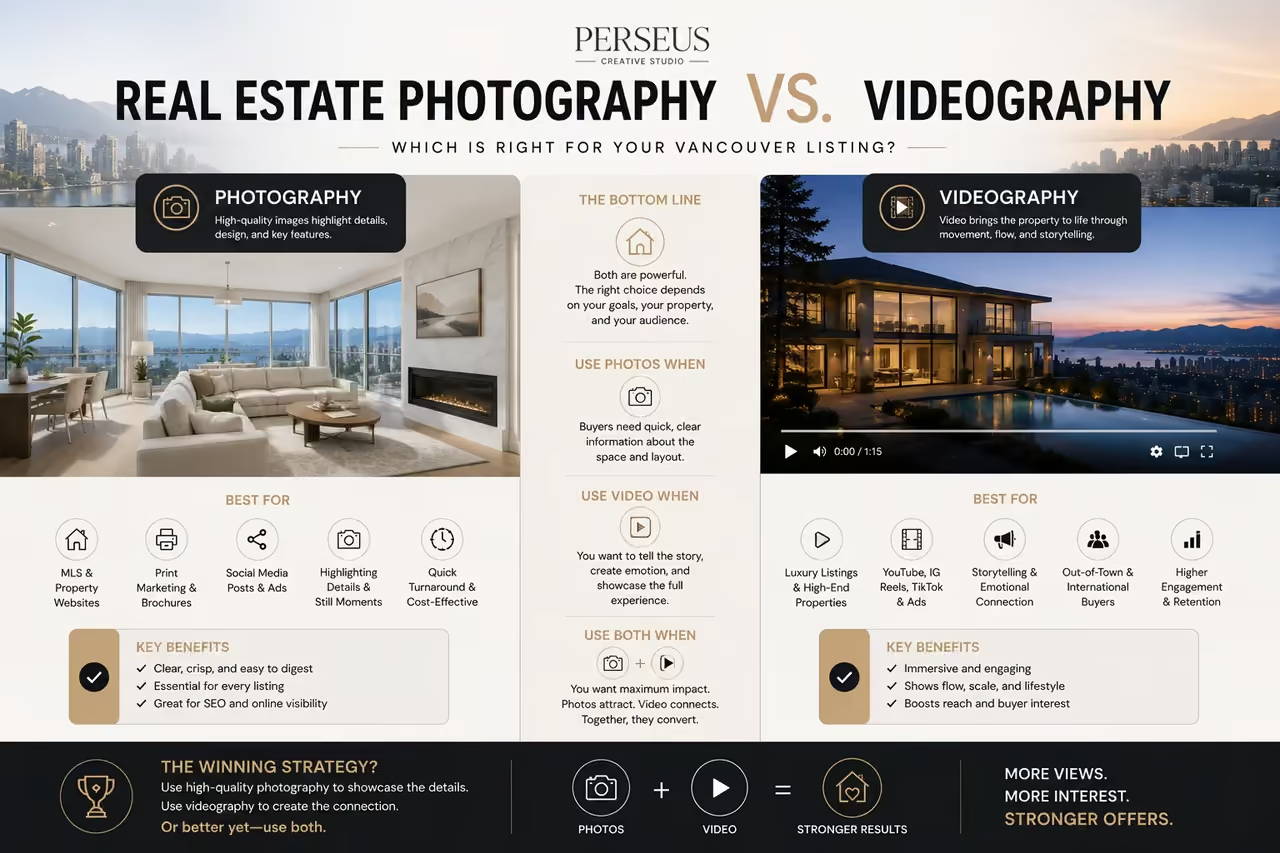
If you are still deciding which media a property needs in the first place, that question is answered in our guide to real estate photography versus videography. This post picks up after the seller has said no.
What follows is the concern that usually sits underneath the words "photos are enough", a plain answer to each version of it, and one Vancouver listing where the answer held.
One rule before any of it. Do not argue a seller into video. Arguing loses, and it costs you credibility on the rest of the marketing plan. Find out what they are actually worried about, then answer that.
What "Photos Are Enough" Usually Means
It is rarely a considered position on listing media. It is a polite way to close a topic, and it usually stands in for one of six concerns:
- The video is another line on the marketing bill and they cannot see what it buys.
- They paid for video on a previous sale and nothing came of it.
- They think video is for large detached homes and this is a condo.
- They believe the market is strong enough that presentation will not change the outcome.
- They think it will push the listing date back.
- They would rather put the same money into staging.
Each has a different answer, and guessing wrong is why the conversation stalls.
The opening move is a question rather than a pitch: what would have to be true for video to be worth it on this listing? The answer tells you which objection you are actually handling. It also moves the seller from refusing to specifying, which is a much better place to negotiate from.
"It Costs Too Much"
The most common version, and the easiest to mishandle, because the instinct is to defend the number.
Do not defend the number. Correct the comparison.
A video package is a marketing cost measured against the sale price of a home. In Vancouver that is not a close comparison: the cost of a video package is small relative to the value of the sale it supports. Whether the package is expensive in isolation is not the useful question. Whether the listing reaches the right buyer with it or without it is.
Two reframes do most of the work:
- Set the media cost beside the cost of a price reduction, not beside the cost of the photos. One reduction on a Vancouver home is a far larger number than the entire marketing budget.
- Add the carrying cost of extra weeks on market. Mortgage interest, property taxes, strata fees, insurance, and utilities keep running while the listing sits.
Neither is a promise about the result. Both correct a comparison the seller is making badly.
If they still will not fund it, say so plainly and move on to what you will do instead. Reopening a closed decision at every meeting reads as pressure, not as advice.
"We Tried Video Before and Nothing Happened"
Take this one seriously, because it is usually accurate.
Most disappointing listing videos are not production failures. They are distribution failures. The video got made, went onto the listing page and YouTube, was linked once on launch day, and was never used again.
Ask what happened to the last one:
- Where was it posted, and how many times?
- Was there a vertical edit, or only the long horizontal cut?
- Did any of it run as paid media, or only organically?
- Was it in the listing email, on the agent's own feed, in the open house promotion?
- How many days after launch did it appear?
If the answer is "it was on the listing page", the seller has not tested video. They tested a link.
What you can commit to is the plan, which is a statement about your work rather than a claim about their outcome:
- The full walkthrough for the listing page, MLS, and YouTube
- Vertical cuts built for Instagram Reels and TikTok, edited for the format rather than cropped out of the horizontal
- A short teaser released before the listing goes live
- The same footage reused for open house promotion and the email send
- Something held back for week three, when the launch attention has gone
A video that runs once behaves like a photo. A video that runs for a month behaves like a campaign. If the last one was only ever a link, the seller is not repeating an experiment. They never ran one.
What the footage should actually capture is covered separately in our guide to the property features listing video should highlight.
"It Is Only a Condo"
A common belief is that video belongs to large detached homes and estates. For a compact space, the opposite argument is stronger.
A photo set of a condo shows six rooms. It does not show how they connect. Buyers scrolling a small-space listing are trying to answer questions a still frame cannot: how the entry opens into the living area, whether the second bedroom is genuinely usable, how far the view carries, how the balcony relates to the room behind it.
Movement answers those. So do the practical realities of the building (the lobby, the amenity floor, the walk to the street) which a photo gallery usually skips entirely.
Keep the deliverable proportionate. A condo does not need the same package as a waterfront property. It needs a shorter cut that resolves the layout questions quickly.
"The Market Is Strong, It Will Sell Anyway"
It might. That is not the same as selling well.
A strong market raises the price the seller could reach, and it raises the number of comparable listings competing on the same street in the same week. Presentation is one of the few variables the seller still controls once the price is set.
The useful framing is not "video will sell your home". It is that the seller is choosing how their property is represented against everything else a buyer sees that evening. The shortlist gets built on a phone, quickly, and the listings that survive it are the ones that gave the buyer something to watch.
If the market is genuinely strong, the sale is not the risk. Leaving the top of the range on the table is.
"It Will Delay the Listing"
Usually a scheduling worry rather than an objection, and it is the easiest one to remove.
- Book photo and video into the same production window. One call-out, one prep, one day the home has to be show-ready.
- Ask for the stills first. Photography can be delivered while the video is still being cut, so the listing never waits on the edit.
- Launch a teaser before the full walkthrough is ready. A short vertical cut can go out on the listing date with the long version following.
A seller who hears that the photos land on the same schedule they always did stops treating the video as a delay.
"I Would Rather Put It Into Staging"
Not a competing spend. Staging changes what the home looks like in person and in the gallery. Video is what carries that work to the people who will never walk through the door.
Staging a home and then marketing it with a static gallery is paying to improve a set and then declining to film it.
If the budget genuinely stretches to only one, stage the home and shoot a shorter video. A modest cut of a well-presented home does more than an elaborate production of an unprepared one.
Stop Describing the Video and Show One
Most of this conversation is easier with something on the screen.
Sellers have no reference for what "cinematic listing video" means, and the phrase competes with every shaky walkthrough they have scrolled past on a listing portal. Show a finished piece from a comparable property and the description stops mattering.
Bring one to the listing appointment. Not a showreel of your best work across five years, but one video of a property that resembles theirs, played on a phone the way a buyer would see it.
Book real estate videography ->
The Listing That Was About to Take a Price Cut
This is our own client work rather than an industry figure, and one listing is not a study. It is here because it is the example we reach for when a seller asks what changing the marketing actually does.
Where It Started
A realtor had a high-end property in a desirable neighbourhood that had been on the market for 45 days with very little showing activity. The still photography was decent. The seller was preparing to take a significant price reduction.
What Changed
The realtor held the price and changed the marketing instead. We produced a cinematic package built around three things:
- Storytelling that led with the architecture and the way the home is actually lived in
- Drone cinematography placing the property against its location, amenities, and ocean views
- Vertical social edits cut for immediate impact rather than trimmed down from the long version
What Happened
Engagement rose within the first week of the relaunch. The home sold nine days after the new marketing went live, at three percent over asking, and the planned reduction never happened.
The point for the objection conversation is narrower than "video sells homes". This seller was about to solve a marketing problem with a price cut. That is the trade actually on the table when a listing stalls, and it is worth naming out loud before a reduction gets signed.
When the Seller Still Says No
Some will, and the answer is not to keep selling.
- Record that video was recommended and declined in the marketing plan the seller signs. Not as a defence, but as a decision you can revisit at the first price conversation.
- Do the photography properly. If stills are the entire campaign, the gallery has to carry more, and prep, light, and composition matter more than usual.
- Ask for a review date. "If we are three weeks in with the showing count where it is today, can we revisit the media before we talk about price?" Many sellers who refuse at listing will agree later, and by then the argument makes itself.
- Keep the option cheap to take. Describe what a short-form-only package looks like, so the fallback is a smaller yes rather than another no.
The objection is rarely permanent. It is usually early.
How Perseus Creative Studio Helps Vancouver Realtors
We produce listing media for Vancouver agents and brokerages, and we plan it as a campaign rather than as a deliverable.
In practice that means real estate photography and videography booked into one production window, aerial production where location is part of the value, and vertical edits cut for social from the start rather than exported at the end.
We are also happy to be in the seller conversation. A producer at the listing appointment with two minutes of comparable work answers more of this than a proposal does.
Contact Perseus Creative Studio to plan the media for your next Vancouver listing.
Key Takeaway
"Photos are enough" is almost never about photos.
Ask what would have to be true for video to be worth it, then answer the concern that comes back. Correct the cost comparison rather than defending the number. Treat a seller's disappointing past video as the distribution failure it usually was. Remove the delay by booking one production window. And if the answer is still no, set a review date instead of an argument.
Which media a property needs in the first place is a different question, answered in our guide to real estate photography versus videography.