Why SEO Matters for Vancouver Realtors
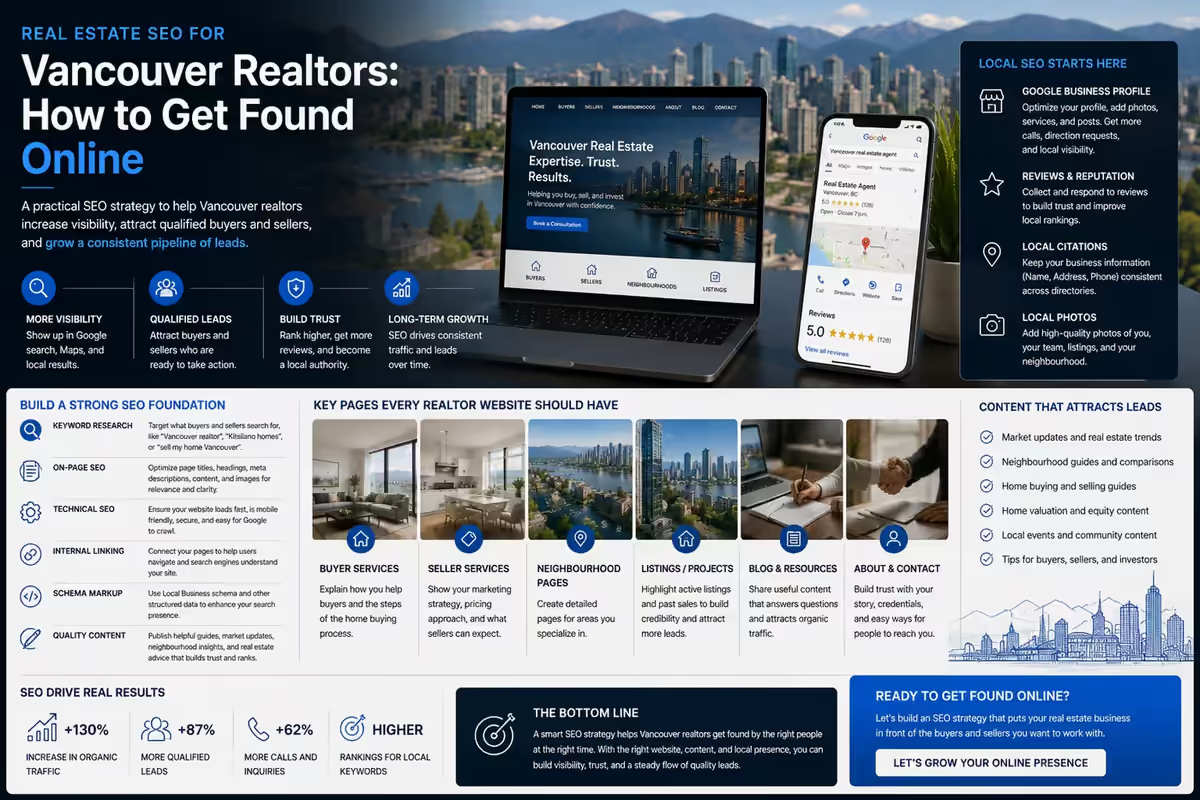
Real estate SEO in Vancouver is about making your website easier to find when buyers, sellers, investors, and homeowners search for real estate information online.
For Vancouver realtors, this matters because search behaviour often starts before someone is ready to call an agent. A homeowner may search for how to sell a condo in Vancouver. A buyer may compare neighbourhoods. An investor may research pre-sale opportunities. A family may search for townhomes near parks or schools. A seller may look for examples of how agents market listings before choosing who to contact.
If your website only exists as a digital business card, it will not capture much of that demand.
SEO helps turn your website into an owned marketing channel. Unlike social media, where content disappears quickly, SEO content can keep working over time when it is useful, well structured, locally relevant, and connected to clear conversion paths.
SEO does not guarantee rankings, traffic, leads, or clients. Search results depend on competition, site quality, content usefulness, authority, technical performance, and many other factors. But a focused SEO strategy can improve the chance that your real estate brand appears when the right people are searching.
Quick Answer
Real estate SEO for Vancouver realtors means optimizing your website, Google Business Profile, service pages, neighbourhood content, blog posts, internal links, technical structure, and local signals so buyers and sellers can find you through Google Search and Google Maps. The goal is not only more traffic. The goal is more relevant visibility from people who are already researching real estate decisions.
What Real Estate SEO Actually Means
Real estate SEO is the process of improving your online presence so search engines and users can understand who you help, where you work, what services you offer, and why your content is useful.
For a Vancouver realtor, SEO can include:
- Website structure
- Service pages
- Neighbourhood pages
- Blog content
- Listing pages
- Project pages
- Google Business Profile
- Local citations
- Reviews
- Internal linking
- Image optimization
- Video optimization
- Technical SEO
- Page speed
- Structured data
- Conversion tracking
The strongest SEO strategies are not built around keyword stuffing. They are built around search intent.
A person searching “Vancouver realtor” may want an agent. A person searching “how to sell a condo in Vancouver” may need seller education. A person searching “best neighbourhoods in Vancouver for families” may be early in the buyer journey. A person searching “real estate photography Vancouver” may be a realtor looking for listing media.
Each search has a different intent. Your website should have pages that match those intents.
SEO Is Not a Shortcut
SEO should be treated as a long-term visibility system, not a quick trick.
Google’s own guidance emphasizes creating helpful, reliable, people-first content rather than content made primarily to manipulate rankings. For realtors, that means useful local expertise matters more than thin pages repeating the same keyword.
A strong real estate SEO strategy should provide actual value:
- Helpful buyer guidance
- Clear seller education
- Local neighbourhood insight
- Strong service explanations
- Useful market context
- Transparent process information
- Real examples of marketing work
- Clear next steps for visitors
This is especially important in real estate because trust matters. A buyer or seller is unlikely to contact an agent based on one keyword alone. They need to see competence, clarity, local understanding, and proof of professionalism.
SEO helps create the first touchpoint. The website has to earn the next one.
The Main SEO Opportunity for Vancouver Realtors
Most realtor websites are underdeveloped.
They often have a homepage, an about page, a contact page, an IDX search, and a few generic service descriptions. That structure may not be enough to compete for meaningful local search visibility.
The opportunity is to build a site around specific search intent.
For example, instead of only having one general page about real estate services, a Vancouver realtor can create pages for:
- Selling a home in Vancouver
- Buying a home in Vancouver
- Selling a condo in Vancouver
- Vancouver neighbourhood guides
- First-time buyer guidance
- Downsizing guidance
- Pre-sale condo guidance
- Luxury listing marketing
- Real estate market updates
- Listing marketing strategy
- Recently marketed properties
- Real estate photography and media examples
Each page should serve a clear purpose. It should answer the user’s question and give them a logical next step.
This is how SEO becomes part of a real business funnel.
Local SEO: Showing Up in Vancouver Search Results
Local SEO is the part of SEO focused on location-based searches.
For Vancouver realtors, this may include searches like:
- Vancouver realtor
- real estate agent Vancouver
- Vancouver listing agent
- condo realtor Vancouver
- North Vancouver realtor
- West Vancouver luxury realtor
- Burnaby real estate agent
- Vancouver real estate marketing
Local SEO is influenced by your website, Google Business Profile, reviews, local relevance, links, citations, and overall digital footprint.
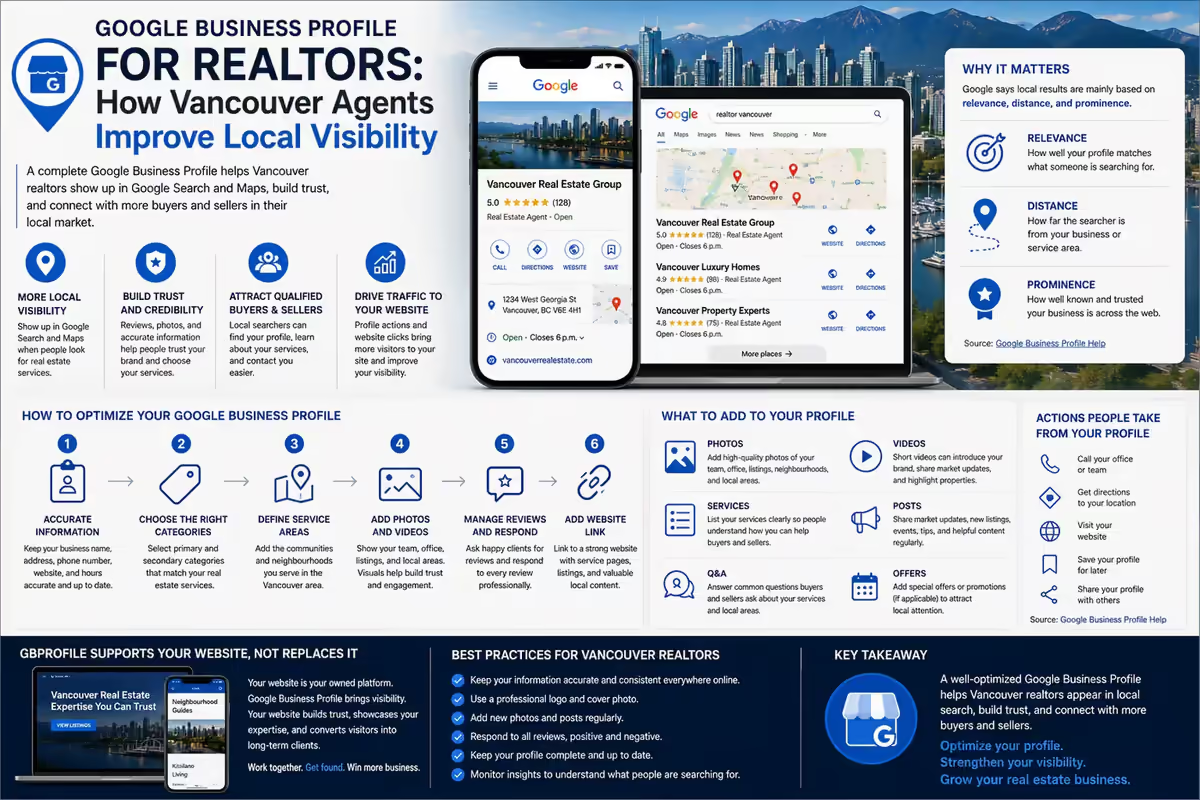
Google’s local ranking guidance says local results are mainly based on relevance, distance, and prominence. It also recommends keeping Business Profile information complete and accurate, verifying the business, keeping hours updated, responding to reviews, and adding photos and videos.
For realtors, this means local SEO is not only about your website. Your Google Business Profile also matters.
Google Business Profile for Realtors
A complete Google Business Profile can help realtors and brokerages appear more professionally in local search and Google Maps.
Your profile should be accurate and maintained. It should not be treated as a one-time setup task.
A strong profile should include:
- Correct business name
- Accurate contact information
- Website link
- Service areas
- Business category
- Business description
- Photos
- Videos where appropriate
- Posts or updates
- Reviews
- Review responses
- Current hours or appointment details where relevant
Google also provides a Profile Strength tool to help businesses identify missing information and improve profile completeness. For realtors, that is a useful reminder that a profile with thin information can weaken local trust.
A Google Business Profile does not replace a website. It supports it.
The website gives you depth. The profile supports local discovery and credibility.
Build Service Pages Around Buyer and Seller Intent
A strong realtor website needs dedicated service pages.
A single homepage cannot rank for every important search and cannot answer every type of client need. Sellers, buyers, investors, developers, and relocation clients all have different questions.
Useful service pages may include:
- Sell your home in Vancouver
- Buy a home in Vancouver
- Sell a condo in Vancouver
- Vancouver listing marketing
- Luxury real estate marketing
- Pre-sale and development marketing
- First-time buyer support
- Relocation support
- Investment property guidance
Each page should be specific.
A seller page should explain your selling process, listing preparation, pricing approach, media strategy, marketing channels, showing strategy, and contact path.
A buyer page should explain search strategy, neighbourhood guidance, offer process, due diligence, financing coordination, and support.
A listing marketing page should show how you present homes through photography, videography, aerial production, 2D floor plans, 3D models, Matterport, social content, paid ads, and email campaigns.
The more specific the page, the easier it is for users and search engines to understand its purpose.
Neighbourhood Pages Are a Major SEO Asset
Neighbourhood pages can be one of the strongest SEO opportunities for Vancouver realtors.
Many people search by neighbourhood before they search by agent. They want to understand lifestyle, housing types, commute, amenities, property styles, schools, walkability, parks, transit, and local character.
A useful neighbourhood page should go beyond generic copy.
It can include:
- Housing types
- Buyer profiles
- Lifestyle fit
- Local amenities
- Parks and recreation
- Transit access
- Schools or education context where appropriate
- Condo vs detached patterns
- Local photography or video
- Market positioning
- Common buyer questions
- Internal links to related guides
- Clear CTA for buyers or sellers
Neighbourhood content should be written for people who are making decisions. Avoid vague phrases like “great area” unless you explain why.
Examples of stronger local content topics:
- Buying a condo in Yaletown
- What sellers should know about Mount Pleasant homes
- Kitsilano real estate lifestyle guide
- North Vancouver family neighbourhoods
- Coal Harbour condo marketing strategy
- West Vancouver luxury listing media
- Burnaby townhome buyer guide
This kind of content builds topical and local relevance.
Blog Content Should Answer Real Questions
A real estate blog should not exist only because SEO tools say “publish content.”
It should answer real questions your audience asks before they become clients.
For Vancouver realtors, useful blog topics may include:
- How to prepare a home before listing
- How to choose a neighbourhood
- What buyers should know about Vancouver condos
- How listing photography affects online perception
- How video helps market luxury properties
- What sellers should ask before choosing a realtor
- How to market a pre-sale development
- How to compare townhome layouts
- What a strong listing campaign includes
- How to understand real estate media packages
This is where your existing blog cluster helps.
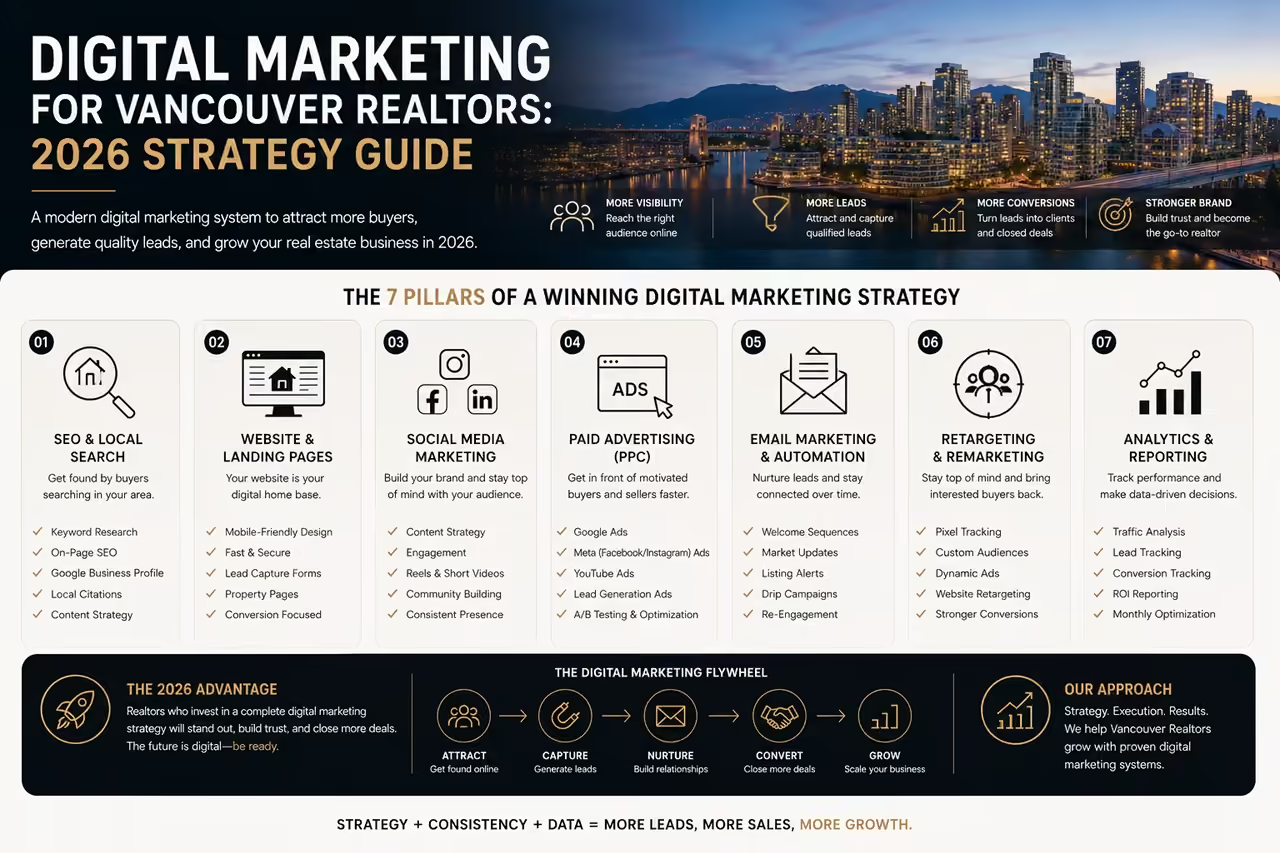
For example, a realtor or brokerage researching broader online growth can read our guide on digital marketing for Vancouver realtors, then move into more specific topics like listing media, photography, video, and local SEO.
The blog should not be random. It should build a content cluster.
Content Clusters Help Build Topical Authority
A content cluster is a group of related pages that support one broader topic.
For example, your real estate marketing cluster may include:
- Digital marketing for Vancouver realtors
- Real estate SEO for Vancouver realtors
- Listing marketing guide
- Real estate photography
- Real estate videography
- Aerial production
- Floor plans and Matterport
- Paid ads for real estate
- Google Business Profile
- Website design for realtors
Each post should link to related posts when it helps the reader.
Internal links help users move through the site. They also help search engines understand how topics connect.
For this SEO article, relevant internal links include:
- digital marketing for Vancouver realtors
- how to market real estate listings in Vancouver
- the best real estate media for Vancouver homes in 2026
A strong content cluster makes the website feel deeper, more useful, and more connected.
SEO and Listing Media Should Work Together
SEO is not only text. It also involves images, video, page structure, and user experience.
For real estate websites, listing media can support SEO when it is used correctly.
Professional photography, videography, aerial production, Matterport, floor plans, and project examples can make a page more useful. But those assets need context. Search engines do not evaluate a beautiful image the way a human does. The surrounding page copy, file naming, alt text, headings, metadata, and structure all help explain the content.
For example, a project page should not only show photos. It should explain:
- What type of property it was
- Where it was located
- What media was created
- What marketing goal the media supported
- Which services were involved
- What the viewer should notice
- How similar clients can inquire
This turns visual work into searchable content.
For real estate media strategy, see our guide on the best real estate media for Vancouver homes in 2026.
Image SEO for Realtor Websites
Images matter in real estate SEO because property marketing is visual.
Google’s image SEO documentation explains that image discoverability is supported by factors such as relevant page context, image placement, useful alt text, and optimization of image landing pages.
For Vancouver realtor websites, image SEO should include:
- Descriptive image filenames
- Useful alt text
- Relevant surrounding text
- Compressed images
- Modern formats where appropriate
- Fast-loading pages
- Correct image dimensions
- Clear page headings
- Captions where useful
- Original images where possible
Bad image handling can weaken performance. Large uncompressed files can slow the site. Missing alt text can reduce accessibility and context. Generic filenames like IMG_4032.jpg are less useful than descriptive names.
A better image filename might be:
vancouver-condo-real-estate-photography-yale-town-living-room.avif