Before the Drone Leaves the Bag
This guide assumes the decision is already made. If you are still weighing whether a listing needs aerial at all, start with when aerial photography is worth including and come back once the shoot is booked.
What follows is the preparation work: what to put on the shot list, how to clear a strata or shared building, what conditions to book for, and what has to be specified so the images match the rest of the gallery.
Most disappointing aerial sets are not the result of a bad pilot. They are the result of a shoot that was never planned. The drone arrives, the operator captures whatever looks good from 60 metres, and the realtor receives twelve dramatic images that do not answer a single question a buyer was asking.
The fix is unglamorous. Decide what each frame is for before anyone opens a case.
Give Every Shot a Job
The most effective drone photography is not a random collection of elevated images. It is a planned sequence that supports the listing story.
Before the shoot, the realtor and production team should agree on what the aerial perspective is there to prove. Usually it is one or two of these:
- Lot size
- Views
- Proximity to amenities
- Outdoor living areas
- Architecture
- Privacy
- Waterfront or park access
- A stronger hero image
- Social media content
Write the reason down. It becomes the filter for the edit later: if a frame does not clarify the property, support the story, or improve the marketing assets, it does not belong in the final gallery.
This single step is what separates a planned set from filler.
The Six Shots That Cover Most Vancouver Listings
The exact list depends on the property, but six categories cover most listings. Treat this as the default and cut what does not apply.
Establishing Images
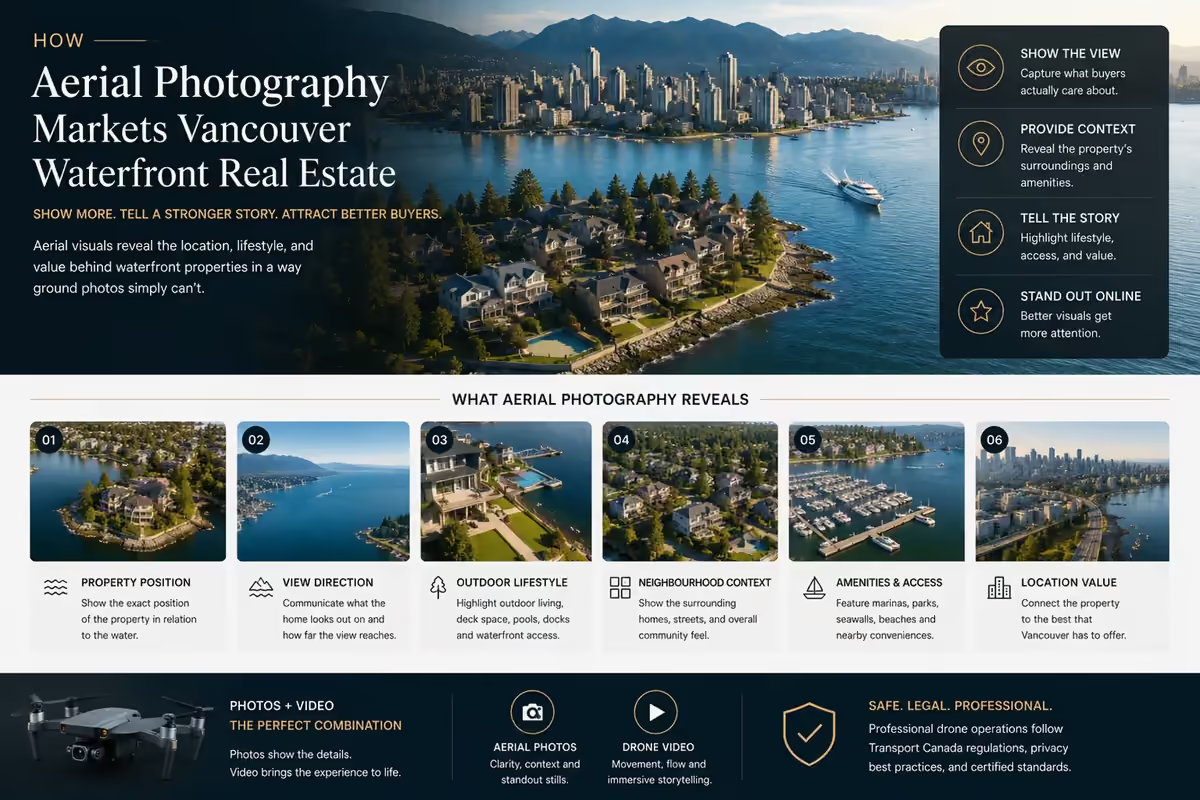
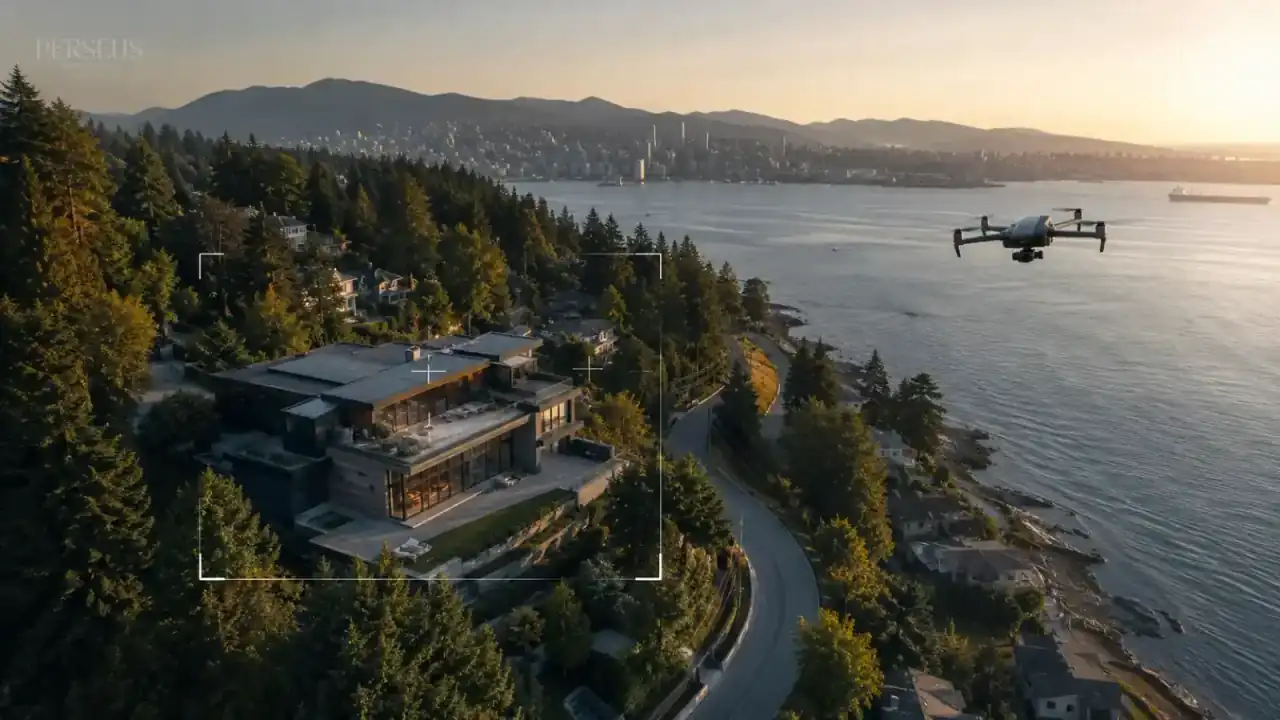
An establishing image shows the property in context: the home, the lot, the street, and surrounding neighbourhood features. It works well at the beginning of a gallery or as a social media asset.
The purpose is orientation. It helps buyers understand where the property sits.
Elevated Exterior Angles
Elevated exterior angles show the front elevation, landscaping, driveway, entry, roofline, and exterior design more clearly than ground-level images.
These are the shots to prioritise when curb appeal, architecture, or exterior condition matters to the listing story.
Top-Down Property Context
Top-down images show lot shape, outdoor areas, roof layout, yard size, and the relationship between different property zones.
Use them carefully. A top-down image is useful for scale but is rarely the most emotionally engaging frame. It works best when it explains something a buyer would otherwise have to guess at.
Outdoor Living Areas
Decks, patios, pools, gardens, lawns, rooftop spaces, and balconies become more understandable from above. Aerial framing shows how these spaces connect to the home and how usable they feel.
Prioritise this when outdoor space is a major selling feature.
View and Location Images
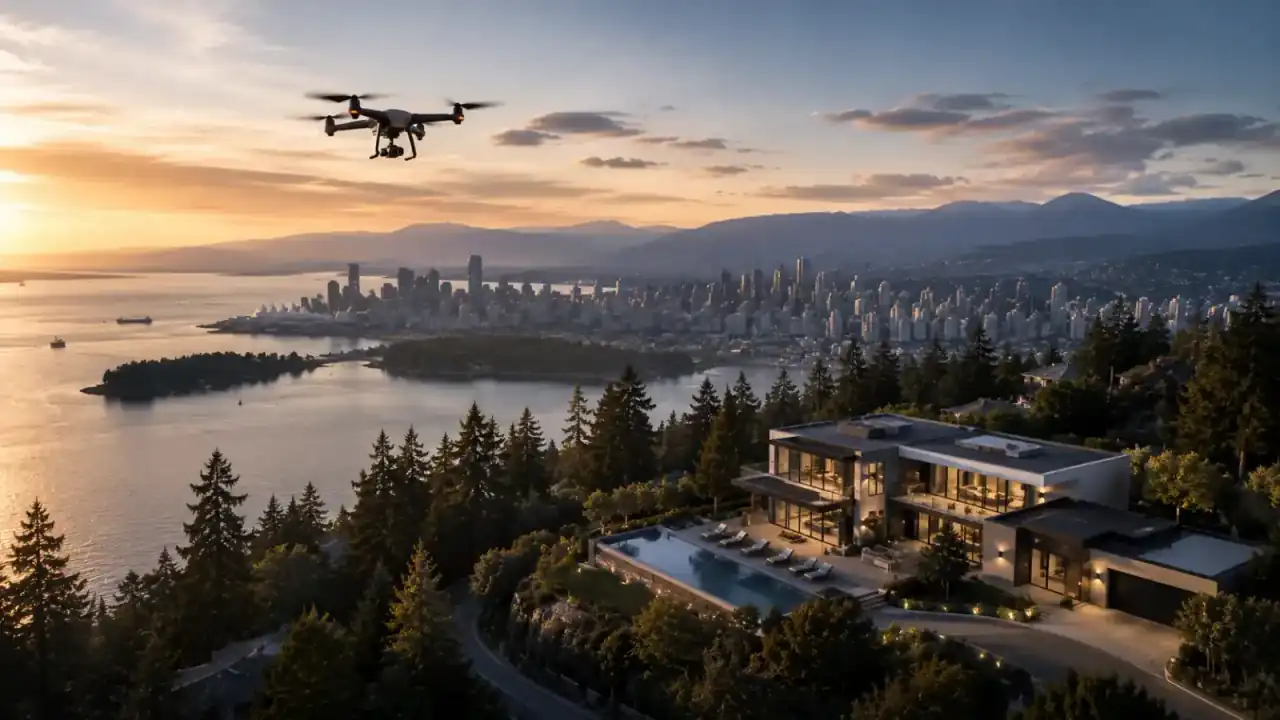
If the property has mountain, ocean, skyline, park, or neighbourhood views, aerial framing can show the view in context.
The goal is not a scenic image. The goal is to show how that view relates to the property: direction, openness, and what the buyer would actually see.
Neighbourhood Context
Neighbourhood images help when location is part of the property value: nearby parks, trails, waterfront access, walkable areas, or urban convenience.
Be selective. Too many neighbourhood frames distract from the property itself.
Permissions for Condos, Strata, and Shared Spaces
This is the step most likely to cost you a shoot day, and the one most often skipped.
Drone photography is more complex for condos, townhomes, strata properties, and shared buildings. Even when drone operation is legally possible, the production team may still need to work around property access, building rules, privacy, shared amenities, and practical flight conditions. Do not assume that aerial production around a building is automatically straightforward.
Before scheduling, confirm:
- Building or strata restrictions
- Access to common areas
- Whether exterior amenities can be photographed
- Privacy concerns around neighbouring units
- Safe takeoff and landing areas
- Whether building management needs advance notice
- Whether alternative ground-level or elevated shots may be more appropriate
Clearing these in advance avoids delays and reduces the chance of problems on shoot day.
For some condo listings the answer will be that aerial is not necessary. If the unit's value is mainly interior layout, finishes, or amenities, standard photography and video may serve it better. If the value is tied to views, location, or building context, aerial media makes more sense.
Booking the Right Conditions
Aerial images are heavily influenced by weather, light, visibility, and timing, more so than interior work, where lighting is controlled.
Soft light usually creates cleaner exterior images. Harsh midday sun creates strong shadows and makes some angles less flattering. Poor weather reduces visibility and weakens views. Wind can make aerial production impractical outright.
For Vancouver properties, weather planning matters. Cloud cover, rain, haze, and seasonal lighting all affect the final images.
A booking decision should account for:
- Time of day
- Direction of light
- View visibility
- Wind conditions
- Rain forecast
- Exterior readiness
- Traffic and neighbourhood activity
- Whether twilight or golden-hour visuals are worth planning
The goal is not to wait for perfect conditions. It is to choose conditions that support the property's strongest features.
A view property needs clear visibility. A home with strong landscaping needs soft exterior light. A listing with architectural detail benefits from controlled shadows and clean angles. Book accordingly, and agree a fallback date before the first one is lost.
Safety, Compliance, and Airspace Planning
Aerial production involves more than creative shot selection. It requires safe operation, planning, airspace awareness, and compliance with current rules.
In Canada, Transport Canada provides official guidance on drone safety, registration, pilot certification, operation categories, and where drones can fly. Because rules can change and depend on the operation, realtors should work with qualified operators and confirm requirements before aerial production is planned.
For a real estate shoot, the production team should consider:
- Whether drone operation is appropriate for the location
- Current airspace conditions
- Property access
- Nearby people, roads, buildings, airports, or heliports
- Weather and visibility
- Privacy considerations
- Building, strata, or property permissions where relevant
- Whether the planned shots can be captured safely
- Backup options if conditions are not suitable
This matters in Vancouver because many properties sit near dense neighbourhoods, controlled airspace, waterfront areas, high-rises, traffic, or shared residential buildings.
A strong plan protects the seller, the agent, the production team, and the people around the property.
What to Specify Instead of Gear Names
It is tempting to brief a shoot around specific drone models. Equipment is the wrong starting point.
Specify production requirements instead:
- Image quality
- Reliable stabilization
- Ability to capture sharp stills
- Safe operation features
- Battery planning
- Appropriate lens and field of view
- Editing flexibility
- Compliance with the operation type
- Ability to produce both stills and short clips
- Suitability for the location and property
A drone is one part of the process. Planning, composition, timing, safety, and editing have a far larger effect on the result.
The practical takeaway for Vancouver realtors: do not buy drone visuals as equipment. Buy them as a marketing deliverable, and specify the deliverable.
Capture Short Video Clips in the Same Window
Even when the main deliverable is photography, capture short drone video clips during the same production window. Adding them later means paying for a second call-out.
Aerial stills serve MLS, websites, brochures, and listing galleries. Short clips serve social media, open house promotion, YouTube Shorts, Instagram Reels, TikTok, email marketing, and property teasers.
A listing can use aerial photography for the formal gallery, then use short clips to create movement across social platforms, which is what keeps a listing visible beyond launch day.
See Aerial Perspective in Motion
Drone photography gives buyers still-frame context. Drone videography adds movement, pacing, and reveal. When the two are planned together, the listing feels more complete across both MLS and social platforms.
Aerial content should always support the property's strongest story. The best drone visuals show scale, setting, and context without distracting from the home itself.
Editing So Aerial Matches the Rest of the Gallery
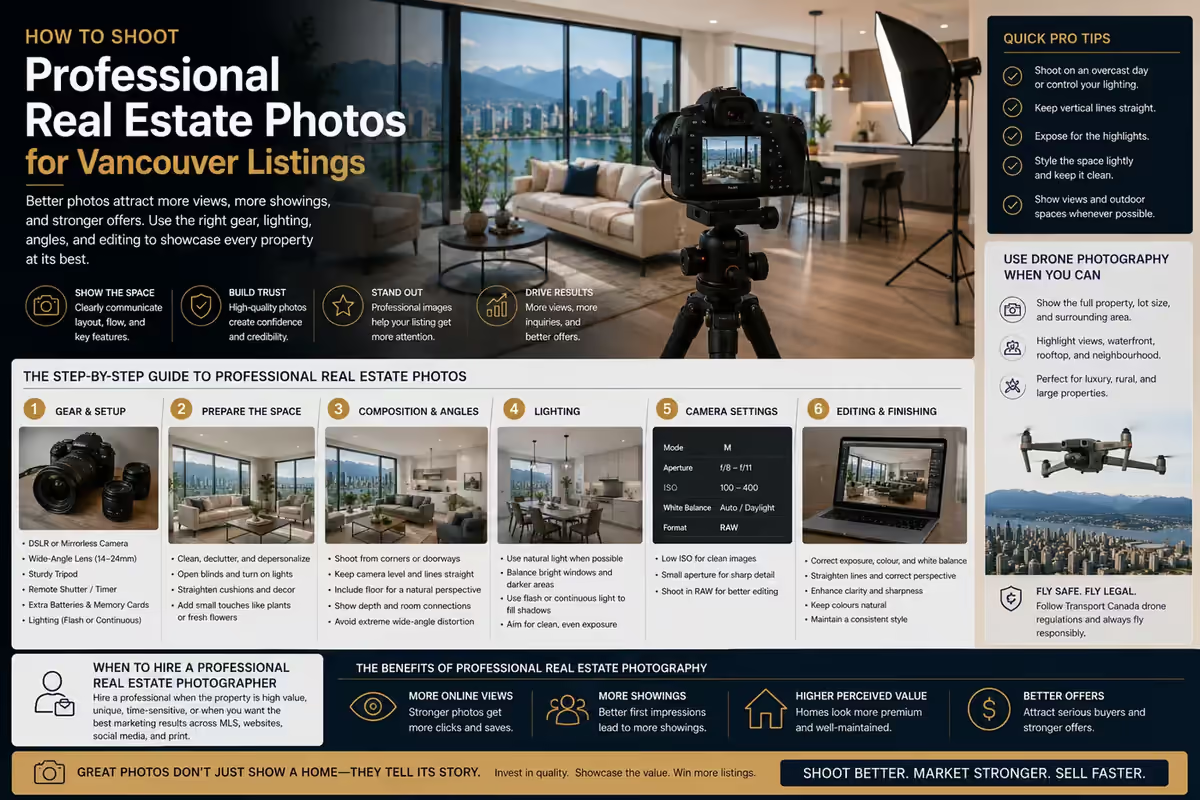
Editing matters because aerial photos have to sit beside interior work. If the drone images look overprocessed, too dark, too saturated, or visually different from the interior gallery, the listing feels inconsistent, and buyers read inconsistency as carelessness.
Good editing improves clarity without making the property look unreal. Specify:
- Exposure balance
- Colour consistency
- Straight horizons
- Clean composition
- Natural contrast
- View clarity
- Image sharpness
- Cropping for web, MLS, and social media
Aerial images should feel like part of the same campaign as the interior photography, exterior photography, and video. Ask for the aerial set to be graded against the interior set, not in isolation.
Where the Stills Get Used After the Shoot
Plan the deliverable list before the shoot so the right crops exist when you need them.
A well-planned aerial set can carry:
- Listing launch posts
- Open house reminders
- Neighbourhood highlight posts
- Instagram carousel covers
- Facebook listing posts
- Email banners
- Website hero images
- Paid ad creative
- Seller presentation examples
Ask for the crops up front. Re-cropping a 16:9 hero into a vertical story after delivery usually means losing the composition that made the frame work.
Mistakes That Show Up on Shoot Day
Most of these are planning failures that only become visible once the images are delivered:
- Capturing too many generic overhead shots
- Showing surrounding areas that weaken the property story
- Ignoring lighting and weather
- Using distorted or poorly composed images
- Making the property difficult to identify in the frame
- Overediting skies, views, or colours
- Failing to match drone images with the rest of the photo gallery
- Ignoring permissions or safety planning
- Treating aerial production as a last-minute add-on
The best aerial media feels intentional. A clean, useful frame beats a dramatic one that does not support the listing.
How Perseus Creative Studio Helps Vancouver Realtors With Drone Photography
Perseus Creative Studio helps Vancouver real estate agents and brokerages create listing media that supports modern property marketing.
Our aerial production process starts with the plan: what the aerial perspective needs to prove, what the building or strata will allow, and what conditions the shots require. If aerial media adds value, we plan it into the broader campaign.
That campaign may include real estate photography, videography, aerial production, editing, and short-form social content. The goal is assets that work across MLS, websites, social media, email campaigns, open house promotion, and seller presentations.
A downtown condo, North Vancouver view property, West Vancouver luxury listing, and East Vancouver family home each need a different shot list. Planning is what makes the difference.
Explore our real estate photography, videography, and aerial production services, or contact Perseus Creative Studio to plan aerial media for your next Vancouver listing.
Key Takeaway
A drone shoot succeeds or fails before the drone takes off.
Agree what each frame is for, clear strata and building permissions early, book conditions that suit the property's strongest feature, capture stills and clips in one window, and specify the deliverable crops up front. Brief the edit against the interior gallery so the two sets match.
Whether a listing needs aerial at all is a separate question, answered in our guide to when aerial photography is worth including.