Why Meta Ads can waste money fast
Meta Ads can be useful for Vancouver Realtors, but only when the campaign has a clear job.
Too many real estate ads are launched with a weak structure: a boosted post, a broad campaign setup, a few listing photos, no landing page strategy, no conversion tracking, and no follow-up system. That kind of campaign may create impressions, likes, or clicks, but it often fails to create qualified conversations.
For Realtors and brokerages, the problem is not that Facebook and Instagram ads do not work. The problem is that many campaigns are built around attention instead of intent.
A listing campaign, seller lead campaign, open house promotion, pre-sale registration campaign, and retargeting campaign should not use the same message, creative, objective, or landing page.
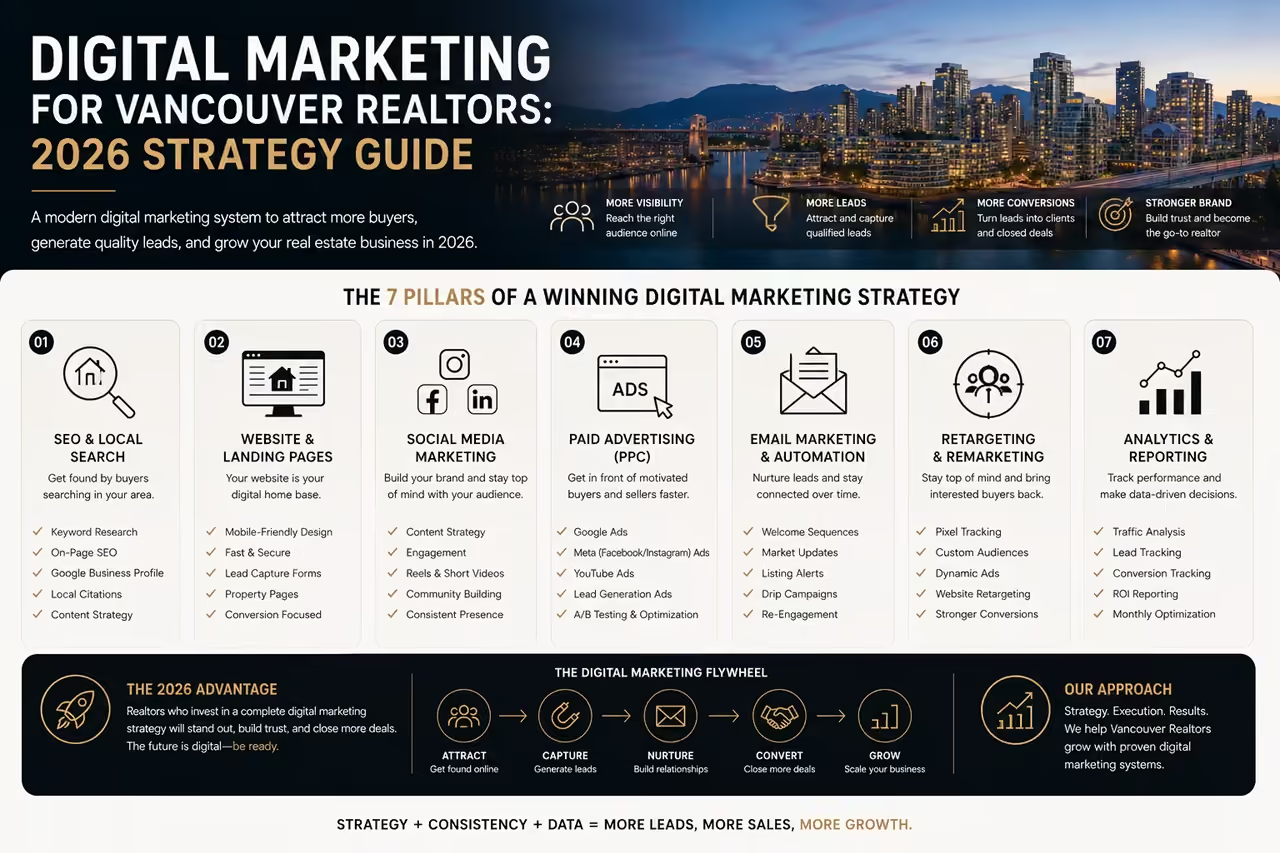
Meta Ads for real estate work best when paid social is treated as part of a full marketing system: strong media, clear offer, compliant campaign setup, focused landing page, tracking, and timely follow-up.
The goal is not to spend more. The goal is to make each dollar point at a specific business outcome.
Meta Ads do not guarantee leads, showings, listing appointments, or sales. Pricing, property quality, market conditions, campaign creative, audience size, landing page quality, and follow-up all matter. But with the right structure, Meta Ads can help Vancouver Realtors extend listing visibility, re-engage warm audiences, and support better campaign distribution.
Quick answer
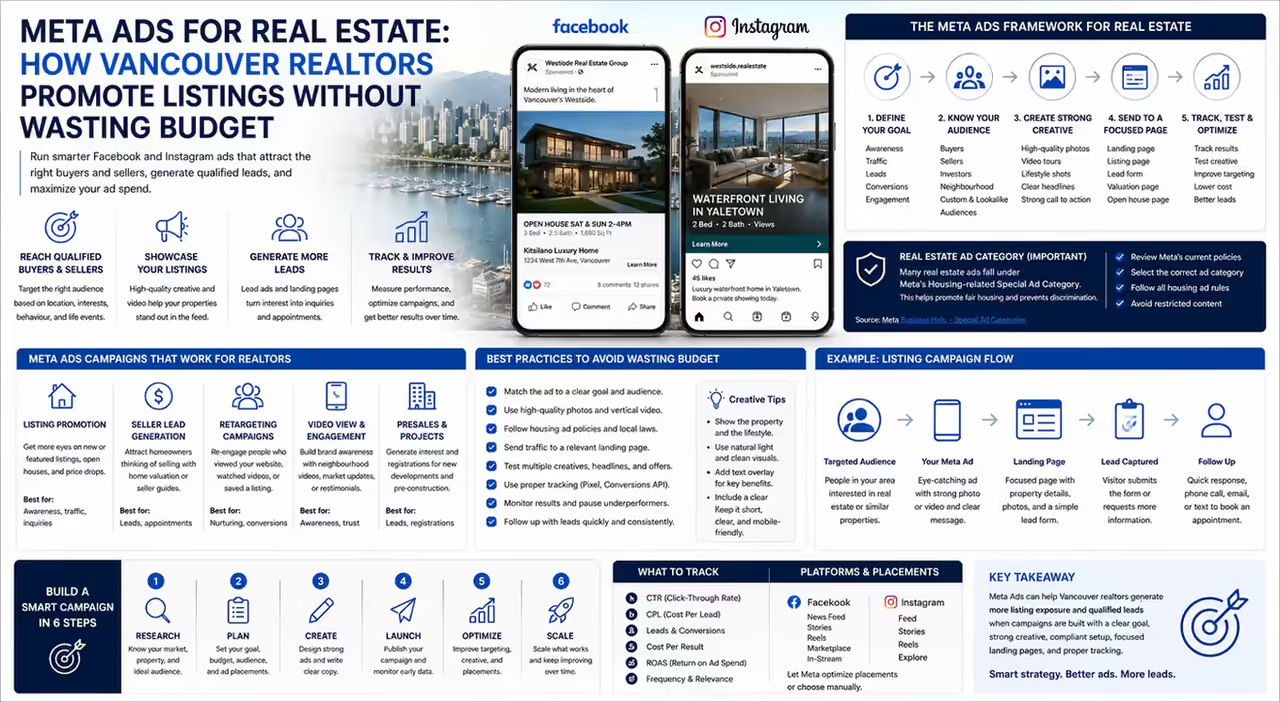
Meta Ads for real estate help Vancouver Realtors promote listings, generate seller interest, distribute videos, retarget engaged audiences, and drive traffic to landing pages.
To avoid wasting budget, the campaign needs a clear goal, strong creative, compliant housing ad setup, focused landing page or lead form, conversion tracking, and a follow-up process.
The strongest campaigns are not built around boosting random posts. They are built around one campaign objective, one audience situation, one offer, and one clear next step.
What Meta Ads actually do for Realtors
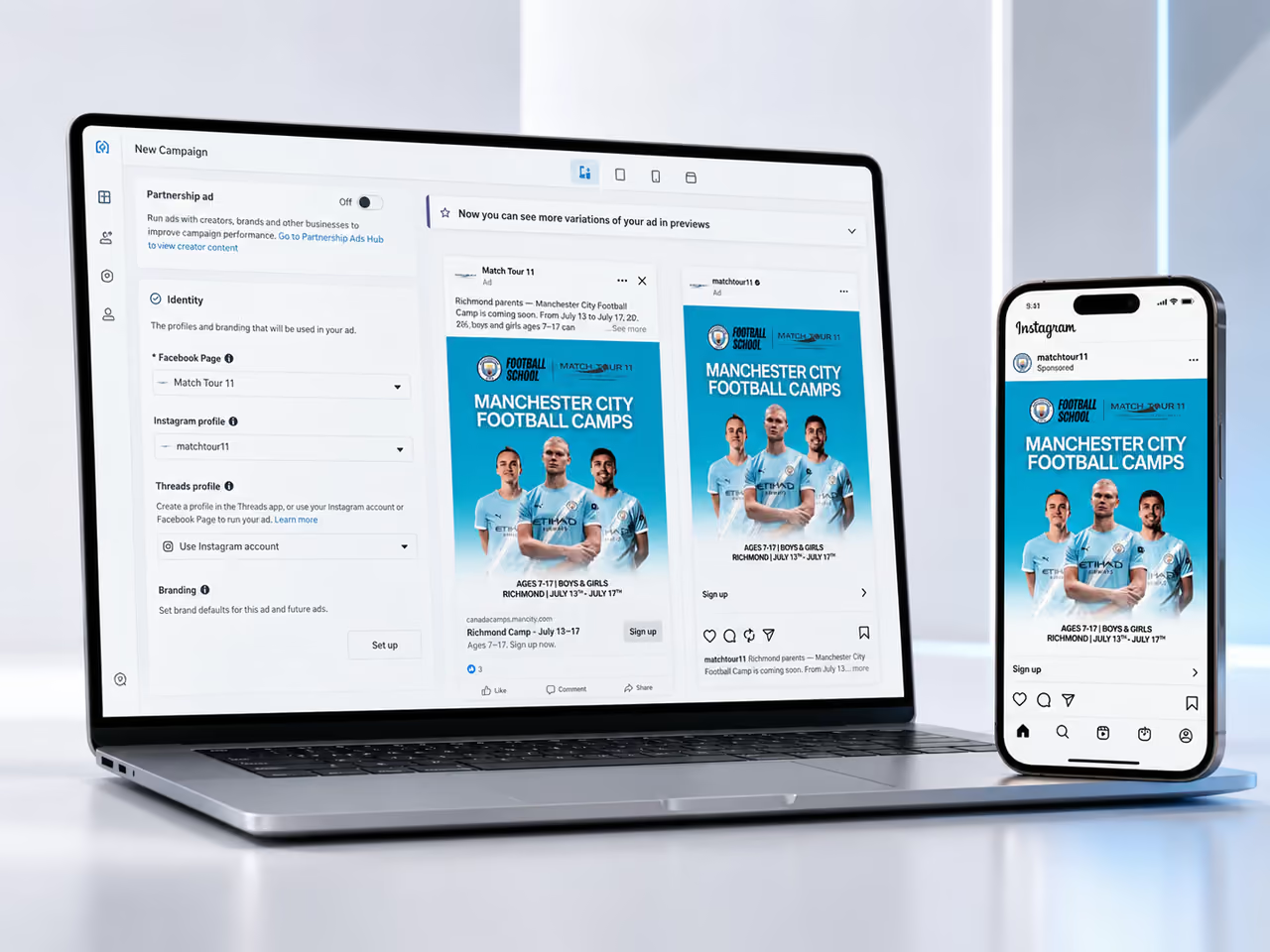
Meta Ads are paid placements across Facebook, Instagram, Messenger, Reels, Stories, and other Meta inventory depending on campaign settings.
For real estate agents, Meta Ads can help distribute listing content, promote open houses, build seller awareness, attract pre-sale registrations, retarget website visitors, and keep an agent or brokerage visible to a local audience.
The key is choosing the right use case.
| Campaign type | Best use | Main risk |
|---|---|---|
| Listing promotion | Increase visibility for a property | Clicks without qualified interest |
| Open house campaign | Remind local audiences before the event | Too little lead time |
| Seller lead campaign | Promote a valuation or consultation offer | Weak offer or generic page |
| Video campaign | Build awareness and retarget viewers | Views with no next step |
| Retargeting campaign | Re-engage warm visitors | Poor audience setup |
| Pre-sale campaign | Register project interest | Forms that collect low-quality leads |
| Brand awareness campaign | Keep the agent visible | Harder to measure direct ROI |
Meta Ads are not one strategy. They are a distribution channel. The strategy comes from the campaign design.
A Realtor who boosts a listing post and hopes for leads is using Meta as a visibility tool. A Realtor who builds listing creative, sends traffic to a property landing page, retargets video viewers, tracks inquiries, and follows up with relevant messaging is using Meta as a campaign system.
That difference matters.
Start with the campaign goal
Before choosing an audience or uploading creative, define the goal.
A vague goal sounds like this:
We want more exposure.A useful campaign goal sounds like this:
We want to drive qualified showing inquiries for this Kitsilano condo over the next 10 days.Or:
We want East Vancouver homeowners to request a listing strategy consultation.Or:
We want to retarget people who watched our listing video and send them to the full property landing page.Meta Ads work better when every decision connects back to the goal.
The objective, creative, budget, landing page, form, and follow-up should all support the same outcome. If the campaign goal is listing awareness, video views may make sense. If the goal is seller leads, a lead form or landing page conversion path may be more appropriate. If the goal is open house attendance, the ad copy and landing page should make date, time, property details, and registration simple.
A campaign without a defined goal is difficult to measure. It may generate activity, but activity is not the same as progress.
Meta Ads and housing-related rules
Real estate advertising requires care because many housing-related ads fall under Meta’s Special Ad Category rules.
This matters for Realtors because ads about listings, housing opportunities, property services, mortgages, rentals, or real estate-related offers may be treated differently from ordinary consumer ads.
Meta’s Special Ad Category rules can affect how campaigns are declared, how audiences are built, and which targeting options are available. The exact setup can change over time, so Realtors should review Meta’s current documentation before launching housing-related campaigns.
For real estate advertising, compliance is not a small technical detail. It is part of the campaign strategy.
This does not mean Realtors cannot advertise. It means campaigns should be built with the correct category, careful copy, and realistic expectations around targeting.
Avoid trying to work around platform rules. That can create account risk and weaken the campaign long term. A stronger approach is to build campaigns around clear creative, useful offers, broad enough delivery, compliant setup, and better follow-up.
In practice, this means the campaign should rely less on narrow targeting tricks and more on the quality of the ad, the offer, and the destination page.
Strong creative matters more than narrow targeting
For many Realtors, the instinct is to focus first on audience targeting.
Targeting matters, but paid social performance is heavily shaped by creative. On Instagram and Facebook, people are not usually searching for a Realtor. They are scrolling, watching, comparing, and reacting quickly.
Your ad has to earn attention before it can create interest.
For real estate, strong creative may include:
- professional listing photography
- short vertical listing videos
- aerial clips where location context matters
- neighbourhood footage
- agent-led educational videos
- before-and-after listing preparation content
- carousel ads showing property features
- simple graphics for seller offers
- short testimonial-style clips
- open house reminder creatives
The creative should match the campaign.
A luxury waterfront listing in Coal Harbour should not use the same creative style as a first-time buyer condo guide for Mount Pleasant. A seller consultation ad should not look like a listing carousel. A pre-sale registration campaign should not feel like a generic brand awareness post.
Creative is not just decoration. It is the message.
For listing campaigns, professional media can significantly improve the perceived quality of the ad. Good photography, video, floor plans, and aerial production make the property easier to understand and more likely to earn attention. For a deeper look at property media, see best real estate media for Vancouver homes.
Listing promotion needs more than a boosted post
Boosting a listing post can create visibility, but it is usually not a complete listing campaign.
A boosted post is often quick and easy. The problem is that quick and easy does not always mean strategic.
A stronger listing campaign should consider:
| Campaign element | Better question |
|---|---|
| Creative | Which image or video best communicates the property’s strongest appeal? |
| Copy | Why should a buyer care about this listing? |
| Landing page | Where does the click go? |
| CTA | What should the visitor do next? |
| Timing | How does the ad support launch, open house, or showing windows? |
| Retargeting | Can engaged viewers be re-engaged? |
| Tracking | Which inquiries came from the campaign? |
For example, a Yaletown condo campaign might use a vertical video for Reels, a carousel highlighting views and amenities, a property landing page with full media, and retargeting for people who watched the video or visited the page.
An East Vancouver detached home campaign might emphasize lot, character, updates, neighbourhood context, school-area considerations where appropriate, floor plan, and open house timing.
The campaign should be built around the property’s actual positioning.
A good listing ad does not only say “new listing.” It explains why the property matters to the right buyer.
Seller lead campaigns need a stronger offer
Many seller lead campaigns use some version of “Find out what your home is worth.”
That can work, but it is also common. Vancouver homeowners have seen many valuation ads. Some will assume the offer is automated, generic, or just a lead capture tactic.
A stronger seller campaign should make the offer more specific and more valuable.
Instead of:
Get your free home valuation.Consider:
Request a Vancouver listing strategy review before you sell.Or:
Get a practical pricing, preparation, and marketing plan for your East Vancouver home.Or:
Thinking of selling your condo in Kitsilano? Start with a focused market and listing preparation review.The difference is that the stronger offer sounds consultative, not automated.
A seller landing page or lead form should explain what the homeowner receives. Does the Realtor review comparable sales? Does the conversation include preparation advice? Does it include photography and video strategy? Does it discuss neighbourhood positioning? Does it help the homeowner understand timing?
Seller leads are not just about collecting contact information. They are about starting a serious conversation with enough trust to continue.
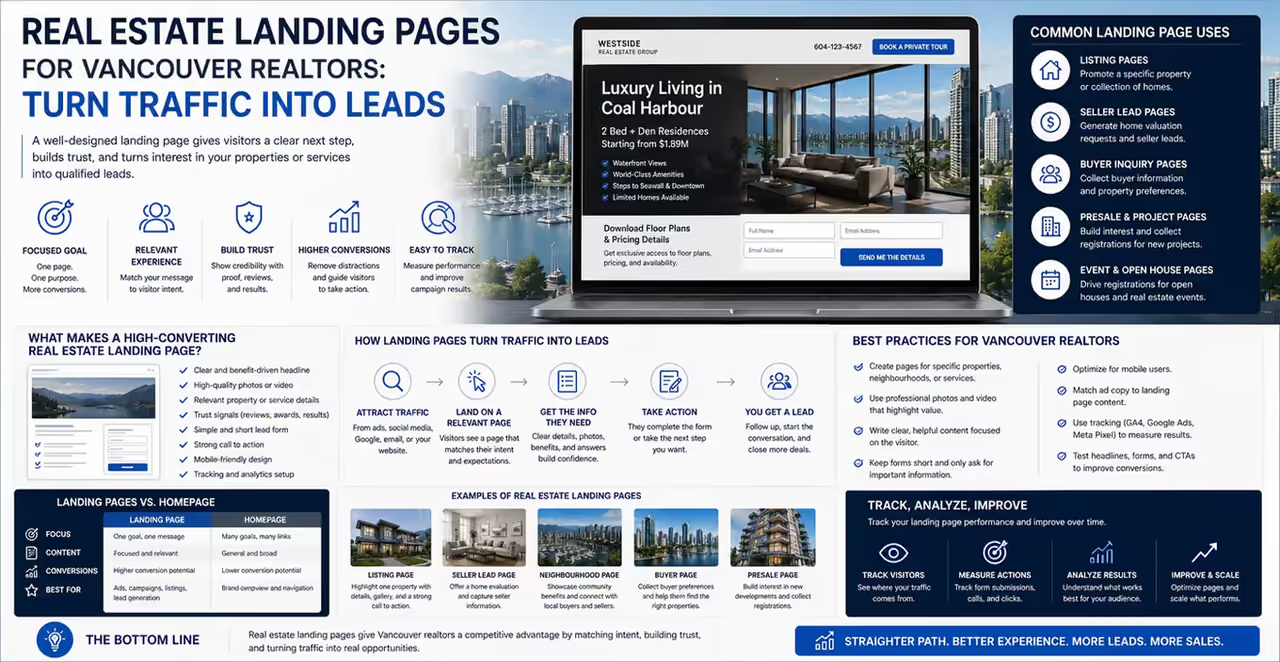
For related campaign structure, see real estate landing pages for Vancouver Realtors.
Lead forms vs landing pages
Meta lead forms can reduce friction because users can submit information without leaving Facebook or Instagram.
That can be useful for simple offers, quick inquiries, event registration, and some seller or buyer campaigns. Meta’s own Advantage+ leads campaigns guidance focuses on simplifying lead generation through automated campaign setup and lead capture tools.
But lower friction can also mean lower intent.
A landing page gives more room for context, visuals, explanation, FAQs, tracking, and stronger qualification. It may produce fewer leads, but those leads may be more informed.
There is no universal answer. The right choice depends on the campaign.
| Option | Strength | Risk |
|---|---|---|
| Meta lead form | Fast submission and low friction | Lower lead quality if the offer is vague |
| Landing page | More context, media, and tracking control | More friction if the page is slow or unclear |
| Messenger or DM flow | Conversational and direct | Harder to scale and track cleanly |
| Call CTA | Useful for urgent inquiries | Not ideal for colder traffic |
For listing campaigns, a landing page is often stronger because buyers need photos, video, floor plan, property details, and neighbourhood context.
For seller lead campaigns, either can work. A lead form may work for a simple consultation offer, while a landing page may work better for a higher-trust strategy review.
For pre-sale campaigns, landing pages often help because users need project details, location context, availability information, and registration clarity.
The key is to match the capture method to the decision being made.
Retargeting is often where Meta Ads become more efficient
Cold audiences may not know the Realtor, listing, brokerage, or offer. Retargeting speaks to people who have already shown some form of interest.
This can include people who:
- visited the website
- viewed a listing landing page
- watched a video
- engaged with Instagram or Facebook content
- opened a lead form but did not submit
- clicked a previous ad
- visited a neighbourhood guide
- interacted with a listing launch campaign
Retargeting works because it continues the conversation.
For example, someone who watched 75% of a listing video may be more likely to click a follow-up ad with the full property landing page. Someone who visited a seller page but did not submit a form may respond to a second ad explaining the listing preparation process. Someone who engaged with a neighbourhood video may be interested in a related buyer guide.
Retargeting does not need to be aggressive. It should feel relevant.
A useful retargeting ad might say:
Still considering selling in Vancouver?

Start with a practical listing strategy review before choosing your launch plan.
Or:
Want the full details on this Mount Pleasant listing?

View the video, floor plan, photo gallery, and showing options.
Retargeting campaigns should also be monitored carefully. Small audiences can fatigue quickly. If the same people see the same ad too often, performance can drop and the brand can feel repetitive.
Meta Advantage+ and automation require good inputs
Meta’s advertising platform has moved heavily toward automation and AI-assisted delivery.
Tools such as Advantage+ Audience allow advertisers to provide audience suggestions while Meta’s system looks for people likely to take action. This can be useful, but it does not remove the need for strategy.
Automation is not a substitute for weak creative, unclear offers, poor landing pages, or slow follow-up.
For Realtors, the practical mindset should be:
Let the platform help with delivery, but give it a strong campaign to deliver.That means using:
- clear campaign objectives
- strong creative variations
- useful landing pages or forms
- accurate conversion tracking
- clean event setup where relevant
- real lead quality feedback
- enough budget and time for learning
- compliant housing category setup
If the campaign sends mixed signals, the platform has less useful information to optimize around.
A seller lead campaign with vague copy, generic creative, and no lead quality feedback will usually be harder to improve than a campaign with a specific offer, relevant creative, and clear follow-up tracking.
Budget should match the campaign stage
Meta Ads budgets should be connected to the campaign goal.
A small budget can support a short listing visibility campaign or retargeting test. A larger budget may be needed for broader seller lead generation, pre-sale registration, or multi-creative testing.
The mistake is not starting small. The mistake is expecting a small, unfocused campaign to produce consistent results.
Budget planning should consider:
| Budget factor | Why it matters |
|---|---|
| Campaign objective | Leads, traffic, video views, and awareness behave differently |
| Audience size | Small retargeting audiences need different budget logic than broad campaigns |
| Creative volume | More creative testing may require more spend |
| Campaign duration | Short campaigns need sharper setup and stronger creative |
| Offer strength | Weak offers waste budget faster |
| Landing page quality | Poor pages reduce conversion efficiency |
| Follow-up speed | Slow response can weaken lead value |
For a listing launch, the budget may be concentrated around the first week of exposure and open house timing.
For seller lead generation, the budget may need a longer testing period because the decision cycle is more complex.
For retargeting, the budget should be controlled so the same audience does not see the same ad too often.
The right budget is not just “more.” It is enough budget for the campaign to learn, test, and produce useful data.
Creative testing should be planned, not random
Testing is one of the main benefits of Meta Ads, but testing only helps when it is structured.
A Realtor might test:
- video vs carousel
- agent-led video vs property-only creative
- listing headline angles
- seller consultation offers
- different first three seconds of a Reel
- neighbourhood-focused copy
- open house reminder copy
- landing page vs lead form
- short form vs longer form
- property feature angle vs lifestyle angle
The goal is not to test everything at once. The goal is to isolate meaningful differences.
For example, a listing campaign could test two creative angles:
Angle 1: Interior and layout
Focus: floor plan, natural light, finishings, usable space

Angle 2: Lifestyle and location
Focus: walkability, neighbourhood, nearby amenities, commute
A seller campaign could test:
Angle 1: Pricing confidence
Focus: understand your property’s market position before listing

Angle 2: Marketing plan
Focus: prepare, photograph, launch, and promote with a clear strategy
Testing should produce decisions. If a creative angle consistently earns better engagement and stronger inquiries, it can inform future campaigns.
Over time, a Realtor can build a creative library that shows what types of messages and visuals perform best for their market.
Landing pages make paid social easier to measure
A Meta campaign should not send every click to a homepage.
A homepage is usually too broad. A landing page continues the specific promise from the ad.
If the ad promotes a listing, the landing page should show that listing. If the ad promotes a seller consultation, the landing page should explain that consultation. If the ad promotes a buyer guide, the page should deliver that guide or explain how to request it.
A good real estate landing page includes:
- clear headline
- relevant visuals
- concise offer explanation
- trust signals
- simple form
- mobile-friendly layout
- clear CTA
- conversion tracking
- FAQ section where useful
Landing pages also make measurement cleaner. It is easier to understand campaign performance when the traffic is sent to a focused destination.
For more detail, read real estate landing pages for Vancouver Realtors.
Follow-up determines whether leads become opportunities
Lead generation does not end when someone submits a form.
For Realtors, follow-up is often where campaign performance is won or lost. A lead from Meta may be early-stage, distracted, or comparing options. The response needs to be fast, relevant, and connected to the offer.
If someone asks about a listing, the follow-up should reference that property and make the next step easy.
If someone requests a seller consultation, the follow-up should explain what the consultation includes and ask for the information needed to prepare.
If someone registers for a buyer guide, the follow-up should offer a useful next step without applying pressure.
A basic follow-up structure could look like this:
1. Confirm the inquiry
2. Reference the exact ad, listing, guide, or offer
3. Provide the next useful detail
4. Ask one clear question
5. Offer a simple booking or reply option
The response should feel human and specific.
A Meta lead should not receive the same generic message as every other inquiry. The more closely the follow-up matches the campaign, the more professional the experience feels.
Track the metrics that actually matter
Meta Ads Manager provides many metrics, but not all of them indicate business value.
Likes, reactions, reach, and impressions can help understand visibility, but they do not prove campaign success.
For real estate campaigns, more useful metrics include:
| Metric | Why it matters |
|---|---|
| Cost per lead | Shows the cost of contact capture |
| Lead quality | Shows whether the inquiries are useful |
| Landing page conversion rate | Shows whether the page supports action |
| Video hold rate | Shows whether creative is earning attention |
| Click-through rate | Shows whether the ad is compelling enough to drive action |
| Cost per landing page view | Shows traffic efficiency |
| Form completion rate | Shows whether the offer and form are aligned |
| Booked consultations | Connects ads to real conversations |
| Showing requests | Useful for listing campaigns |
| Follow-up outcome | Shows whether leads became opportunities |
Lead quality matters more than lead volume.
A campaign that generates 40 low-intent leads may be less valuable than a campaign that generates six serious seller conversations. A listing campaign with fewer clicks but stronger showing inquiries may be better than a high-click campaign that attracts casual browsing.
The campaign should be judged by the business outcome, not only platform activity.
Meta Ads should support the full real estate marketing system
Meta Ads work better when they connect to the rest of the Realtor’s marketing.
A paid social campaign should not sit alone. It should work with listing media, landing pages, SEO, email, website structure, Google Business Profile, and content strategy.
For example, a strong listing campaign might include:
Professional photography
Listing video
Aerial clips
Property landing page
Instagram Reel
Meta listing ads
Retargeting campaign
Email announcement
Open house reminder
Showing request form
A seller lead campaign might include:
Seller strategy landing page
Meta lead campaign
Retargeting ads
Google Business Profile post
Blog article about listing preparation
Email follow-up
Consultation booking flow
A neighbourhood campaign might include:
Neighbourhood guide
Short-form video
Meta awareness campaign
Retargeting audience
Buyer or seller landing page
Email nurture
Website internal links
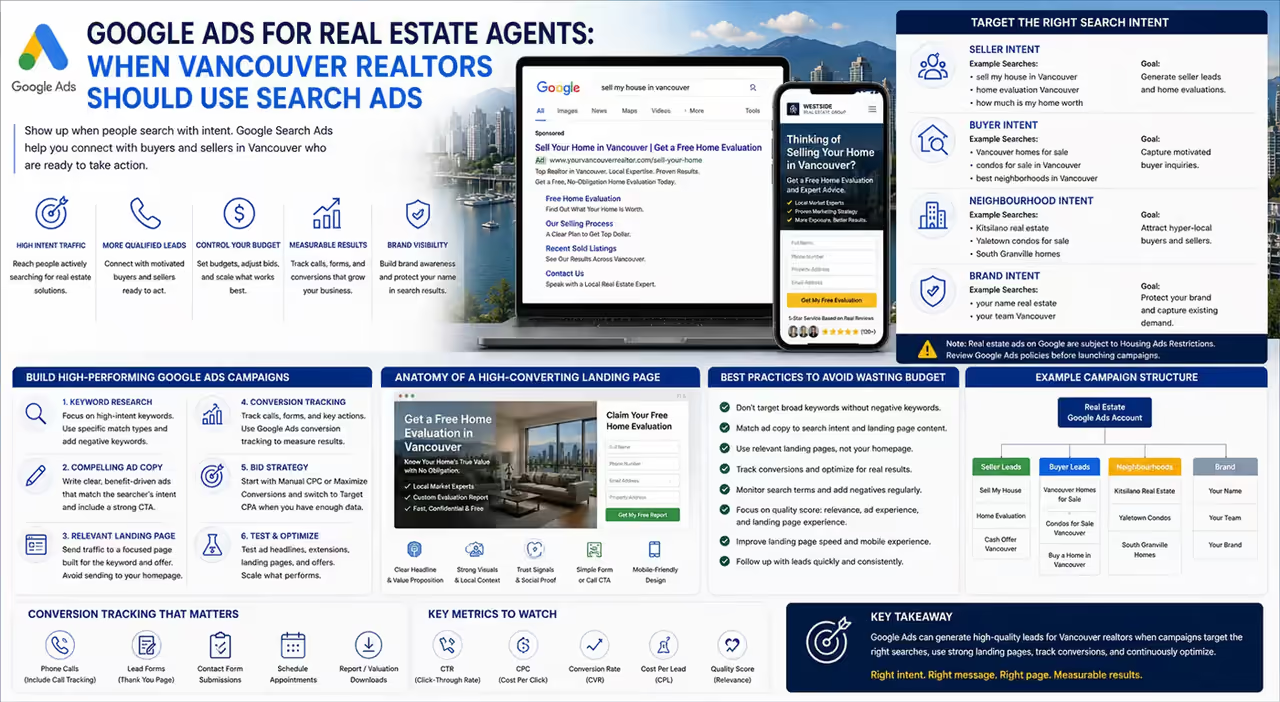
This is why Meta Ads connect naturally with digital marketing for real estate in Vancouver. Paid social is strongest when it supports a larger system.
Common Meta Ads mistakes Realtors should avoid
Many Meta Ads campaigns underperform because of preventable mistakes.
The most common mistake is boosting posts without a campaign plan. Boosting can create reach, but it often lacks the structure needed for serious lead generation or tracking.
Another mistake is using weak creative. A blurry listing photo, a generic graphic, or a vague caption will struggle in a visual feed.
Other common mistakes include:
- ignoring housing-related ad rules
- choosing the wrong campaign objective
- sending traffic to a generic homepage
- using the same ad for buyers and sellers
- running seller ads with a weak valuation offer
- asking for too much information too soon
- failing to test multiple creative angles
- judging success only by likes or reach
- not setting up conversion tracking
- not following up quickly
- stopping campaigns before enough data is collected
- running ads without a clear landing page or lead form
- using unsupported claims or exaggerated promises
The strongest campaigns are usually simple, but not careless.
They have a clear goal, compliant setup, good creative, a focused destination, and a follow-up process.
A practical Meta Ads framework for Vancouver Realtors
Use this framework before launching a campaign.
1. Define the campaign type
Start by identifying the campaign category.
Is it a listing campaign, seller campaign, buyer campaign, open house campaign, video campaign, retargeting campaign, or pre-sale campaign?
The campaign type determines the objective, creative, landing page, and follow-up.
2. Define the business outcome
Decide what success looks like.
Examples:
Book private showings
Generate seller consultation requests
Register pre-sale interest
Increase listing video views
Retarget website visitors
Drive traffic to a neighbourhood guide
Promote an open house
Avoid launching with “more exposure” as the only goal.
3. Confirm compliance requirements
Review whether the campaign falls under housing-related advertising rules.
If it does, set up the campaign accordingly. Do not try to bypass platform rules.
4. Build the creative around the offer
Creative should match the campaign.
A seller consultation campaign may need a direct agent-led video. A listing campaign may need strong property visuals. A neighbourhood campaign may need short lifestyle clips and local context.
5. Choose the conversion path
Decide whether the campaign should use a Meta lead form, landing page, message flow, phone call, or event registration.
The path should match the visitor’s level of intent.
6. Set up tracking
Track the campaign before launch, not after.
At minimum, track leads, landing page views, form submissions, CTA clicks, and lead quality. For more advanced campaigns, connect CRM feedback where possible.
7. Launch with enough creative variation
Do not rely on one ad.
Use a small set of distinct creative angles so the campaign has something useful to test.
8. Review lead quality, not only cost
A low cost per lead is not always good. If the leads are not serious, the campaign needs adjustment.
Measure whether leads become replies, appointments, showings, consultations, or meaningful conversations.
When Meta Ads are not the right first move
Meta Ads are useful, but they are not always the first priority.
If a Realtor has no clear offer, weak listing media, no landing page, no follow-up process, and no tracking, spending more on ads may simply expose those weaknesses.
Before scaling paid social, fix the foundation.
That may include:
- improving listing photography and video
- building focused landing pages
- clarifying the buyer or seller offer
- setting up conversion tracking
- improving the website experience
- creating follow-up templates
- defining service areas and content pillars
- building stronger neighbourhood content
A paid campaign amplifies what already exists. If the foundation is weak, the campaign will amplify confusion.
For a stronger website and campaign foundation, see why Vancouver businesses need a strong website.
How Perseus Creative Studio approaches Meta Ads for real estate
Meta Ads work best when strategy, creative, landing pages, tracking, and follow-up are aligned.
For Vancouver Realtors, that means the campaign should be built around the actual business goal: promoting a listing, generating seller inquiries, supporting a launch, distributing neighbourhood content, registering pre-sale interest, or retargeting warm audiences.
Perseus Creative Studio helps real estate professionals connect paid social with the assets that make campaigns stronger: photography, videography, aerial production, property landing pages, website design, SEO, content strategy, and campaign tracking.
That matters because the ad is only one piece of the system.
A listing ad needs strong media. A seller campaign needs clear positioning. A retargeting campaign needs useful audience signals. A landing page needs persuasive structure. A follow-up process needs to match the offer.
When those pieces work together, Meta Ads become more than paid reach. They become a controlled way to distribute the right message to the right stage of the client journey.
Make Meta Ads accountable to real outcomes
Meta Ads should not be treated as a monthly visibility expense with no clear accountability.
For Vancouver Realtors and brokerages, paid social should answer a practical question: did this campaign help create more qualified attention, better inquiries, stronger listing exposure, or more useful conversations?
That requires discipline.
Start with the campaign goal. Respect housing ad rules. Use strong creative. Match the ad to a focused landing page or lead form. Track the right metrics. Follow up quickly. Review lead quality, not only platform activity.
The best Meta Ads campaigns are not necessarily the loudest. They are the clearest.
If your current paid social is mostly boosted posts, vague listing ads, or campaigns with no tracking, the next improvement may not be a bigger budget. It may be a better system.
Perseus Creative Studio helps Vancouver Realtors and brokerages build Meta Ads campaigns that connect strategy, creative, landing pages, tracking, and real estate media. To improve how your paid social turns attention into qualified conversations, explore our real estate marketing and media services, review our real estate media projects, or contact Perseus Creative Studio.