Why listing traffic does not automatically become leads
Getting traffic is only part of real estate marketing. The harder part is turning that traffic into qualified conversations.
A Vancouver Realtor may drive attention from MLS, Realtor.ca, Instagram, Google Business Profile, Google Ads, Meta Ads, email campaigns, YouTube, open house promotions, neighbourhood content, and referral traffic. But if that attention lands on a generic homepage, a cluttered listing page, or a page with no clear next step, much of the opportunity can disappear.
That is where real estate landing pages become useful.
A landing page is not just another page on a website. It is a focused conversion page built around one campaign, one audience, and one action. For Realtors, that action might be booking a showing, requesting a home valuation, downloading a seller guide, registering for a pre-sale project, asking about a listing, or scheduling a consultation.
A landing page will not fix weak pricing, poor listing media, unclear positioning, or low buyer demand. It also does not guarantee leads. But a well-built landing page can reduce friction, match the visitor’s intent, and make the next step easier to take.
For Vancouver Realtors and brokerages, this matters because digital attention is expensive. If you are paying for ads, creating listing videos, publishing social content, building SEO traffic, or promoting a property, the destination page needs to work as hard as the campaign.
Quick answer
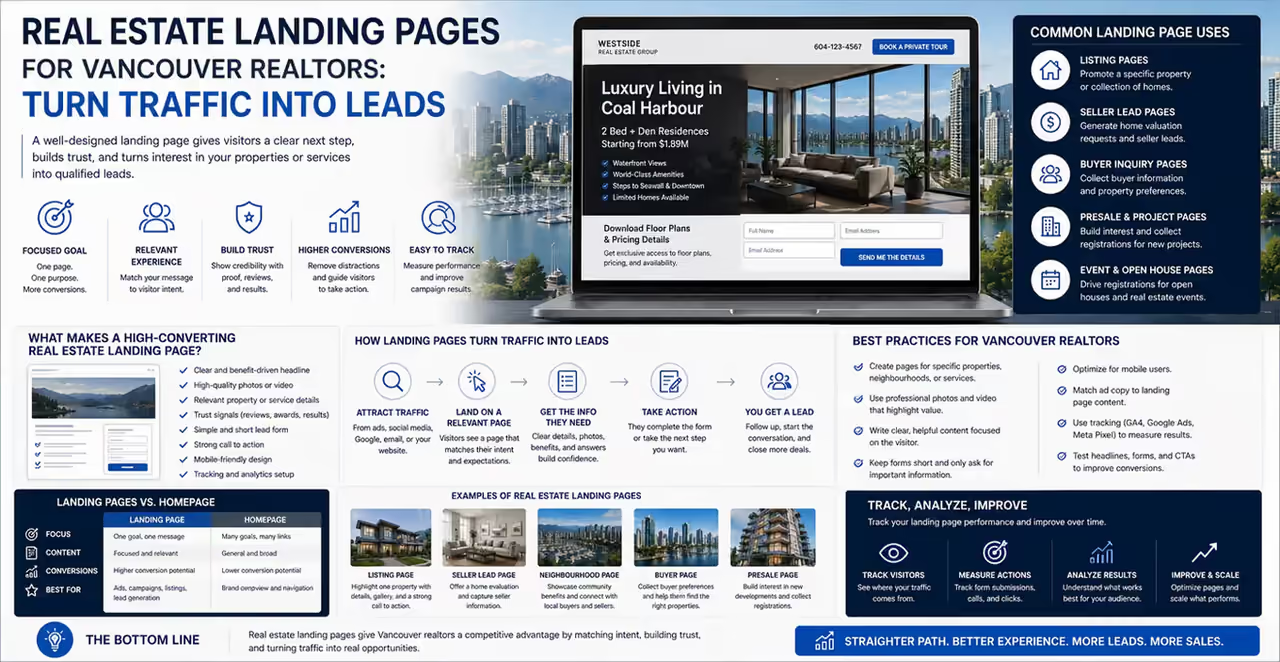
Real estate landing pages help Vancouver Realtors turn traffic into leads by focusing each visitor on one clear action. Instead of sending ad clicks, listing traffic, or social media visitors to a generic homepage, a landing page matches the campaign intent with relevant copy, strong visuals, trust signals, a simple form, and a direct call to action.
The strongest landing pages are not built around design alone. They are built around message match, local relevance, conversion strategy, mobile usability, and tracking.
What is a real estate landing page?
A real estate landing page is a focused web page created for a specific marketing goal.
It may promote one listing, one neighbourhood, one buyer guide, one seller offer, one pre-sale project, or one real estate service. Unlike a homepage, it does not try to explain the entire brand. It gives a specific visitor a specific reason to act.
A real estate landing page can be used for:
| Landing page type | Primary goal | Best use |
|---|---|---|
| Listing landing page | Generate property inquiries | Active listings, luxury homes, open houses |
| Seller landing page | Generate seller leads | Valuation offers, listing consultations |
| Buyer landing page | Capture buyer inquiries | First-time buyers, relocation, neighbourhood interest |
| Pre-sale landing page | Register project interest | Developments, launches, VIP lists |
| Neighbourhood landing page | Build local authority | SEO, paid ads, local campaigns |
| Retargeting landing page | Re-engage warm visitors | Past website visitors, video viewers, ad clickers |
| Recruitment landing page | Attract agents | Brokerage recruitment and team growth |
| Event landing page | Register attendees | Open houses, webinars, buyer seminars |
The page should not be judged only by how it looks. It should be judged by whether it helps the visitor make a decision.
A landing page should answer one practical question: what should this specific visitor do next?
Why a homepage is usually not enough
A homepage has to serve many people at once. Buyers, sellers, investors, developers, partners, agents, and general visitors may all land there.
That makes the homepage broad by nature.
A landing page is different. It is built for one situation.
If someone clicks an ad for a Vancouver condo listing, they should not have to search through the homepage to find the property. If someone clicks a seller valuation ad, they should not land on a general brand page with no valuation message. If someone clicks a pre-sale registration post, they should not be sent to a generic contact page.
The page should continue the conversation that started the click.
A good landing page does not make the visitor re-orient themselves. It confirms they are in the right place and shows them exactly what to do next.
That message match is one of the biggest differences between a page that receives traffic and a page that converts traffic.
A homepage might say, “We help buyers and sellers across Vancouver.” A landing page can say, “Thinking about selling a Kitsilano condo? Request a focused pricing and marketing consultation.” The second message is more specific, more relevant, and more likely to create action when the traffic source matches it.
The conversion equation for Realtor landing pages
A real estate landing page works when four pieces line up.
| Element | Question it answers | Example |
|---|---|---|
| Intent | Why did the visitor click? | “I want details about this listing.” |
| Message | Does the page match the click? | Same property, same offer, same neighbourhood |
| Trust | Why should the visitor believe you? | Media quality, reviews, process, credentials |
| Action | What should the visitor do now? | Book a showing, request valuation, register interest |
If one piece is missing, conversion gets weaker.
A strong landing page does not need to be complicated. It needs to be aligned.
For example, a Meta ad promoting a seller guide should not send users to a listing search page. A Google Ad for “Vancouver home valuation” should not send visitors to a long homepage with no valuation context. A neighbourhood video about Mount Pleasant should not send viewers to a generic contact page if a more specific Mount Pleasant buyer or seller page exists.
That alignment is where landing pages become valuable.
Real estate landing pages and search intent
Search intent matters because different visitors are at different stages.
A person searching “Vancouver condo for sale with view” has different intent than someone searching “how to sell my house in Vancouver.” A person clicking a Google ad for “home valuation Vancouver” has different intent than someone clicking a social video about a waterfront listing.
Landing pages should match intent.
For example:
| Visitor intent | Better landing page |
|---|---|
| Wants listing details | Property-specific landing page |
| Wants to sell soon | Seller consultation or valuation page |
| Researching neighbourhoods | Neighbourhood guide page |
| Comparing agents | Listing marketing or portfolio page |
| Interested in pre-sales | Registration landing page |
| Returning after seeing content | Retargeting-specific page |
| Looking for open houses | Open house registration page |
| Considering a move from another city | Relocation buyer page |
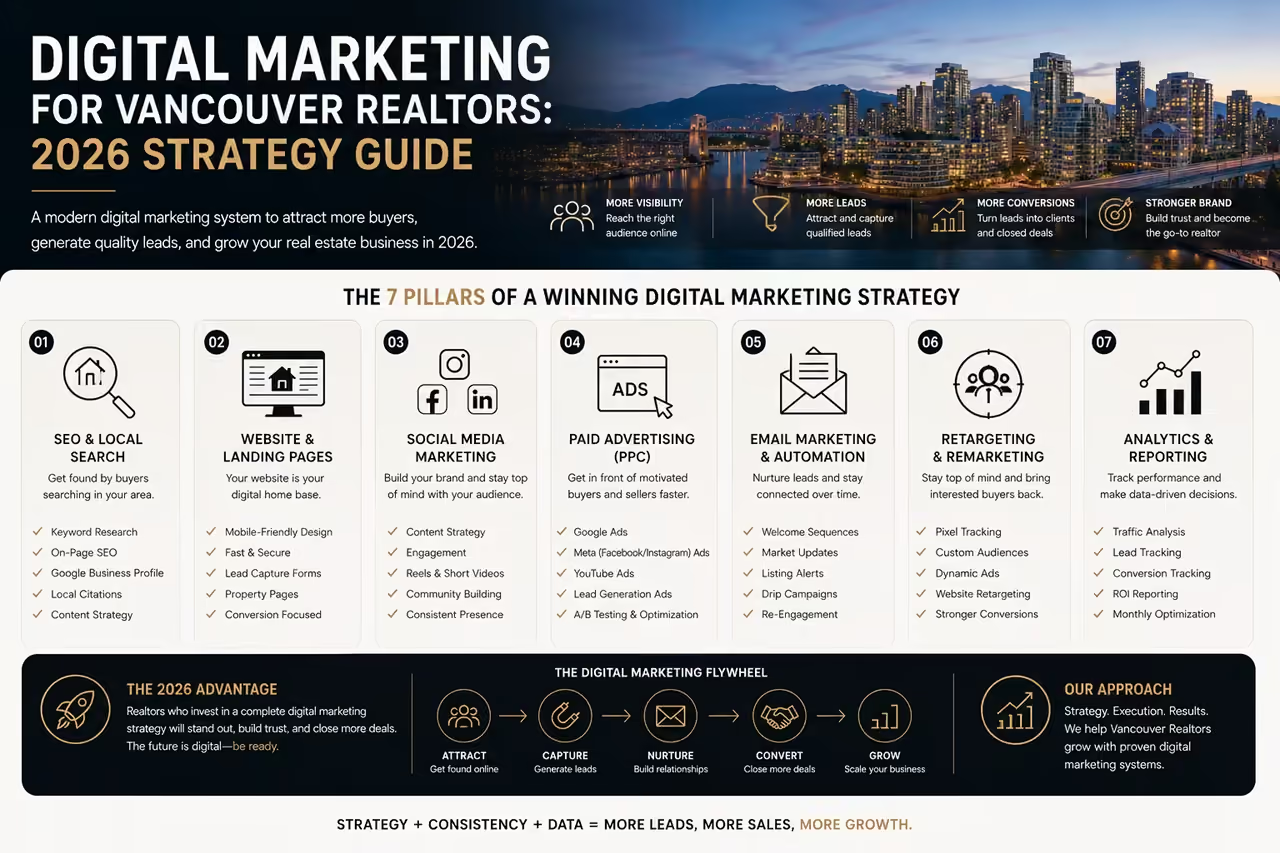
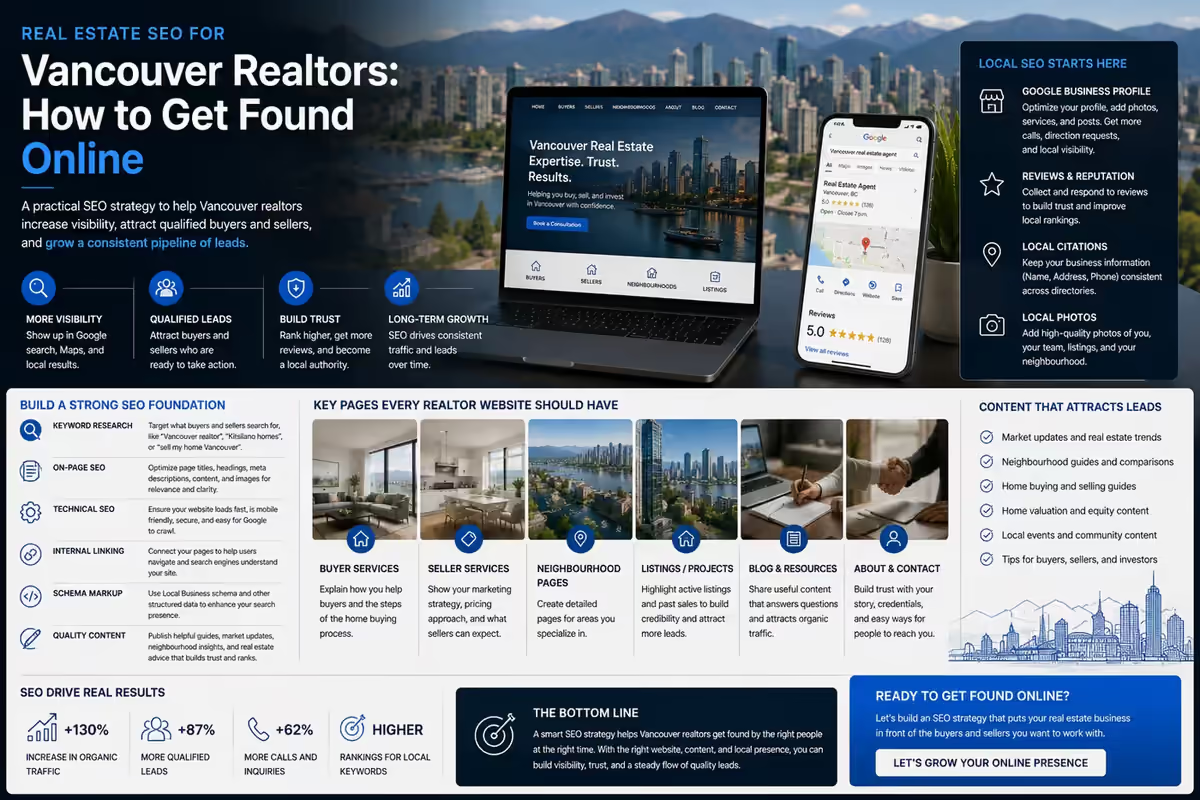
This is also why landing pages connect closely to SEO. A strong real estate SEO strategy brings people to pages that match what they searched for. For more on that foundation, read our guide on real estate SEO for Vancouver Realtors.
Google’s guidance on creating helpful, reliable, people-first content is useful here. Landing pages should not be thin pages created only for search or ads. They should help a real person take the next step with more clarity.
The anatomy of a strong real estate landing page
A high-performing real estate landing page usually has a clear structure.
Not every page needs every element, but the page should answer the visitor’s main questions quickly.
A practical structure:
- Hero section with clear headline
- Short supporting copy
- Strong image or video
- Primary call to action
- Core property or offer details
- Trust signals
- Benefits or value explanation
- Media gallery or visual proof
- Simple form
- FAQ section
- Secondary CTA
- Tracking and analytics
For real estate, visuals matter. The page should not feel like a text-only sales letter. It should use professional photography, listing video, aerial media, Matterport, floor plans, or project visuals where relevant.
A landing page should feel focused, not thin.
The strongest pages usually combine strategy and presentation. They make the offer clear, show the property or service in the best possible way, explain why the next step is useful, and remove unnecessary distractions.
The hero section: where the decision starts
The hero section is the first screen a visitor sees. It needs to make the page’s purpose clear immediately.
A strong real estate landing page hero should answer:
“What is this page about?”
“Why should I care?”
“What can I do next?”
Example for a listing page:
Modern 2-Bedroom Condo in Yaletown With City Views

View photos, floor plan, video tour, and open house details. Book a private showing or ask a question about the property.
Example for a seller lead page:
Thinking About Selling in East Vancouver?

Get a clear pricing, preparation, and listing marketing plan before you go to market.
Example for a buyer page:
Buying a Condo in Mount Pleasant?

Compare building types, neighbourhood trade-offs, and next steps before starting your search.
The best headline is not always the most creative headline. It is the clearest headline.
A landing page visitor should not need to decode the message. They should immediately understand the offer and why it is relevant to them.
Listing landing pages need more than property details
A listing landing page should do more than repeat MLS information.
The MLS-style details are important, but they are not the whole story. A listing page should help the visitor understand the value of the property, the lifestyle context, the media, and the next action.
A strong listing landing page may include:
| Section | Purpose |
|---|---|
| Property headline | Clarifies the core appeal |
| Photo gallery | Shows the home visually |
| Video tour | Adds flow, emotion, and spatial context |
| Floor plan | Helps buyers understand layout |
| Key features | Highlights the strongest selling points |
| Neighbourhood context | Explains location value |
| Showing CTA | Makes inquiry easy |
| Open house details | Supports appointment planning |
| Realtor contact | Builds confidence and accessibility |
| FAQ | Answers common buyer questions |
For Vancouver listings, neighbourhood context can be especially important. A condo in Olympic Village, a duplex in Mount Pleasant, and a detached home in East Vancouver each need different positioning.
The landing page should not only say what the property has. It should explain why the property matters to the right buyer.
For stronger listing campaigns, landing pages can work alongside professional media. Photography, video, aerial production, floor plans, and Matterport can all help the page feel more complete. For related media strategy, see real estate listing marketing in Vancouver.
Seller landing pages should reduce uncertainty
A seller landing page has a different job from a listing landing page.
The visitor is not trying to view a specific property. They are trying to decide whether it is worth starting a conversation.
That means the page should reduce uncertainty.
A strong seller landing page should explain what happens after the visitor submits the form. It should not just say, “Get a free home valuation.” That offer is common, and many homeowners are skeptical of vague automated valuation pages.
A better seller page might focus on a more complete outcome:
Request a Vancouver listing strategy review

Get a practical look at pricing, preparation, media, launch timing, and how your property could be positioned for today’s buyer audience.
That framing feels more strategic.
For Vancouver homeowners, the selling decision often involves more than price. They may need to understand preparation, timing, photography, video, staging, repairs, strata documents, buyer objections, and neighbourhood positioning.
A seller landing page can cover:
- what the consultation includes
- who the service is for
- what information the Realtor reviews
- how the listing preparation process works
- what marketing assets may be used
- what makes the Realtor’s approach credible
- what the homeowner should expect after submitting the form
This kind of page supports higher-quality conversations because the lead understands the process before reaching out.
Buyer landing pages should help visitors self-identify
Buyer landing pages work best when they are specific.
A generic “Buy with me” page can be useful as a core service page, but a campaign landing page should usually speak to a clearer buyer segment.
Examples:
First-time condo buyers in Vancouver
Relocation buyers moving to Vancouver
Buyers comparing Kitsilano and Mount Pleasant
North Vancouver townhome buyers
Investors evaluating rental-friendly strata properties
Luxury condo buyers in Coal Harbour or Yaletown
Each buyer group has different concerns.
A first-time buyer may need clarity around financing, strata documents, deposit expectations, subject clauses, and the offer process. A relocation buyer may need neighbourhood comparisons, commute context, lifestyle fit, and virtual consultation options. A luxury buyer may care more about privacy, building reputation, views, amenities, and presentation quality.
The landing page should help the visitor recognize themselves.
For example:
This page is for buyers who want to compare Vancouver neighbourhoods before committing to a search.That type of copy is simple, but it creates immediate relevance.
Buyer landing pages should also avoid overpromising. The goal is not to guarantee access, deals, or outcomes. The goal is to make the process clearer and invite the right conversation.
Neighbourhood landing pages can support local authority
Neighbourhood landing pages can be useful for both SEO and campaign traffic when they are built with depth.
A thin neighbourhood page with a paragraph of generic copy and a listings feed will not do much. A stronger page should explain the local area in a way that helps buyers or sellers make better decisions.
For Vancouver Realtors, neighbourhood landing pages could focus on:
- Kitsilano condos
- Mount Pleasant duplexes
- East Vancouver character homes
- Yaletown condo living
- Coal Harbour waterfront listings
- North Vancouver townhomes
- Burnaby condo buyers
- Olympic Village lifestyle and property types
A good neighbourhood landing page can include local context, property types, buyer fit, seller considerations, media examples, FAQs, and a clear CTA.
This connects closely with a broader content strategy. A neighbourhood landing page can act as the conversion-focused destination, while blog posts and social content support education and discovery.
For a deeper strategy, see why Vancouver Realtors should invest in video and social content.
Paid ads need focused landing pages
Paid traffic should rarely be sent to a generic page.
When someone clicks a Google Ad or Meta ad, they arrive with a specific expectation. If the landing page does not match that expectation, the campaign loses efficiency.
For Google Ads, landing page relevance and usability are part of the broader quality experience. For Meta Ads, message match also matters because users are often interrupting their feed experience. The page has to confirm quickly that the click was worthwhile.
A paid ad landing page should align with:
| Ad element | Landing page requirement |
|---|---|
| Keyword or audience | Page speaks to the same intent |
| Ad headline | Page headline reinforces the same offer |
| Visual | Page image or video supports the campaign |
| CTA | Page action matches the ad promise |
| Form | Page collects only necessary information |
| Tracking | Page records conversions accurately |
For example, a Google Ad targeting “sell my condo Vancouver” should not send traffic to a homepage. It should send traffic to a seller-focused page about condo listing strategy, valuation, preparation, and next steps.
A Meta ad promoting a listing video should send users to a page with the property video, photos, details, and showing CTA.
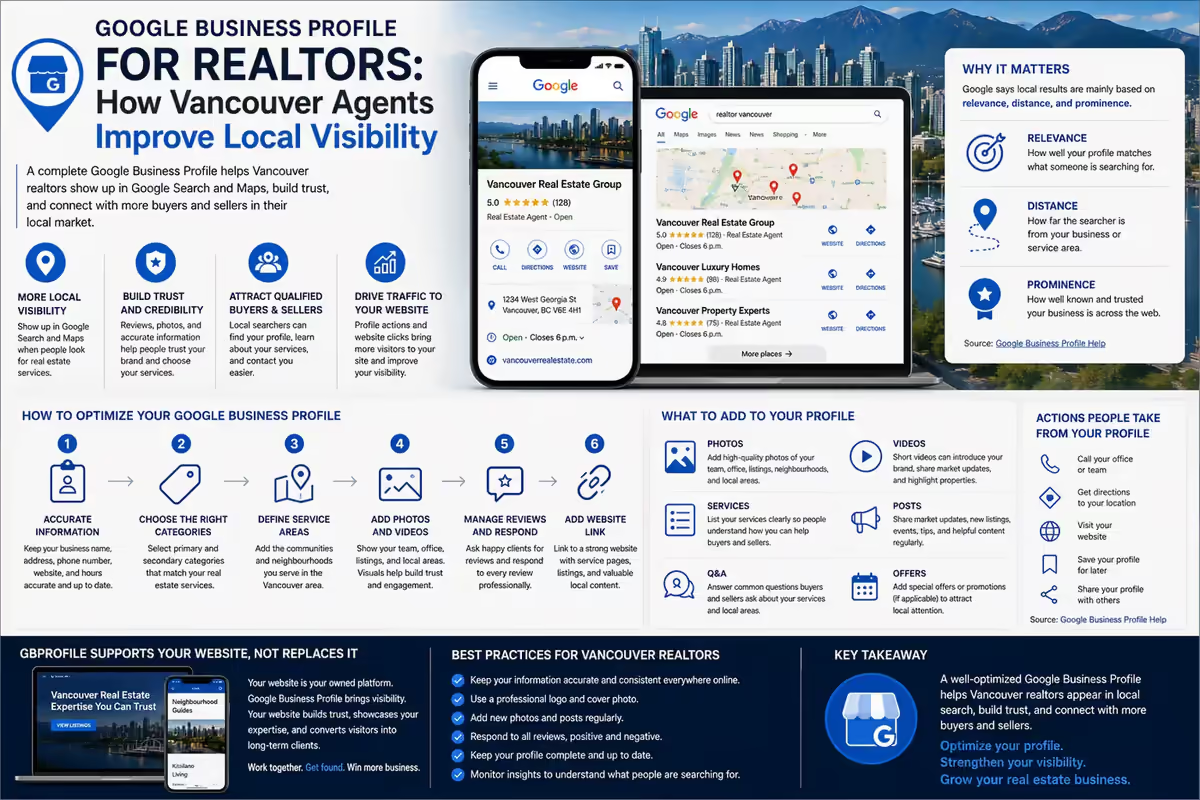
For campaign planning, see Google Ads for real estate agents in Vancouver and Meta Ads for Vancouver real estate.
Retargeting landing pages should speak to warm visitors
Retargeting is different from cold traffic.
A retargeting visitor may have already watched a video, visited a listing, clicked a social post, opened an email, or browsed a service page. They do not need the same introduction as someone discovering the brand for the first time.
This creates an opportunity for more specific landing pages.
For example:
Still thinking about selling in Vancouver?

If you have been comparing options, start with a clear listing strategy review.
Or:
Want more details about this Kitsilano listing?

View the full media package, floor plan, open house details, and showing options.
Warm traffic often needs a smaller next step. The landing page should not overload them with the entire brand story. It should acknowledge the likely intent and make action simple.
Retargeting pages can be especially useful for property launches, seller lead campaigns, pre-sale registrations, and audience segments built from video views or website visitors.
Forms should be simple and intentional
The form is one of the most important parts of a landing page.
If the form is too long, vague, or difficult to use on mobile, the page may lose serious visitors. If it is too short for a high-intent offer, the Realtor may receive low-quality inquiries.
The right form depends on the campaign.
A listing inquiry form might ask for:
Name
Email
Phone
Preferred showing time
Message
A seller strategy form might ask for:
Name
Email
Phone
Property address or neighbourhood
Timeline
Message
A pre-sale registration form might ask for:
Name
Email
Phone
Preferred unit type
Budget range
Are you working with an agent?
A landing page form should not ask for information the Realtor does not need at that stage. Every extra field creates friction.
The CTA button should also be clear. “Submit” is functional, but not very specific. Better options include:
Request listing strategy
Book a private showing
Ask about this property
Get the buyer guide
Register interest
Schedule a consultation
The button should describe the action.
Trust signals should match the offer
Trust signals are not just testimonials placed at the bottom of a page.
They should support the specific decision the visitor is making.
For a listing landing page, useful trust signals may include professional media, property video, floor plan, open house details, and clear Realtor contact information.
For a seller landing page, useful trust signals may include listing marketing examples, client testimonials, preparation process, photography and videography quality, and local market experience.
For a buyer landing page, useful trust signals may include process explanation, neighbourhood knowledge, buyer education, and accessible contact options.
Trust signals may include:
- testimonials
- Google reviews
- professional photography
- listing videos
- floor plans
- Matterport or 3D tours
- sold or past marketing examples
- local guides
- agent experience
- brokerage credibility
- clear privacy language
- recognizable service area references
The key is relevance.
A generic review may help. A specific proof point connected to the landing page offer will usually help more.
For example, a seller landing page becomes stronger when it shows actual listing marketing assets, not just a generic testimonial carousel. A buyer page becomes stronger when it links to relevant neighbourhood content or explains the buying process clearly.
Mobile-first design is not optional
Many real estate landing page visitors arrive from mobile.
They may click from Instagram, TikTok, Google search, Google Business Profile, email, YouTube, or a text message. If the landing page does not work well on mobile, the campaign is weakened immediately.
A mobile-first landing page should have:
- a clear headline above the fold
- fast-loading images
- easy-to-tap CTA buttons
- readable text
- minimal layout clutter
- simple form fields
- strong spacing between sections
- no intrusive popups blocking the main action
- click-to-call where appropriate
- visible contact options
Real estate pages often use large visuals, but those visuals need to be optimized. Oversized images can slow the page. Heavy scripts can delay interaction. Poor spacing can make forms frustrating.
Mobile experience is not just a technical detail. It affects whether a serious visitor stays long enough to inquire.
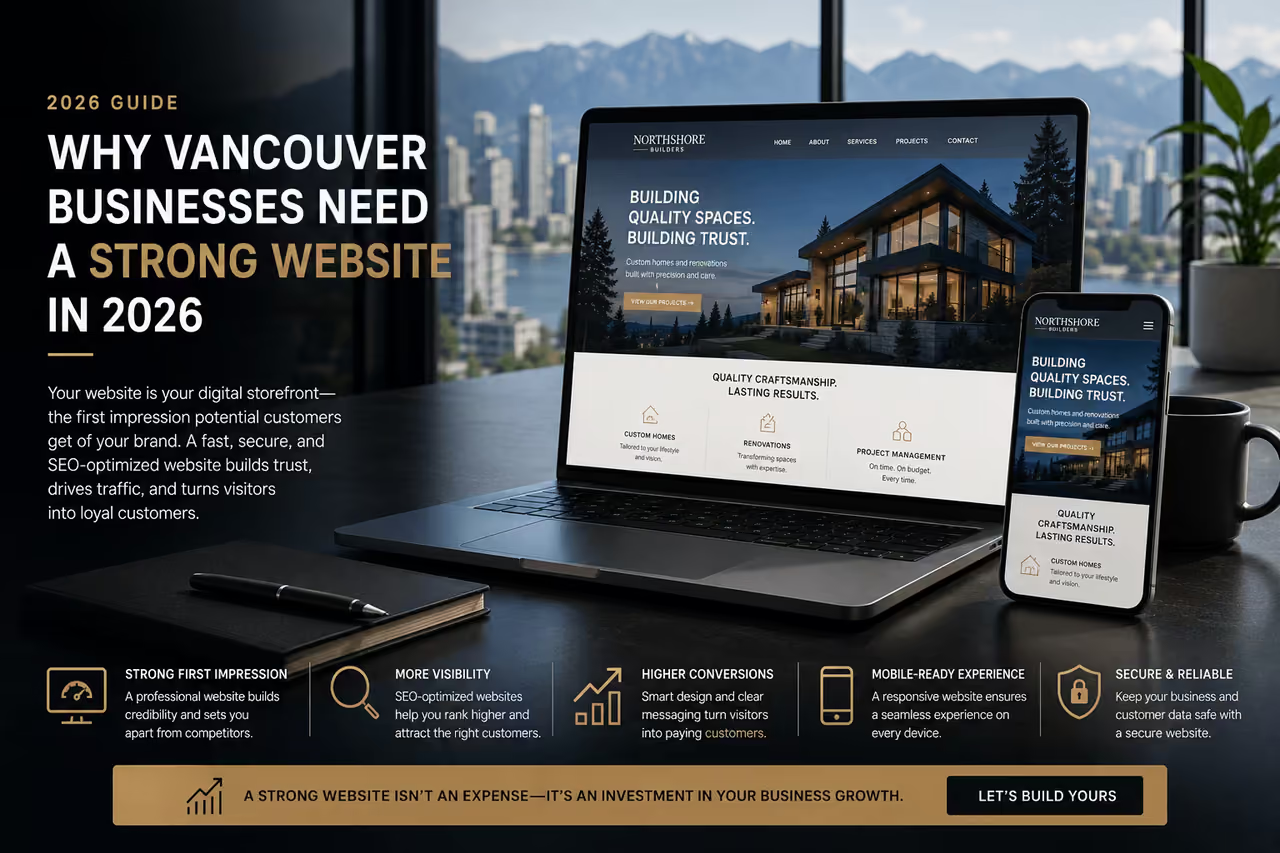
For broader website strategy, read the web design mistakes that reduce sales for Vancouver businesses.
Landing page copy should be clear, not clever
Real estate landing page copy should sound like a strategic advisor, not a template.
Avoid vague phrases like:
Your dream home awaits.
Experience unparalleled service.
Unlock your property’s potential.
Your trusted real estate partner.
These lines are common and often too broad.
Better copy is specific:
Get a clear selling plan before listing your Vancouver condo.View the full media package, floor plan, and showing details for this Yaletown listing.Compare Mount Pleasant condo options before starting your search.Book a listing strategy review for your East Vancouver home.Good landing page copy should explain who the page is for, what the visitor gets, why it matters, and what to do next.
It should also match the campaign source. If the ad says “Request a Vancouver home valuation,” the page should not suddenly talk about general real estate services. If the social post promotes a listing video, the landing page should make that listing video easy to find.
Visuals can make or break real estate landing pages
Real estate is visual. A landing page with weak imagery will struggle, even if the copy is clear.
For listing campaigns, professional photography is essential. The page should use images that make the property feel desirable, accurate, and easy to understand. Video can add flow. Floor plans can answer layout questions. Aerial media can add location context where relevant.
For seller campaigns, visuals should show the quality of the marketing process. Instead of using generic stock photos, show examples of strong listing media, property presentation, or campaign assets where possible.
For neighbourhood landing pages, visuals should feel local. A Mount Pleasant page should not rely on a generic downtown skyline if the content is about Main Street, local walkability, character homes, and newer condo options.
Visuals should support the strategy.
A landing page for a luxury waterfront listing may need refined photography, aerial footage, lifestyle context, and a more premium visual direction. A first-time buyer guide may need clean layout, simple educational graphics, and approachable visual hierarchy.
For examples of strong property presentation, see best real estate media for Vancouver homes.
Landing pages should connect to the broader marketing system
A landing page is rarely successful in isolation.
It works best as part of a campaign system.
For example, a seller lead campaign might include:
Google Ad
Meta retargeting ad
Seller landing page
Email follow-up
Google Business Profile post
Blog article about listing preparation
Tracking dashboard
Consultation booking flow
A listing launch campaign might include:
Listing video
Instagram Reel
Property landing page
Email announcement
Open house registration
Retargeting audience
Showing request form
Follow-up sequence
A neighbourhood campaign might include:
Neighbourhood guide
Short-form video
Local landing page
Buyer inquiry form
SEO blog content
Google Business Profile update
Email newsletter segment
This is why landing pages connect naturally with broader digital marketing for real estate in Vancouver.
The page is the destination. The campaign is the path that gets people there.
Tracking is not optional
A landing page should be tracked from the start.
Without tracking, it is difficult to know whether the page is working. A Realtor may receive inquiries, but not know which channel produced them. A brokerage may spend money on ads without knowing which landing pages convert. A listing campaign may generate traffic but no clear insight into engagement.
Useful tracking can include:
| Tracking item | Why it matters |
|---|---|
| Form submissions | Measures direct lead capture |
| Phone clicks | Tracks mobile intent |
| CTA clicks | Shows whether visitors move toward action |
| Scroll depth | Shows whether users engage with the page |
| Video engagement | Measures property or campaign interest |
| Source and medium | Identifies traffic channels |
| Conversion rate | Shows page effectiveness |
| Cost per lead | Helps evaluate paid campaigns |
| Lead quality | Separates useful inquiries from low-intent submissions |
The goal is not to collect data for the sake of data. The goal is to make better decisions.
If a landing page gets traffic but no leads, the issue may be the offer, message, form, visual quality, traffic source, or audience targeting. Tracking helps identify where to investigate.
Common real estate landing page mistakes
Many landing pages underperform because of avoidable problems.
The most common mistake is sending all traffic to the homepage. This makes visitors search for the thing they clicked to find.
Another mistake is using one generic landing page for every campaign. A seller lead campaign, buyer campaign, listing campaign, and pre-sale campaign need different pages.
Realtors should also avoid:
- vague headlines
- weak property visuals
- forms that ask for too much too soon
- no clear call to action
- no mobile optimization
- slow page loading
- no trust signals
- no neighbourhood context
- no campaign tracking
- too many competing buttons
- copy that does not match the ad or post
- using a landing page without follow-up
- making unsupported claims or guarantees
A landing page does not need to be long to work. But it does need to be complete enough for the visitor’s decision.
Thin pages often fail because they do not answer enough questions. Overloaded pages fail because they create too much friction. The right balance depends on the campaign intent.
A practical landing page framework for Vancouver Realtors
Use this framework before building any landing page.
1. Define the campaign goal
Start with one goal.
Do you want the visitor to book a showing, request a valuation, register for a project, download a guide, ask about a neighbourhood, or schedule a consultation?
If the goal is unclear, the page will become unfocused.
2. Define the audience
The page should speak to a specific person.
Examples:
Vancouver homeowners considering selling within 3–6 months
Buyers comparing condos in Mount Pleasant and Olympic Village
Investors looking at rental-friendly strata properties
Families considering North Vancouver townhomes
Luxury sellers preparing a waterfront listing
The more clearly the audience is defined, the easier the copy becomes.
3. Match the traffic source
A landing page for Google Search traffic may need different copy than a page for Instagram traffic.
Search traffic is often intent-driven. Social traffic may need more context. Retargeting traffic may need a shorter path. Email traffic may already trust the sender.
The page should reflect the source.
4. Build the offer
The offer is what the visitor gets by acting.
Examples:
Private showing
Listing strategy review
Home valuation consultation
Buyer consultation
Neighbourhood guide
Pre-sale registration
Open house registration
Marketing review
The offer should feel useful, not vague.
5. Add proof
Proof can include testimonials, visuals, media examples, process explanation, local expertise, or professional presentation.
For real estate, proof often comes from quality of execution. Strong media, clear copy, and specific local context can all build trust.
6. Make action simple
The CTA should be obvious.
Do not make visitors hunt for the form. Do not add multiple competing CTAs unless the hierarchy is clear. Do not ask for more information than needed.
7. Track and improve
Launch the page with tracking in place.
Review traffic, form completions, CTA clicks, and lead quality. Then improve the page based on evidence.
When a landing page should be short or long
Not every landing page needs the same length.
A listing page for a specific property may need strong visuals, key details, and showing options. It does not always need thousands of words.
A seller lead page may need more explanation because the visitor is deciding whether to trust the Realtor with a major financial decision.
A pre-sale page may need project details, location context, floor plan information, registration value, and compliance-aware copy.
A neighbourhood SEO landing page may need deeper content because it has to satisfy search intent and build authority.
A simple way to decide:
| Page type | Recommended depth |
|---|---|
| Listing inquiry page | Short to medium |
| Open house registration page | Short |
| Seller consultation page | Medium to long |
| Buyer guide landing page | Medium |
| Pre-sale registration page | Medium to long |
| Neighbourhood SEO page | Long |
| Retargeting page | Short to medium |
The page should be as long as needed to support the decision, and no longer.
How Perseus Creative Studio approaches real estate landing pages
A strong landing page requires more than a nice layout.
For real estate, the page has to connect strategy, copy, media, design, technical setup, and campaign tracking. The work starts with understanding the offer: listing campaign, seller lead generation, buyer inquiry, pre-sale registration, neighbourhood authority, or paid advertising.
From there, the landing page can be built around the visitor’s intent.
Perseus Creative Studio supports Vancouver Realtors and brokerages with website design, landing pages, SEO, paid advertising, listing media, photography, videography, aerial production, content strategy, and campaign planning. That combination matters because landing pages work best when the media, message, and traffic source are aligned.
A property landing page needs strong visuals. A seller lead page needs clear positioning. A paid ad page needs message match. A neighbourhood landing page needs local relevance and useful content. A brokerage landing page may need audience segmentation and routing.
For Realtors who want landing pages to support a broader growth system, the page should connect with a strong website, real estate SEO, and campaign-specific traffic sources such as Google Ads, Meta Ads, email, and social content.
Turn real estate traffic into a clearer next step
Traffic is not the goal by itself.
The goal is to turn relevant attention into qualified conversations.
A landing page helps by removing distractions, matching the visitor’s intent, showing the right information, and making the next step obvious. For Vancouver Realtors, that can mean more effective listing campaigns, stronger seller lead generation, cleaner paid ad performance, better neighbourhood campaigns, and more useful buyer inquiry paths.
The strongest landing pages are not aggressive. They are clear.
They tell the visitor where they are, why the page matters, what they can expect, and how to act. That clarity is valuable in a market where buyers and sellers are comparing options quickly.
If your campaigns are sending traffic to a generic homepage, a cluttered listings page, or an unclear contact form, the first improvement may not be more traffic. It may be a better destination.
Perseus Creative Studio helps Vancouver Realtors and brokerages build landing pages that connect strategy, design, media, SEO, paid ads, and conversion tracking. To improve how your website turns traffic into leads, explore our real estate marketing and media services, review our real estate media projects, or contact Perseus Creative Studio.