Why the Right Listing Media Depends on the Property
Real estate photography and videography are often discussed as if one has to replace the other. That is the wrong way to think about listing media.
Photography and videography do different jobs.
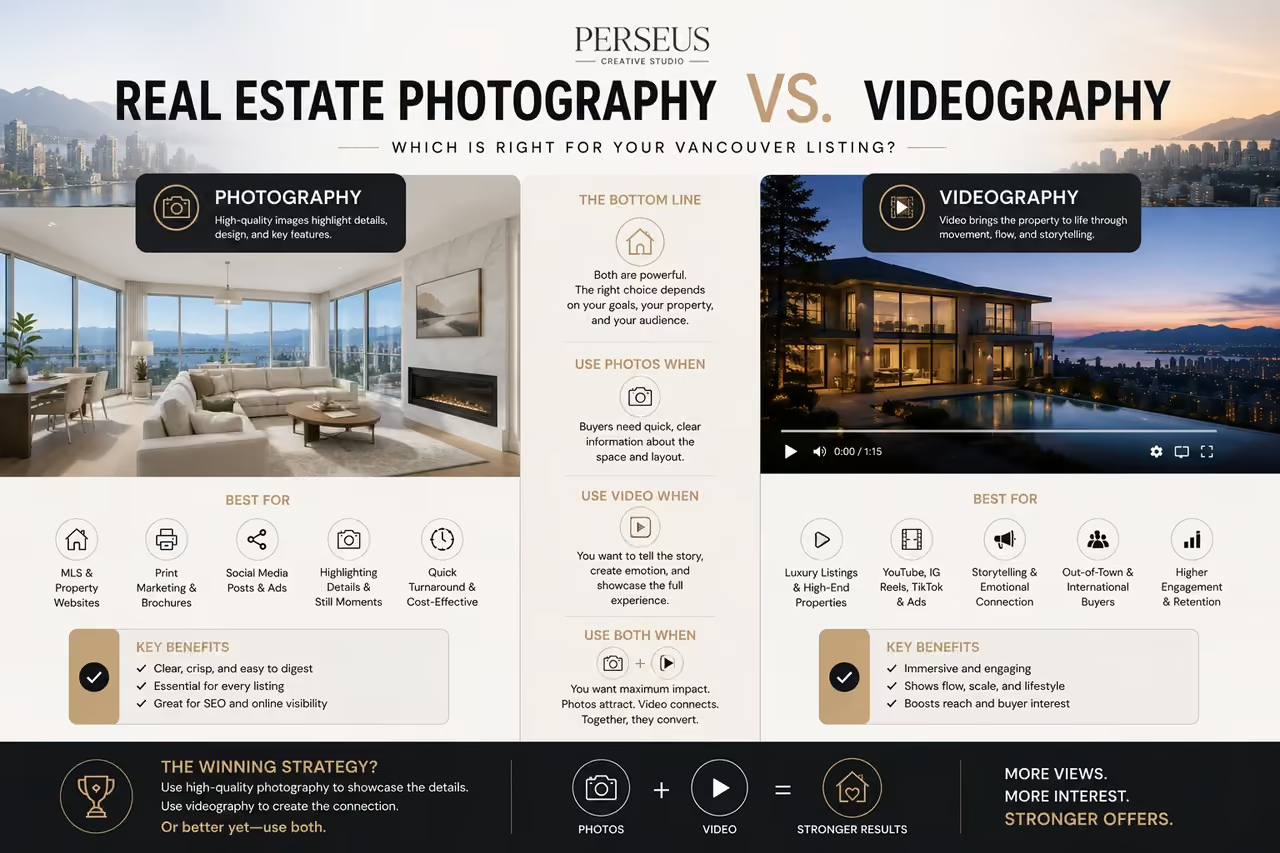
Photography helps buyers scan, compare, and evaluate a property quickly. Videography helps buyers understand movement, flow, atmosphere, and lifestyle. A strong Vancouver listing campaign may need one or both depending on the property, audience, budget, timeline, and marketing objective.
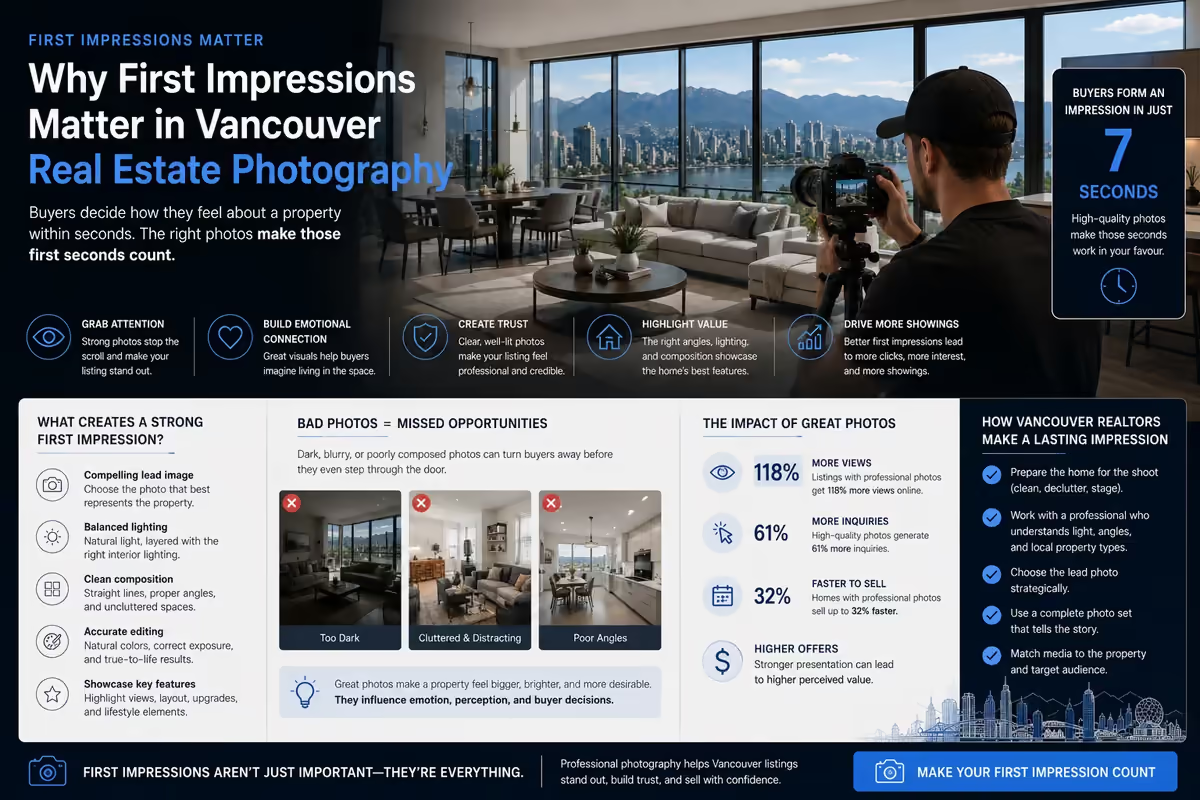
For Vancouver realtors and brokerages, this decision matters because buyers usually see the listing online before they book a showing. The media package is the first layer of the buyer experience. If it is weak, unclear, or incomplete, the property may lose attention before the buyer understands its value.
The goal is not to choose the trendiest format. The goal is to choose the format that makes the property easier to understand and easier to market.
What Real Estate Photography Does Best
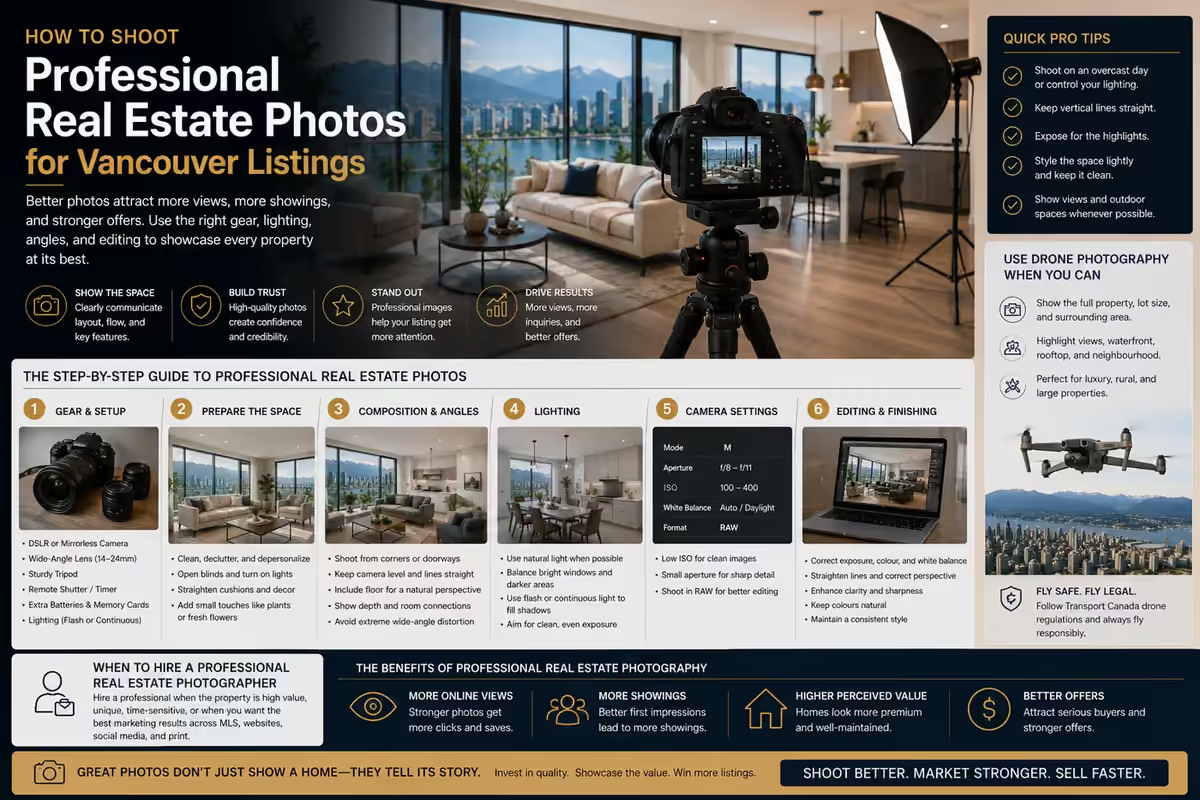
Photography is still the core asset in real estate marketing. Buyers rely on listing photos to make fast decisions, compare properties, and decide whether a home is worth seeing in person.
A strong real estate photo gallery shows the property clearly. It gives buyers a structured view of the exterior, entry, living areas, kitchen, bedrooms, bathrooms, outdoor spaces, views, and key features.
Photography works well because it is easy to scan. Buyers can move through images at their own pace. They can pause on rooms that matter, compare layouts, and return to images later.
Professional real estate photography is especially useful for:
- MLS listing galleries
- Agent and brokerage websites
- Property landing pages
- Email announcements
- Listing brochures
- Social media carousels
- Google Business Profile posts
- Open house materials
- Seller presentations
For Vancouver realtors, photography is rarely optional. Even when a property has a full video, the photo gallery still carries the first impression on many platforms.
Why Photography Supports Buyer Comparison
Buyers compare listings quickly. A buyer may open several Vancouver condos, townhomes, or detached homes in one session and move between them based on images.
Photography supports that behaviour because it organizes the property into clear visual moments.
A buyer can compare kitchens, living rooms, bedrooms, bathrooms, views, outdoor spaces, and finishes. This makes photography especially useful for functional decision-making.
A strong photo gallery helps answer:
- Is the property bright?
- How clean and updated does it look?
- Are the rooms usable?
- What are the main finishes?
- Does the home have outdoor space?
- Is there a view?
- Does the listing match the price point?
- Should I book a showing?
If the photos are dark, distorted, cluttered, or poorly sequenced, the listing can feel weaker than the actual property. If the photos are clear and professional, the buyer can evaluate the home with less friction.
When Photography May Be Enough
Photography may be enough when the property is simple, the layout is clear, and the listing does not need a larger storytelling package.
A standard photo package may be the right choice when:
- The property has a straightforward layout
- The listing needs a lean media budget
- The launch timeline is tight
- The buyer can understand the space from still images
- The property does not have major lifestyle or movement-driven features
- The listing strategy is focused mainly on MLS and basic digital promotion
For example, a simple one-bedroom condo may not require full videography if the photography, floor plan, and listing description explain the property clearly.
That does not mean the listing should use basic or rushed photos. It means the photo gallery should be strong enough to carry the listing.
Professional photography remains the baseline.
Where Photography Falls Short
Photography is powerful, but it has limits.
Photos can show individual rooms, but they do not always show how those rooms connect. They can show a balcony, but they may not show the feeling of moving from the living room to the view. They can show a kitchen and dining area separately, but they may not explain how the space works for entertaining.
Photography may fall short when a listing depends on:
- Room-to-room flow
- Indoor-outdoor movement
- Lifestyle atmosphere
- Architectural pacing
- A dramatic entry
- Views that need movement
- Large outdoor spaces
- Multi-level layouts
- Neighbourhood context
- Luxury positioning
- Social media storytelling
In these cases, videography can add value.
The question is not whether video is better than photography. The question is whether the property has qualities that need motion to be understood properly.
What Real Estate Videography Does Best
Real estate videography helps buyers experience a property more naturally.
A listing video can move through the home, establish a sense of arrival, show how rooms connect, reveal views, highlight outdoor spaces, and create a stronger emotional impression. Video can also support pacing, music, narration, agent presence, aerial movement, and story.
Videography is especially valuable when a property needs to communicate atmosphere.
For example, a Vancouver condo with a strong view may benefit from a video that starts in the living area and moves toward the balcony. A detached home may need a walkthrough that shows how the kitchen, dining area, backyard, and family spaces connect. A luxury property may need slower cinematic pacing, detail shots, and exterior context.
Video helps buyers understand what the property feels like, not only what it looks like.
Why Videography Is More Important for Social Media
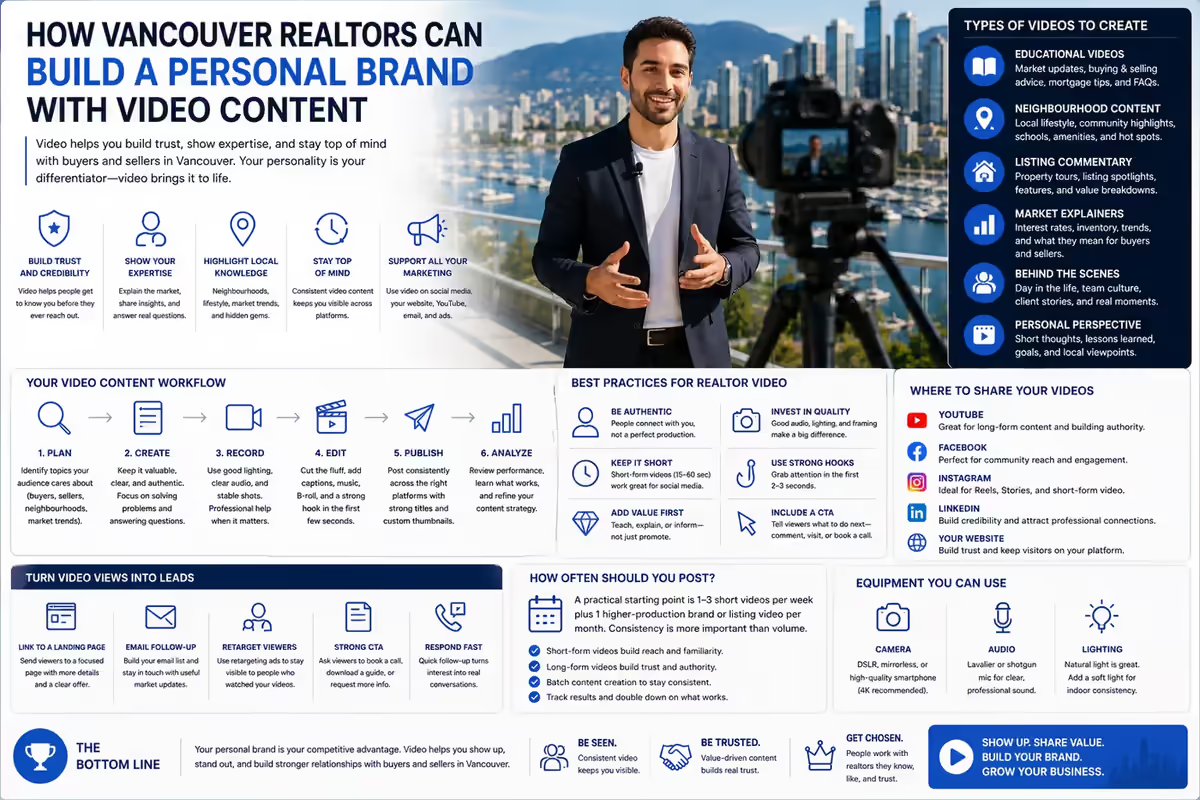
Social platforms are increasingly video-driven. Instagram Reels, TikTok, YouTube Shorts, and Facebook all give agents opportunities to distribute short listing videos, walkthrough clips, open house teasers, and agent commentary.
This is one of the strongest arguments for videography.
A full listing video can become several social assets:
- A 15-second teaser
- A short walkthrough
- A view-focused clip
- A kitchen feature video
- An open house reminder
- A neighbourhood clip
- An agent-led listing introduction
- A vertical reel for mobile viewers
This gives the listing more distribution options. Instead of relying on one MLS upload and one social post, agents can create multiple touchpoints across the campaign.
For Vancouver realtors, this matters because visibility is built through repetition. One strong video shoot can generate content for launch week, open house promotion, follow-up posts, and future seller presentations.
See Real Estate Videography in Action
Videography is easier to evaluate when you can see how pacing, camera movement, detail shots, and transitions shape the viewing experience. A strong listing video should not only look polished. It should help buyers understand the property.
For Vancouver listing campaigns, the best video format depends on the property. Some listings need a short social-first tour. Others need a polished cinematic film. The strongest approach is the one that supports the buyer journey.
When Videography Is Worth Adding
Videography is worth adding when motion improves the listing story.
It is especially useful when the property includes:
- Strong layout flow
- Open-concept living
- Indoor-outdoor connection
- Views
- Luxury finishes
- Architectural details
- Large outdoor spaces
- A dramatic arrival sequence
- A neighbourhood lifestyle angle
- A need for stronger social media content
- A seller expectation for premium marketing
Videography can also help agents differentiate themselves in listing presentations. Sellers can see a visible commitment to marketing quality, especially when video is paired with photography, floor plans, aerial production, Matterport, or social content.
Video should not be added only because it looks impressive. It should be added because it helps the listing communicate something important.
When Video May Not Be Necessary
Not every listing needs a full video production.
Video may not be necessary when:
- The layout is simple
- The property can be explained clearly with photos and a floor plan
- The listing timeline is extremely tight
- The marketing budget is limited
- The property has limited movement-based features
- The campaign is intentionally lean
- The buyer audience is unlikely to need a video walkthrough
That said, even if a full cinematic video is not needed, a few short vertical clips may still be useful for social media. There is a difference between a complete listing film and a lightweight social video package.
Agents should choose based on the property’s needs, not assumptions.
Photography vs Videography: Side-by-Side Comparison
| Category | Photography | Videography |
|---|---|---|
| Primary role | Shows clear still images of the property | Shows movement, flow, and atmosphere |
| Best use | MLS, galleries, websites, brochures, email | Listing videos, social media, YouTube, ads |
| Buyer behaviour | Quick scanning and comparison | More immersive viewing and storytelling |
| Strength | Clarity and detail | Experience and motion |
| Limitation | May not show flow well | Requires more production and editing |
| Best for | Almost every listing | Listings with layout, lifestyle, or story value |
| Social media value | Strong for carousels and posts | Strong for Reels, Shorts, TikTok, and ads |
| Seller presentation value | Shows baseline marketing quality | Shows a stronger content strategy |
The practical answer is simple: photography is the foundation; videography is the accelerator.
Most professional listings need strong photography. Many listings benefit from video. Premium, complex, view-focused, or social-heavy campaigns often need both.
How Photography and Videography Work Together
The strongest campaigns do not treat photography and videography as competitors.
They work together.
Photography gives buyers a clear, organized way to review the property. Videography gives them a more emotional and spatial experience. Photography helps the listing perform on MLS and property pages. Videography helps the listing travel across social media, YouTube, email, and paid campaigns.
A complete listing campaign may use:
- Professional photography for MLS and website galleries
- Listing video for YouTube and property pages
- Short vertical clips for Instagram Reels, TikTok, and YouTube Shorts
- Detail photos for premium finishes
- Video detail shots for movement and mood
- Exterior images for curb appeal
- Walkthrough footage for room flow
- Branded and unbranded versions for platform requirements
This creates a more flexible campaign. The agent has assets for every channel instead of trying to force one format to do everything.
Choosing the Right Format by Property Type
The right media mix depends on the listing.
Condos
Most condos need strong photography and a clear floor plan. Videography is useful when the unit has a strong view, efficient layout, luxury finishes, lifestyle amenities, or a neighbourhood story.
A short vertical video may be especially useful for condo listings because it can quickly show the living area, kitchen, balcony, and view.
Townhomes
Townhomes often benefit from video because multi-level layouts can be difficult to understand through photos alone. Photography shows each room. Video shows how levels and rooms connect.
A combined photo and video package is often a strong choice.
Detached Homes
Detached homes usually need professional photography at minimum. Videography becomes useful when the property has strong interior flow, outdoor space, a suite, a renovated layout, or neighbourhood context.
If the property has a yard, deck, patio, or strong exterior presence, video can help show how those areas connect to daily living.
Luxury Properties
Luxury listings usually need both photography and videography. Sellers expect premium presentation, and buyers expect a more complete media experience.
Photography should show detail and quality. Videography should show atmosphere, movement, design, scale, and lifestyle.
Development and Pre-Sale Projects
Developments and pre-sales often need a broader content strategy. Photography may support location, lifestyle, and sales centre content. Videography can help explain the project story, amenities, neighbourhood, and buyer experience.
The media package may also include 3D models, Matterport, renderings, floor plans, and paid advertising assets.
How to Use Both Formats for Maximum Impact
Using both photography and videography works best when the shoot is planned around distribution.
Before production, define where the content will be used:
- MLS
- Agent website
- Brokerage website
- Property landing page
- TikTok
- YouTube
- Paid ads
- Open house promotion
- Seller presentation
Then capture assets for those placements.
A horizontal video may work well on a website or YouTube. A vertical cutdown is better for Reels, TikTok, and Shorts. A wide image may work for the listing gallery but not for a social cover. A detail photo may work in an Instagram carousel but not as the lead MLS image.
The strongest listing campaigns are planned before the camera comes out.
Real Estate Media Should Support the Agent Brand
Every listing is also a public example of the agent’s marketing standard.
If the listing media is strong, consistent, and well distributed, future sellers can see that the agent takes property marketing seriously. If the media feels rushed or inconsistent, that also becomes visible.
Photography and videography both affect brand perception.
Photography shows the agent has a professional baseline. Videography shows the agent can create richer digital content and promote listings across modern platforms.
For Vancouver realtors, this matters because seller competition is real. Many homeowners compare how agents market properties before choosing who to list with.
Strong media can help communicate professionalism without saying it directly.
Watch How Listing Video Extends a Campaign
A listing video can become the central asset for a broader content strategy. It can be embedded on a website, shared through YouTube, cut into short-form social clips, used in email, and repurposed for paid ads.
The most efficient campaigns think about this before the shoot. Instead of producing only one final video, the production should create assets that support the full listing campaign.
Common Mistakes When Choosing Between Photo and Video
Many agents make the wrong decision because they think in terms of cost alone or trends alone.
Common mistakes include:
- Using video without strong photography
- Skipping video when the property needs flow explained
- Choosing photography that is too basic for the listing price point
- Creating a full video but no short social clips
- Using the same media package for every property
- Not planning branded and unbranded versions
- Forgetting that video needs a distribution plan
- Choosing the lead photo without strategy
- Treating media as a checklist instead of a campaign asset
The media choice should be based on the listing’s marketing challenge.
If buyers need clarity, photography and floor plans may be the priority. If buyers need flow and emotion, video becomes more important. If the campaign needs social visibility, short-form video should be planned from the start.
How Perseus Creative Studio Helps Vancouver Realtors Choose the Right Media
Perseus Creative Studio helps Vancouver real estate agents, brokerages, and property-focused businesses create listing media for modern property marketing.
Our work includes photography, videography, editing, social content, and campaign-ready creative. The goal is not to use every format for every listing. The goal is to choose the right media mix for the property, audience, and campaign strategy.
For some Vancouver listings, professional photography is the right foundation. For others, videography adds the movement and atmosphere buyers need. For stronger campaigns, photography and video work together with floor plans, aerial production, Matterport, and short-form social content.
A downtown condo, North Vancouver townhome, East Vancouver family home, West Vancouver luxury property, and pre-sale development should not all be marketed the same way.
Explore our real estate photography and videography services, view our real estate media projects, or contact Perseus Creative Studio to plan the right media package for your next Vancouver listing.
Key Takeaway
Photography and videography are not interchangeable. Photography helps buyers scan, compare, and evaluate. Videography helps buyers experience flow, mood, and lifestyle.
For Vancouver realtors, professional photography is usually the foundation. Videography is the next layer when a listing needs stronger storytelling, social content, or buyer experience.
The strongest campaigns often use both. The right decision depends on the property, target buyer, listing timeline, distribution plan, and seller expectations.