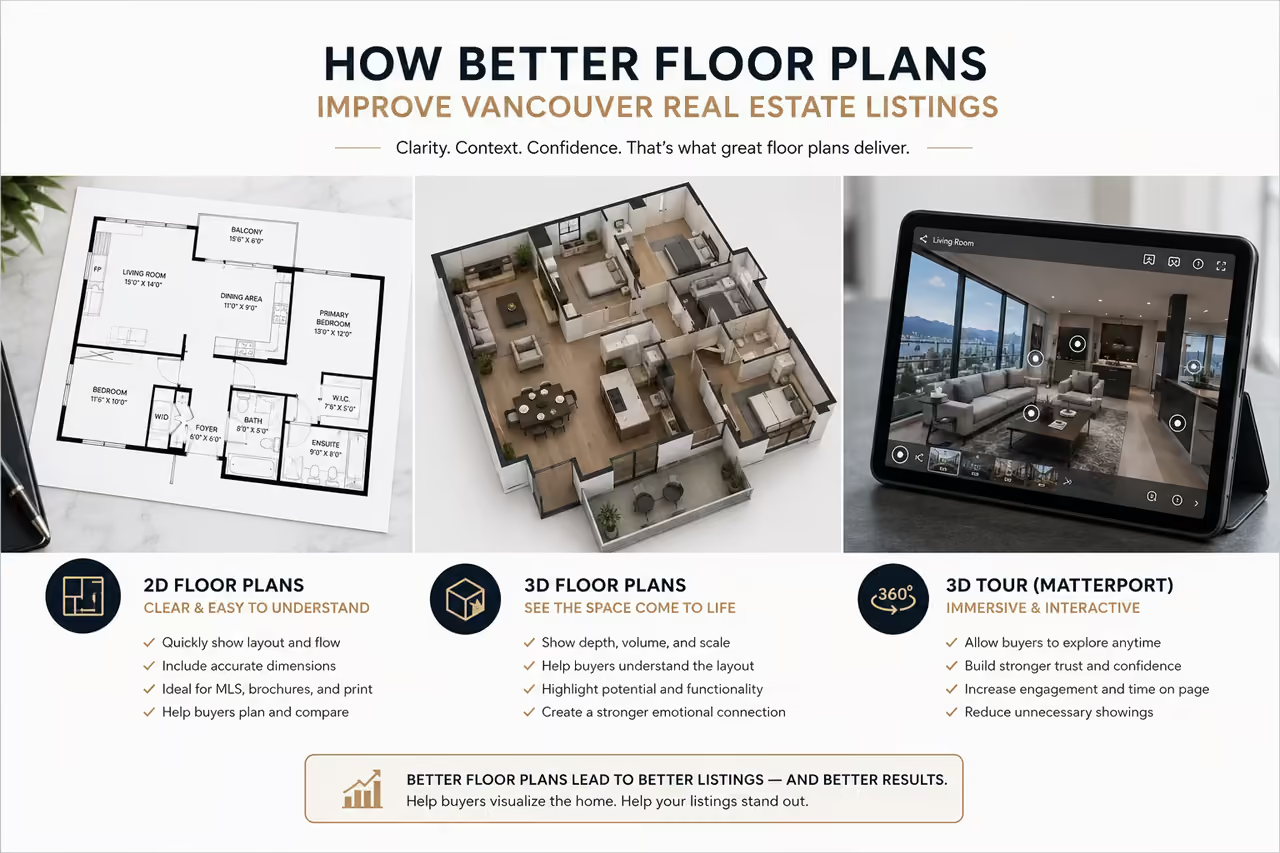
Why Layout Clarity Can Change the Way Buyers Read a Listing
A real estate listing is not only judged by how it looks. Buyers also need to understand how the property works.
Photography shows the rooms. Videography shows movement and atmosphere. Floor plans explain the structure behind both. They show how rooms connect, where bedrooms are positioned, how outdoor areas relate to the interior, and whether the overall layout fits the buyer’s lifestyle.
For Vancouver realtors and brokerages, this matters because many buyers evaluate listings online before deciding whether to book a showing. A strong photo gallery can create interest, but the floor plan often helps buyers decide whether the property is practical enough to pursue.
This is especially important in Vancouver, where listings can include compact condos, multi-level townhomes, renovated character homes, laneway homes, basement suites, luxury properties, and pre-sale developments. In many cases, the layout is one of the most important parts of the buying decision.
A high-quality floor plan helps remove uncertainty. It gives buyers a clearer way to evaluate the property before they visit, and it gives agents a stronger listing media package to present to sellers.
Why Floor Plans Matter for Real Estate Listings
Floor plans matter because photos do not always explain layout.
A buyer may like the kitchen, living room, or primary bedroom in the photo gallery, but still feel unsure about how the home functions. Where is the second bedroom? Is the den large enough for a desk? Does the balcony connect to the living room or bedroom? Is the laundry near the main living area? Is the basement suite separate? Does the townhome layout work for a family?
Floor plans answer these questions quickly.
They help buyers understand:
- Room relationships
- Traffic flow
- Entry points
- Bedroom separation
- Storage placement
- Bathroom access
- Outdoor connections
- Flexible-use spaces
- Suite or secondary area layouts
- Overall property function
This kind of clarity can make a listing feel more complete. It does not replace the in-person showing, but it helps buyers arrive with more context.
For agents, that context can support better-informed inquiries. A buyer who has reviewed the photos, video, and floor plan is often more prepared than a buyer who has only seen a few images.
Floor Plans Help Buyers Compare Listings
Buyers rarely evaluate one listing in isolation. They compare.
A buyer may look at several condos in the same neighbourhood, multiple townhomes at similar price points, or several detached homes with different layouts. Floor plans make that comparison easier.
For example, two condos may have similar square footage, but one may have a more functional den, better bedroom separation, or stronger storage. A floor plan can reveal those differences faster than photos alone.
Two detached homes may both look attractive in images, but one may have a more practical main floor, better outdoor access, or a more usable lower level. Again, the floor plan helps clarify the difference.
This is useful because square footage alone does not explain usability. A smaller property with a better layout may feel more practical than a larger property with wasted space.
For Vancouver listings, where efficient use of space is often important, floor plans can help buyers understand value beyond the headline specs.
How Professional Floor Plans Improve Listing Quality
A professional floor plan improves a listing by making the property feel more transparent, organized, and buyer-friendly.
A strong floor plan should be easy to read. It should use clear room labels, clean visual hierarchy, accurate proportions, and a format that works across listing pages, mobile screens, brochures, and buyer follow-up materials.
A poor floor plan can create confusion. If labels are unclear, room relationships are hard to follow, or the file is difficult to view on mobile, the asset may not help the buyer.
A professional floor plan supports the listing by:
- Making the layout easier to understand
- Helping buyers remember the property after viewing
- Supporting online decision-making
- Reducing layout confusion before showings
- Strengthening the agent’s listing presentation
- Giving sellers a more complete marketing package
- Improving the usefulness of photography and video
- Supporting social media, email, and brochure content
Floor plans are not decorative. They are decision-support tools.
The Role of 2D Floor Plans
A 2D floor plan is the most practical and widely understood layout tool. It shows the property from above, usually with rooms, walls, doors, windows, stairs, outdoor areas, and labels.
Its strength is speed. Buyers can quickly understand the layout without needing to interact with a tour or interpret a complex visual.
A 2D floor plan is useful for almost every property type:
- Condos
- Townhomes
- Detached homes
- Laneway homes
- Basement suites
- Investment properties
- Rental units
- Pre-sale units
- Renovated homes
- Properties with flexible rooms
For many Vancouver listings, a 2D floor plan should be considered a baseline asset. It helps buyers verify how the space works after they review the photo gallery.
It can also be useful during showings. Buyers may walk through a property, then return to the floor plan afterward to confirm how rooms connect and whether the layout fits their needs.
When a 2D Floor Plan Is Usually Enough
A 2D floor plan may be enough when the property is simple, easy to understand, or already supported by strong photography and video.
It may be the right choice when:
- The listing has a straightforward layout
- The property is smaller
- The budget needs to stay lean
- The timeline is tight
- Buyers only need basic layout clarity
- The photo gallery explains the rooms well
- The property does not require immersive exploration
For example, a simple one-bedroom Vancouver condo may not need a 3D model if the photos and 2D floor plan already make the space clear. A standard floor plan can show the den, balcony, bedroom, kitchen, and storage relationship quickly.
This is not a lower-quality approach. It is simply the right media choice for the listing.
The best listing strategy does not add every possible asset. It adds the assets that make the property easier to evaluate.
Where 3D Models Add More Value
A 3D model gives buyers a more visual sense of the property. It helps them understand depth, furniture placement, room relationships, and the overall feel of the layout.
This is useful when a property needs more explanation than a flat plan can provide.
3D models can be helpful for:
- Larger homes
- Multi-level townhomes
- Luxury properties
- Pre-sale units
- Development projects
- Unusual layouts
- Open-concept spaces
- Homes with flexible-use rooms
- Properties marketed to remote buyers
- Listings where furniture placement matters
A 3D model can also make the listing feel more premium. It gives sellers a more advanced marketing asset and gives buyers a more visual way to understand the property.
For Vancouver realtors competing for stronger listings, 3D models can be a useful differentiator when used appropriately.
Matterport and 360° Tours Give Buyers Control
Matterport and 360° tours serve a different purpose from standard floor plans.
A floor plan lets buyers understand the layout from above. A Matterport or 360° tour lets buyers explore the property interactively. They can move from room to room, revisit spaces, and spend more time evaluating the property remotely.
This can be valuable for:
- Remote buyers
- Relocation clients
- Investors
- Luxury listings
- Larger homes
- Pre-sale projects
- Complex layouts
- Buyers who want to revisit the home after a showing
- Family members or decision-makers who cannot attend in person
Matterport positions its real estate tools around immersive 3D tours, floor plans, and property marketing assets, while its schematic floor plan service describes creating 2D floor plans from a 3D tour. Those official resources are useful references when explaining how layout media, virtual tours, and floor plans can work together.
For Vancouver agents, the practical benefit is simple: Matterport can make a listing easier to explore when photos and a static plan are not enough.
2D Floor Plans vs 3D Models vs Matterport
Each layout format has a different role.
| Format | Best Use | Main Strength |
|---|---|---|
| 2D floor plan | Most standard listings | Fast layout clarity |
| 3D model | Premium, larger, or complex listings | Visual understanding of space |
| Matterport / 360° tour | Remote exploration and interactive viewing | Buyer-controlled walkthrough |
A simple listing may only need a 2D floor plan.
A more complex listing may benefit from a 2D plan plus a 3D model.
A premium listing, larger home, relocation-focused property, or pre-sale campaign may benefit from Matterport as well.
The decision should be based on buyer needs, not just the desire to add more media.
How Floor Plans Support Photography and Videography
Floor plans work best when they are connected to the rest of the listing media.
Photography creates the first impression. Videography shows movement through the property. Floor plans explain how the space is organized. Matterport lets buyers explore at their own pace.
Together, these assets answer different buyer questions.
A buyer may see a beautiful living room photo and wonder where the bedrooms are. The floor plan answers that. A buyer may watch a video and like the flow, then use the floor plan to confirm room relationships. A buyer may tour the Matterport experience, then return to the 2D plan for quick reference.
This creates a stronger buyer journey.
A listing with only photos can feel attractive but incomplete. A listing with photos, video, and layout media can feel easier to trust.
How Floor Plans Improve Seller Confidence
Floor plans also help with seller confidence.
When a realtor includes floor plans, 3D models, or Matterport in the listing strategy, it shows that the property is being marketed with more than basic visuals. Sellers can see that the agent is thinking about buyer experience, not just presentation.
This can be valuable in listing presentations.
An agent can explain:
- Why a 2D floor plan helps buyers understand the layout
- Why a 3D model may help a complex property feel clearer
- Why Matterport may support remote buyers
- Why layout media can reduce uncertainty before showings
- How these assets support social media, email, and follow-up
This makes the marketing plan feel more complete.
It also helps agents avoid sounding generic. Instead of saying “we do professional marketing,” the agent can show exactly how each asset supports the buyer journey.
Tips for Realtors Using Floor Plans
Floor plans are most useful when they are integrated properly into the campaign.
First, make the floor plan easy to find. Do not hide it at the end of the listing assets if layout is a major selling point.
Second, connect it to the photo sequence. If the gallery shows the main living area first, the floor plan should help buyers understand where that space sits in the property.
Third, use floor plans in follow-up. If a buyer asks about room placement, flex space, storage, or suite layout, send the floor plan with the answer.
Fourth, use floor plans in social content. A carousel post can pair photos with a floor plan to explain how the listing works.
Fifth, choose the right format for the property. Do not force Matterport or 3D models into every listing if a clean 2D plan is enough. Also, do not underuse layout media when the property is complex.
The best floor plan strategy is practical. It helps buyers understand the home faster.
Floor Plans for Vancouver Condos
Condos often benefit strongly from floor plans because efficient use of space matters.
A buyer may care about whether the den can work as an office, whether the bedroom has good separation from the living area, whether the balcony is accessible, whether storage is practical, and whether the kitchen layout works.
A 2D floor plan can clarify these details quickly.
For premium condos, view properties, or pre-sale units, a 3D model or Matterport tour may add value. This is especially true if buyers are relocating, investing, or comparing several units remotely.
In Vancouver condo marketing, layout can be just as important as square footage. A well-planned smaller unit may feel more functional than a larger unit with awkward circulation.
Floor plans help buyers see that difference.
Floor Plans for Townhomes and Multi-Level Homes
Townhomes and multi-level homes can be harder to understand from photos alone.
A photo gallery may show each room, but buyers still need to understand which floor the room is on, how stairs connect the levels, where bedrooms are placed, and how outdoor or garage access works.
A floor plan is especially useful here.
For townhomes, a strong floor plan should make each level clear. It should show entries, stairs, bedrooms, bathrooms, outdoor areas, parking, storage, and any flex spaces.
A 3D model can add even more clarity when the vertical layout is a selling point or when the home has several functional zones.
For Vancouver realtors, this can help reduce confusion and make the listing easier to discuss with buyers.
Floor Plans for Detached Homes and Suites
Detached homes often need floor plans because they can include more layout complexity.
A detached home may have a main floor, upper floor, basement, suite, garage, laneway home, crawl space, storage, deck, yard, or separate entry. Photos alone may not explain how all of these areas connect.
Floor plans can clarify:
- Main floor flow
- Bedroom placement
- Basement or suite access
- Separate entrances
- Storage areas
- Laundry location
- Outdoor connections
- Garage or parking relationships
- Potential flexibility of rooms
This is especially useful when a property has income potential, multi-generational living potential, or renovation history.
A clear floor plan helps buyers understand the property’s functional value more quickly.
Floor Plans for Luxury and Pre-Sale Listings
Luxury and pre-sale listings usually require a more complete visual strategy.
For luxury homes, floor plans help buyers understand scale, privacy, entertaining areas, bedroom wings, outdoor connections, and special-use spaces. A 3D model or Matterport tour can help communicate the property more fully, especially for out-of-town buyers.
For pre-sale projects, floor plans and 3D models are even more important because buyers may be evaluating something that is not fully built. They need to understand what the unit, amenity spaces, and overall project experience may look and feel like.
A 2D floor plan can explain the layout. A 3D model can help buyers visualize the space. A Matterport-style or 360° experience can support deeper exploration when available.
These assets help make an abstract future property feel more concrete.
How to Use Floor Plans Across Marketing Channels
Floor plans should not only sit inside the listing package. They can support multiple marketing channels.
Use them in:
- MLS galleries
- Property landing pages
- Email campaigns
- Listing brochures
- Buyer follow-up emails
- Social media carousels
- Open house materials
- Seller presentations
- Paid ad landing pages
- Pre-sale sales materials
A floor plan can also make educational content stronger. For example, an agent can post a short explanation of why a layout works, using the floor plan as a visual reference.
This helps the agent show expertise. It also helps buyers understand what to look for when comparing properties.
Common Floor Plan Mistakes to Avoid
Floor plans are useful, but only when they are clear and usable.
Common mistakes include:
- Using no floor plan for a complex listing
- Uploading a plan that is hard to read on mobile
- Using inconsistent or unclear room labels
- Failing to show outdoor space connections
- Hiding the floor plan too deep in the listing
- Using a 3D model when a 2D plan would be clearer
- Skipping Matterport when remote exploration would help
- Not using the floor plan in buyer follow-up
- Treating layout media as an afterthought
- Failing to connect the plan with the rest of the campaign
The floor plan should help the buyer make sense of the home. If it creates more questions, it is not doing its job.
How Perseus Creative Studio Helps Vancouver Realtors With Floor Plans and Matterport
Perseus Creative Studio helps Vancouver real estate agents, brokerages, and property-focused businesses create listing media that supports how buyers actually evaluate homes online.
Our services include 2D floor plans, 3D models, Matterport, and 360° tour support, along with photography, videography, and campaign-ready content. The goal is to help each listing feel clear, complete, and easier to understand across digital channels.
Some properties only need a clean 2D floor plan. Others need 3D models or Matterport to explain layout, scale, flow, and buyer experience more effectively.
A Vancouver condo, a multi-level townhome, a detached home with a suite, a luxury property, and a pre-sale development all need different layout media decisions.
Explore our 2D floor plans, 3D models, and Matterport real estate media services, or contact Perseus Creative Studio to plan the right listing media for your next Vancouver property.
Key Takeaway
High-quality real estate floor plans help buyers understand what photos and videos cannot always explain: layout, flow, room relationships, storage, outdoor access, and functional use of space.
For Vancouver realtors, floor plans are not just add-ons. They are practical buyer tools and seller-facing marketing assets.
A 2D floor plan gives fast clarity. A 3D model adds visual depth. Matterport and 360° tours allow interactive exploration. The strongest choice depends on the property, buyer audience, and listing strategy.