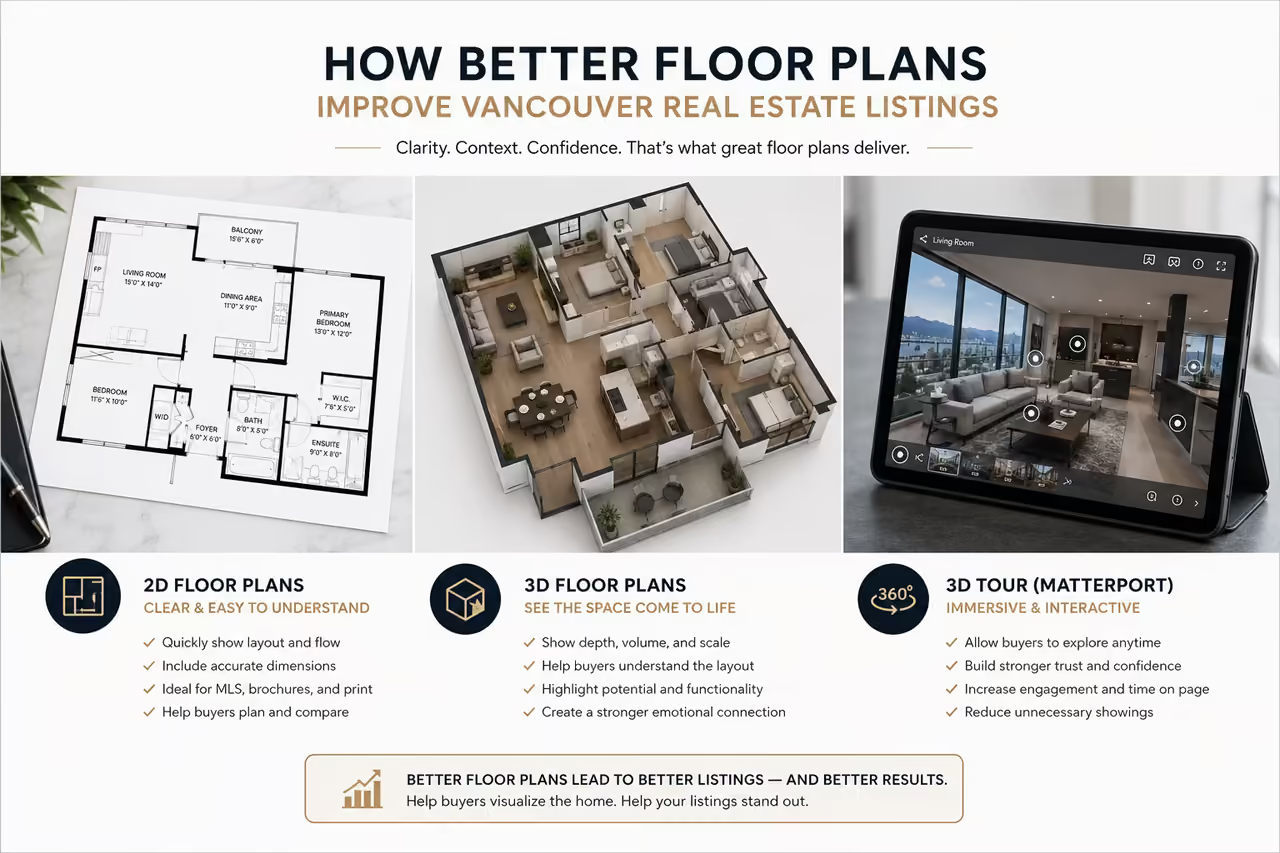
How Floor Plans Help Buyers Understand a Listing Faster
Photography shows what a property looks like. Videography shows how it feels to move through the space. Floor plans explain how the space actually works.
For Vancouver realtors and brokerages, this matters because many buyers evaluate listings online before deciding whether to book a showing. A strong photo gallery may create interest, but buyers often still need to understand layout, room relationships, storage, entry points, bedroom separation, outdoor access, and overall flow.
That is where 2D floor plans, 3D models, and Matterport tours become useful.
A floor plan helps buyers answer practical questions that photos alone may not solve. Where are the bedrooms? Is the den usable as an office? How does the kitchen connect to the living room? Is there enough separation between sleeping areas and entertainment areas? Does the balcony connect naturally to the main living space? How does the lower level function?
For Vancouver listings, layout clarity can be a major advantage. Condos, townhomes, laneway homes, split-level houses, basement suites, luxury properties, and pre-sale projects all benefit from different types of spatial media. The right choice depends on the property and the buyer journey.
Why Layout Clarity Matters in Real Estate Marketing
Many listing campaigns focus heavily on visual appeal. That makes sense. Strong photography and video are essential. But visual appeal is not the only thing buyers need.
Buyers also need confidence.
A property can look beautiful in photos but still feel unclear if the layout is hard to understand. This is especially common with multi-level townhomes, basement suites, compact condos, renovated older homes, and properties with additions or flexible-use rooms.
Floor plans reduce uncertainty by making the structure of the property easier to read.
They help buyers understand:
- How rooms connect
- Where bedrooms are located
- Whether the layout supports their lifestyle
- How outdoor spaces connect to the interior
- Whether the den, office, or flex room is usable
- How furniture might fit
- How storage, laundry, bathrooms, and entries are positioned
- Whether the property is worth visiting in person
This type of clarity can support more informed buyer interest. It does not guarantee a sale, but it helps buyers evaluate the listing more efficiently.
For agents, floor plans also strengthen seller confidence. They show that the listing is being marketed with more than surface-level visuals.
The Practical Role of a 2D Floor Plan
A 2D floor plan is the simplest and most widely understood layout tool. It shows the property from above, usually with room labels, walls, doors, windows, and basic spatial relationships.
Its strength is clarity.
Buyers can quickly understand where rooms are, how they connect, and whether the overall layout fits their needs. A 2D floor plan does not need to be immersive to be useful. It works because it is direct.
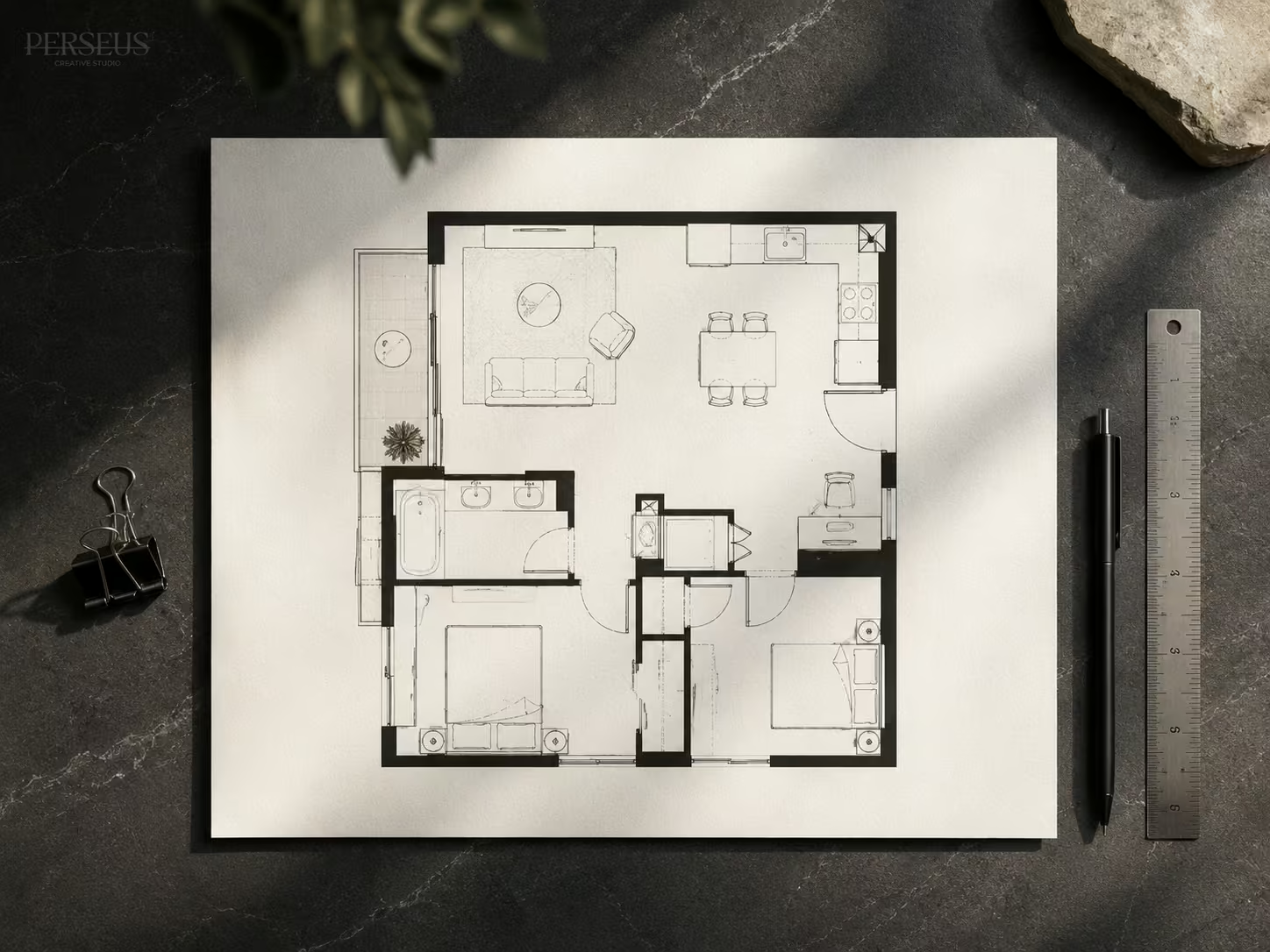
A 2D floor plan is especially useful for:
- Condos
- Townhomes
- Detached homes
- Basement suites
- Laneway homes
- Investment properties
- Rental units
- Listings with unusual layouts
- Properties where room count and flow matter
- Buyers comparing several homes online
For Vancouver realtors, a 2D floor plan is often a strong baseline deliverable. It helps the listing feel more complete and gives buyers a practical reference point after they view the photos or video.
A buyer may like the living room in photos, but the floor plan tells them whether that living room connects properly to the kitchen, balcony, bedrooms, and entry.
When a 2D Floor Plan Is Enough
Not every listing needs a 3D model or Matterport tour. In many cases, a clean 2D floor plan is enough to support the listing.
A 2D floor plan may be the right choice when:
- The layout is simple
- The property is smaller
- The listing timeline is tight
- The budget needs to stay lean
- The buyer only needs quick layout clarity
- The photos and video already explain the space well
- The property does not require immersive exploration
- The listing is mainly being promoted through MLS and standard channels
For example, a straightforward one-bedroom Vancouver condo may not need a 3D model if the photography, video, and floor plan already explain the property clearly. A simple 2D plan can be enough to show room flow, balcony access, storage, and den placement.
This is not a downgrade. It is a practical match between the media and the property.
What a 3D Floor Plan Adds
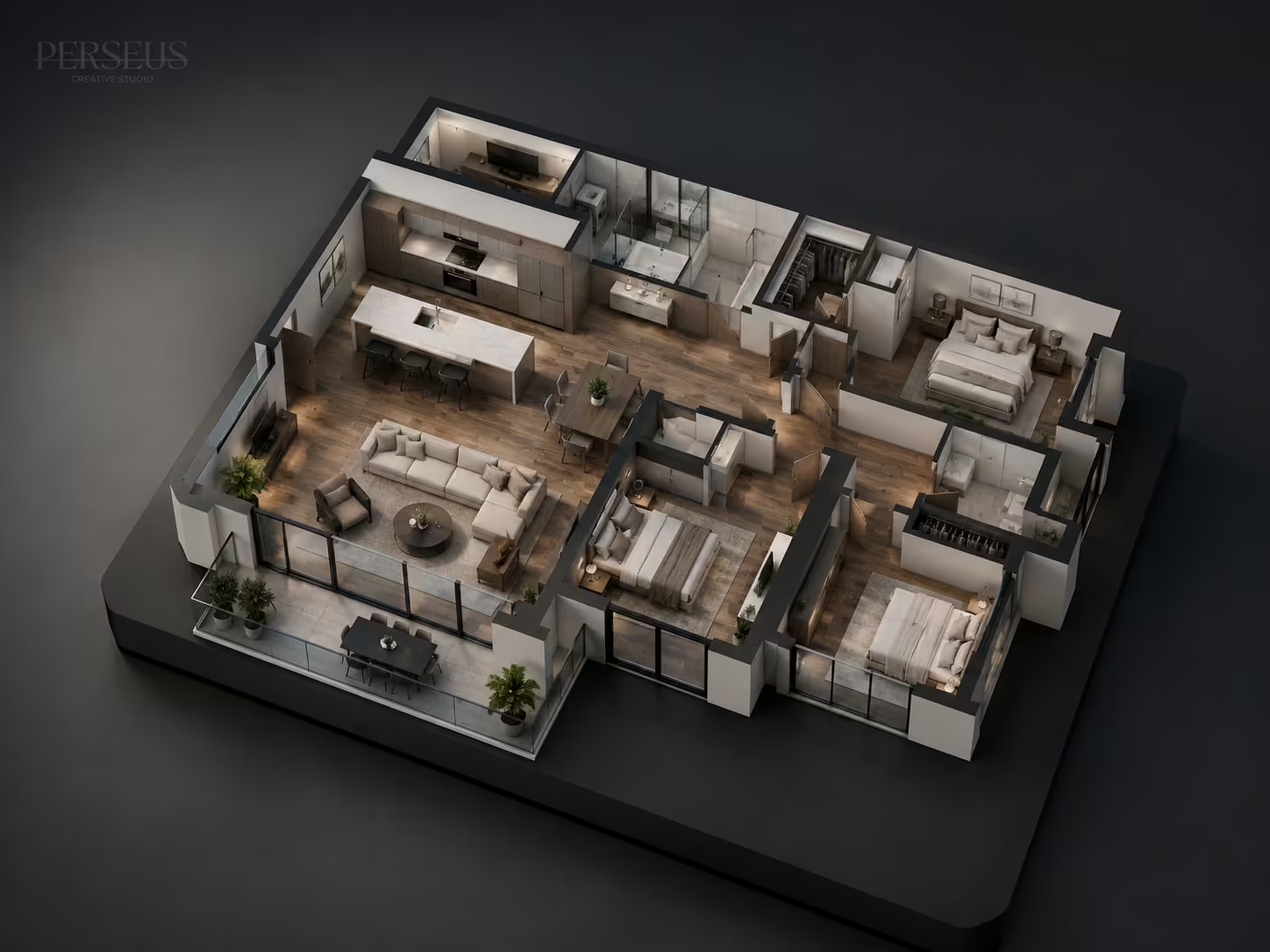
A 3D floor plan or 3D model gives buyers a more visual understanding of the space. Instead of seeing the layout as lines and labels, buyers can see a more dimensional representation of rooms, walls, furniture placement, and flow.
This can help when a property needs more visualization.
A 3D model is useful because it bridges the gap between a technical floor plan and a real visual experience. It helps buyers imagine how the home functions, not just where rooms are located.
3D models can be especially helpful for:
- Larger homes
- Luxury properties
- Pre-sale projects
- Multi-level townhomes
- Properties with unusual layouts
- Homes with open-concept spaces
- Listings where furniture placement matters
- Properties marketed to remote buyers
- Developments where buyers need to imagine unfinished spaces
For Vancouver listings, 3D models can make complex layouts feel easier to understand. They can also lift the listing presentation, especially when the property is positioned at a higher price point.
When a 3D Model Is Worth the Upgrade
A 3D model is worth considering when the layout is part of the property’s value or when buyers need more help visualizing the space.
It may be a smart upgrade when:
- The property has multiple levels
- The home has a unique or non-standard layout
- The listing is luxury or design-focused
- The property has large open spaces
- The buyer audience may include remote purchasers
- The property is part of a development or pre-sale campaign
- The agent wants a more premium listing media package
- The home has flexible rooms that need clearer context
- The seller expects a more advanced marketing presentation
A 3D model can also be useful in listing presentations. It gives sellers a visible example of how the agent goes beyond basic marketing.
For agents competing for higher-value listings, this can help differentiate the marketing plan.
The Role of Matterport and 360° Tours
Matterport and 360° tours serve a different purpose from 2D and 3D floor plans.
A 2D floor plan helps buyers scan layout. A 3D model helps buyers visualize the space. A Matterport tour lets buyers explore the property interactively.
This is especially useful when buyers need more control. They can move through rooms, revisit spaces, understand transitions, and spend more time evaluating the property before booking or after attending a showing.
Matterport’s real estate platform is positioned around immersive property tours and exploration from any device, and Matterport also describes its platform as supporting 3D tours, floor plans, and property marketing assets. In its guide to 3D virtual tours, Matterport notes that true 3D tours can create a model that users can zoom into and out of, including a dollhouse-style view.
For Vancouver real estate agents, this can be valuable when the buyer audience includes:
- Remote buyers
- Relocation clients
- Investors
- Busy professionals
- Out-of-town family decision-makers
- Pre-qualified buyers who want to revisit the layout
- Buyers comparing several similar listings
- Prospects who want to reduce unnecessary showings
Matterport is not always necessary, but when layout and exploration matter, it can make the listing more useful.

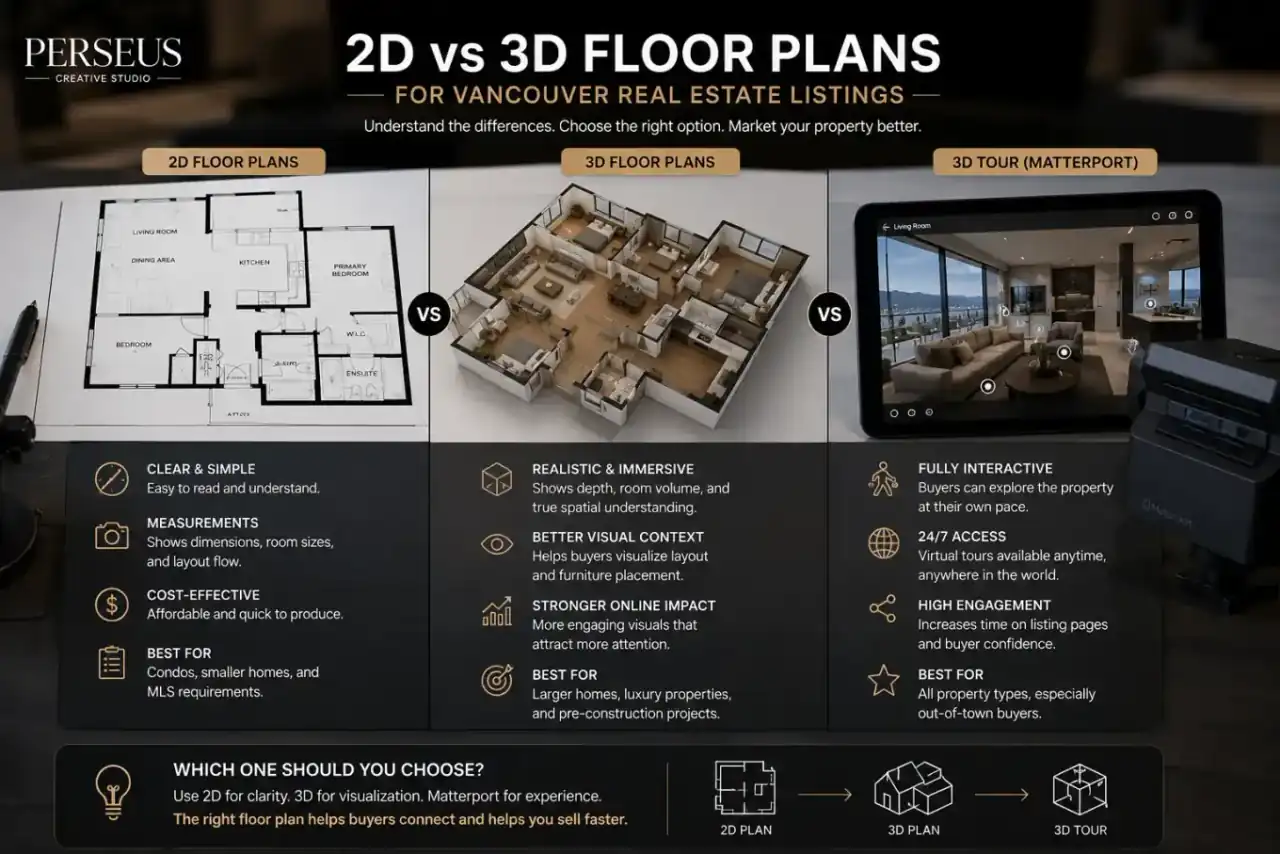
2D Floor Plans vs 3D Models vs Matterport
Each format has a different job.
| Format | Best For | Main Strength | Best Listing Fit |
|---|---|---|---|
| 2D floor plan | Quick layout clarity | Simple and easy to scan | Most listings |
| 3D model | Visualizing room flow and scale | More immersive than 2D | Larger, luxury, complex, or pre-sale listings |
| Matterport / 360° tour | Interactive exploration | Buyer-controlled walkthrough | Remote buyers, complex homes, premium listings, developments |
The best choice depends on the listing’s marketing challenge.
If buyers only need to understand the layout, a 2D floor plan may be enough.
If buyers need to imagine how the space feels, a 3D model may help.
If buyers need to explore the property remotely or interactively, Matterport may be the strongest option.
The Hybrid Approach: Why Many Listings Need More Than One Format
The strongest listing media packages often combine several formats.
Photography creates the visual first impression. Videography shows movement and atmosphere. A 2D floor plan explains the structure. A 3D model adds visual depth. Matterport gives buyers interactive control.
These tools do not replace each other. They answer different buyer questions.
A practical hybrid package may include:
- Professional listing photography
- 2D floor plan
- Listing video
- Matterport tour for larger or more complex listings
- 3D model for premium or development-focused properties
- Social media clips for distribution
- Aerial production if location or exterior context matters
This approach works because modern buyers do not all consume listings the same way. Some buyers scan photos first. Others watch video. Some study the floor plan. Others want to explore the tour.
A strong listing gives each serious buyer the format they need to make a more informed decision.
Choosing the Right Option by Property Type
The best floor plan format depends heavily on the property.
Condos
For condos, a 2D floor plan is often essential. Buyers want to understand square footage, bedroom placement, den usability, storage, balcony access, and kitchen-to-living flow.
A 3D model may be useful when the condo is higher-end, unusually laid out, or part of a pre-sale campaign. Matterport can help when the buyer audience includes remote purchasers or relocation clients.
Townhomes
Townhomes often benefit from stronger layout tools because multiple levels can be difficult to understand from photos alone.
A 2D floor plan helps show each level. A 3D model can make the vertical layout easier to visualize. Matterport can be useful when the home has several floors, flexible rooms, or complex transitions.
Detached Homes
Detached homes usually benefit from a 2D floor plan at minimum. Larger homes, renovated character properties, homes with basement suites, and properties with additions may benefit from 3D models or Matterport.
If the home includes a suite, separate entrance, laneway structure, or flexible lower level, layout clarity becomes more important.
Luxury Properties
Luxury listings often deserve a more complete media package. Buyers expect a higher standard of presentation, and sellers often expect the agent to use more advanced marketing tools.
A luxury listing may benefit from professional photography, cinematic video, aerial production, 2D floor plans, 3D models, Matterport, and polished social media content.
Pre-Sale and Development Projects
Pre-sales and developments often need 3D models because buyers may be evaluating a property that is not fully built or not available for normal showing.
In these cases, visualization is central to the campaign. 2D floor plans explain the unit layout. 3D models help buyers imagine the future space. Matterport-style experiences or 360° tours can support sales presentations and remote exploration.
Floor Plans for Remote and Relocation Buyers
Vancouver attracts buyers who may not always be able to view a property immediately in person. Remote buyers, relocation clients, investors, and family decision-makers often need more information before they commit to a showing or a conversation.
Floor plans and 3D tools help reduce uncertainty.
A photo may show a bright living room. A video may show the movement through the main floor. But the floor plan confirms whether the layout works for the buyer’s needs.
This is especially useful when buyers are comparing multiple properties from outside the city. They may not have time to visit every option. A complete media package helps them narrow their shortlist more confidently.
For agents, this can lead to better-informed inquiries. A buyer who has reviewed the floor plan, video, and Matterport tour may already understand the property more clearly before reaching out.
How Floor Plans Support Seller Confidence
Floor plans also matter on the seller side.
When a realtor includes professional media beyond basic photography, the seller can see a more complete marketing plan. This can improve confidence in the listing process.
A seller may not understand every technical detail of 2D plans, 3D models, or Matterport, but they can see that the listing is being presented thoroughly.
This matters in competitive listing presentations. Agents who can explain when and why they use different media formats often appear more strategic.
The key is to avoid adding services just to make the package look larger. The agent should explain the reason behind each asset.
For example:
- “We will use a 2D floor plan because the layout is a major buyer question.”
- “We will add Matterport because the property may attract remote buyers.”
- “We will use a 3D model because this multi-level layout needs stronger visualization.”
- “We will keep the package lean because the property is simple and the photos explain it clearly.”
This shows judgment, not just spending.
How to Avoid Overbuilding the Media Package
More media is not always better.
A listing can become overcomplicated if every possible deliverable is added without a clear purpose. The best media package should support the property, buyer behaviour, and campaign strategy.
Avoid adding advanced floor plan tools when:
- The layout is very simple
- The budget is better spent on photography or video
- The listing timeline is too tight
- The buyer does not need additional spatial explanation
- The property’s value is driven more by condition, price, or location than layout
- A standard 2D floor plan already solves the main question
A 3D model or Matterport tour should make the listing easier to understand. If it does not do that, it may not be necessary.
For Vancouver realtors, this is where a media partner can help. The goal is to recommend the right tools, not the most expensive package.
How to Use Floor Plan Assets Across Marketing Channels
Floor plans should not only sit inside the listing gallery. They can support several parts of the campaign.
A 2D floor plan can be used in:
- MLS listing media
- Property brochures
- Agent websites
- Email campaigns
- Social media carousels
- Open house materials
- Buyer follow-up
- Seller presentations
3D models and Matterport tours can be used in:
- Listing landing pages
- Virtual tour sections
- Social media teasers
- Paid ad campaigns
- Email follow-up
- Development presentations
- Remote buyer packages
- Brokerage marketing
The more accessible the layout assets are, the more useful they become.
A buyer may not study the floor plan during their first look. But after they become more interested, the floor plan can help them evaluate whether the property fits.
Common Mistakes Realtors Should Avoid
Floor plan tools are useful, but only when they are used clearly and accurately.
Common mistakes include:
- Using no floor plan when the layout is complex
- Uploading a floor plan that is hard to read on mobile
- Using inconsistent room labels
- Not matching the floor plan to the photo sequence
- Adding 3D models when a simple 2D plan would be enough
- Not explaining Matterport or virtual tour access clearly
- Hiding the floor plan too deep in the listing assets
- Not using floor plan visuals in social or email content
- Failing to clarify suite, entry, or multi-level relationships
- Treating floor plans as an afterthought instead of a buyer tool
The best floor plan assets are easy to find, easy to read, and easy to connect to the rest of the listing media.
How Perseus Creative Studio Helps Vancouver Realtors With 2D, 3D, and Matterport
Perseus Creative Studio helps Vancouver real estate agents, brokerages, and property-focused businesses create listing media that supports modern buyer behaviour.
Our real estate media services include 2D floor plans, 3D models, Matterport, and 360° tour support, along with photography, videography, and campaign-ready visual content. The goal is to help buyers understand the property clearly and help agents present listings with a more complete marketing standard.
For some properties, a clean 2D floor plan is the right choice. For others, a 3D model or Matterport tour can help explain layout, scale, and flow more effectively.
The right recommendation depends on the listing.
A compact Vancouver condo, a multi-level townhome, a detached home with a suite, a West Vancouver luxury property, and a pre-sale development all require different media decisions.
Explore our 2D floor plans, 3D models, and Matterport real estate media services, or contact Perseus Creative Studio to plan the right layout media for your next Vancouver listing.
Key Takeaway
2D floor plans, 3D models, and Matterport tours all help buyers understand a listing, but they serve different purposes.
A 2D floor plan is practical and easy to scan. A 3D model adds visual depth. Matterport and 360° tours allow interactive exploration.
For Vancouver realtors, the strongest choice depends on the property type, buyer audience, listing complexity, and marketing strategy. The right format should make the listing clearer, more useful, and more credible online.