The Water Is Part of What You Are Selling
This guide covers one property type: waterfront and view listings across Greater Vancouver. If you are deciding what media a standard home needs, start with the best real estate media for Vancouver homes in 2026. If the only open question is whether to add a drone, read when aerial photography is worth including.
What follows is the package for a property whose value sits partly outside its walls.
On a waterfront or water-adjacent listing, the setting is part of the product. The rooms still matter. But the buyer is also paying for a view, an orientation, a shoreline, a seawall a few minutes away, or a marina within sight of the balcony. Media that only documents the interior leaves that part of the price unexplained.
The practical problem is that waterfront in Vancouver is not one thing. A False Creek condo, a Coal Harbour tower unit, a Kitsilano home two streets off the beach, a North Vancouver shoreline property and a West Vancouver view lot are five different products. They attract different buyers and need different media.
So plan the package around the neighbourhood first, then fill it in.
Quick Answer
To market a Vancouver waterfront or view listing, build the media package around what the water actually does for that specific property: how close it is, which rooms face it, whether the view is direct or partial, and which outdoor spaces use it. Start from the neighbourhood, because Coal Harbour, False Creek, Kitsilano and the North Shore each sell a different relationship to the water. Interior photography composed toward the view and thorough outdoor coverage do most of the work. Aerial media is one component of the plan, not the plan.
Plan the Package Around the Neighbourhood
The fastest way to build a waterfront shot list is to ask what the water means in that specific area, then let the answer set the priorities.
The five groupings below cover most water-adjacent listings in Greater Vancouver. Treat them as starting points and adjust to the property.
False Creek
The water here is urban and active: the seawall, the small ferries, marinas, Granville Island, Olympic Village. Most buyers are purchasing proximity and walkability rather than private frontage.
Prioritise:
- Seawall and marina context that shows how the building meets the water's edge
- Balcony images that establish the real sightline, including nearby buildings
- Distance-to-water framing, because the walk matters as much as the view
- Short clips moving from the entrance toward the water
- Interior images that show which side of the unit faces the creek
Lead with an image that places the building on the water, not with the kitchen.
Coal Harbour
Coal Harbour sells an urban address with a working harbour outside the window: marina, seaplanes, Stanley Park, and the North Shore mountains across the inlet.
Prioritise:
- View direction and exactly what it includes: harbour, marina, park, mountains, or a mix
- Height context, because the same stack reads very differently on different floors
- Twilight photography, since the harbour and skyline carry the evening
- Interior detail that matches a premium positioning
- Building arrival and amenity coverage, because the tower is part of the product
The listing still has to explain the unit. Harbour images support the claim; they do not replace the walkthrough.
Kitsilano and the West Side Beaches
Here the water is usually a lifestyle claim rather than a frontage claim: the beach, the park, the walk. Some homes have a partial view and many do not.
Prioritise:
- Neighbourhood photography that shows the route to the beach and parks
- Outdoor living areas: yards, decks, rooftop space
- Any partial or filtered water view, framed honestly from where it is actually visible
- Daytime light, because the appeal of the area reads best in daylight
- Interiors that show light and openness, which is often the real inheritance of the location
If the view is marginal, sell the walk instead of stretching the view.
North Vancouver
North Vancouver combines water with outdoor recreation: Burrard Inlet, the Lonsdale waterfront, Deep Cove, and the mountains behind.
Prioritise:
- Both halves of the view, since water and mountains often share the frame
- Outdoor space and how it connects to trails, parks or shoreline
- Shoreline or inlet context where the property is genuinely close to it
- Access context: how the location works on an ordinary weekday
- Interiors composed toward whichever direction carries the view
Buyers here are frequently comparing lifestyle against commute. The media should let them judge both.
West Vancouver
West Vancouver listings tend to sell elevation, privacy and reach: larger lots, homes set into the slope, and long views over the water.
Prioritise:
- Elevation and openness: how far the view extends and what it looks over
- Privacy: spacing from neighbours, tree cover, and the approach to the house
- Exterior architecture and scale, which is often part of the positioning
- Terraces and how outdoor levels step down the site
- Twilight where the view holds light late into the evening
A West Vancouver campaign usually needs fewer images than a downtown one, but each has to be more deliberate.
Be Precise About the View Before You Book Anything
A waterfront campaign gets into trouble when the media implies more water than the property has.
Before booking, write down the honest version:
- How close is the property to the water?
- Is the view direct, partial, elevated or obstructed?
- Which rooms have it, and from where in the room?
- Does the outdoor space share the view or face away from it?
- Is there privacy from neighbouring units, balconies or a public path?
- Is the water proximity something a buyer would use, or only see?
That list is the brief. Every frame in the package should trace back to one line on it.
Be precise because view claims are checkable. A buyer who arrives expecting the balcony image and finds a narrower sightline stops trusting the rest of the gallery. Understating slightly and letting the images over-deliver is the safer trade.
Shoot the Interior Toward the Water
This is where most waterfront campaigns are won or lost, and it is ordinary interior photography done with one extra instruction.
The listing still needs strong interior images. Buyers need rooms, finishes, lighting, layout and condition. The difference is that composition should reinforce the water story wherever the property supports it.
Ask for:
- Living room images oriented toward the view rather than square to the wall
- Kitchen and dining frames that show the sightline through to the window
- Bedroom images that establish which rooms have the view
- Balcony or patio images shot from inside, so the connection is visible
- Window exposure that preserves the view without leaving the interior too dark
- At least one frame that shows where a person would actually sit to look at the water
The window exposure point is the technical one worth insisting on. A blown-out window turns a view property into a generic condo. If the view is the reason for the price, it has to be legible in the photograph.
A view is more valuable when buyers can see where it is experienced from, and a balcony means more when the image shows how it opens off the living area.
Outdoor Space Carries Half the Listing
For waterfront and view properties, outdoor areas often hold as much marketing value as the interior.
Balconies, patios, terraces, gardens, decks, rooftop areas, docks, walkways and shared outdoor amenities should be covered deliberately, not treated as one wide frame at the end of the shoot.
Outdoor coverage should show:
- Whether the space is usable, and for what
- Seating or entertaining potential at a realistic scale
- View direction from the outdoor space specifically
- Privacy from neighbours and public paths
- The connection back into the interior
- The relationship to water, parks or trails
- Condition and materials
Shared amenities count here too. On a downtown waterfront listing, a rooftop terrace or waterside common area is part of what the buyer is purchasing, and it often goes unphotographed.
If the property has a dock, a gate to the seawall, or direct beach access, that is the single most valuable outdoor frame in the set. Shoot it properly.
Where Aerial and Drone Video Fit
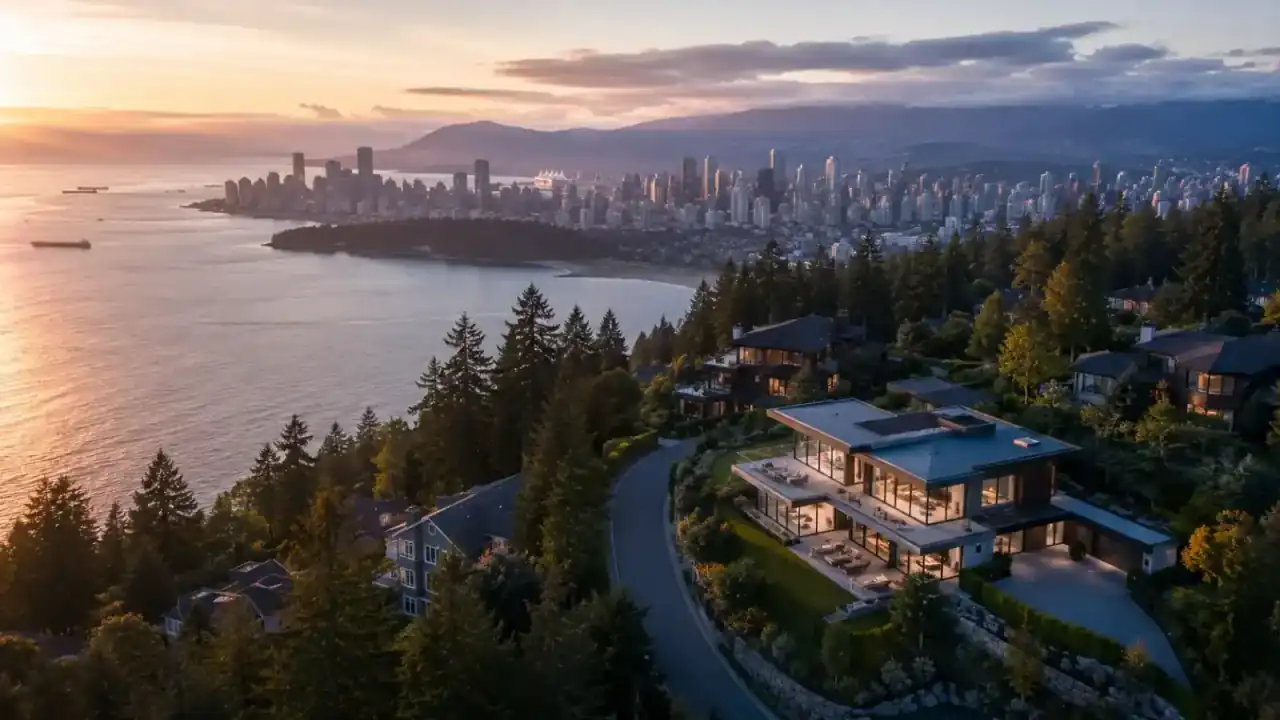
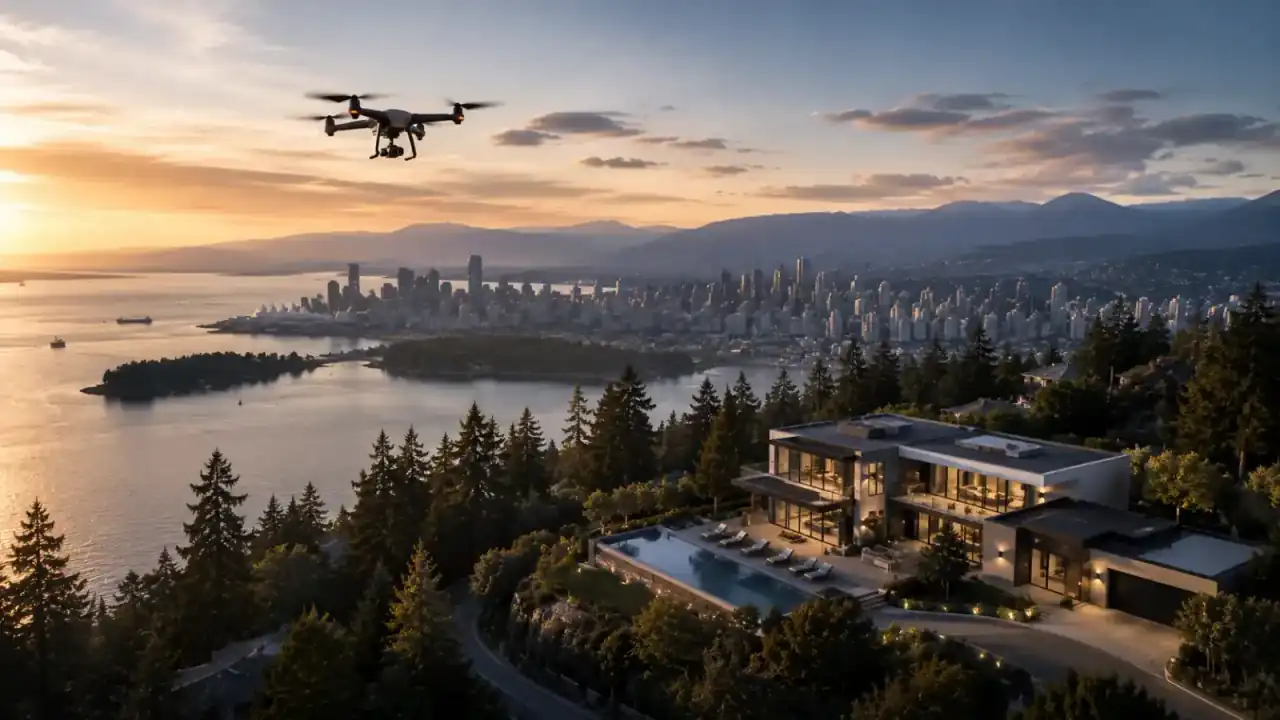
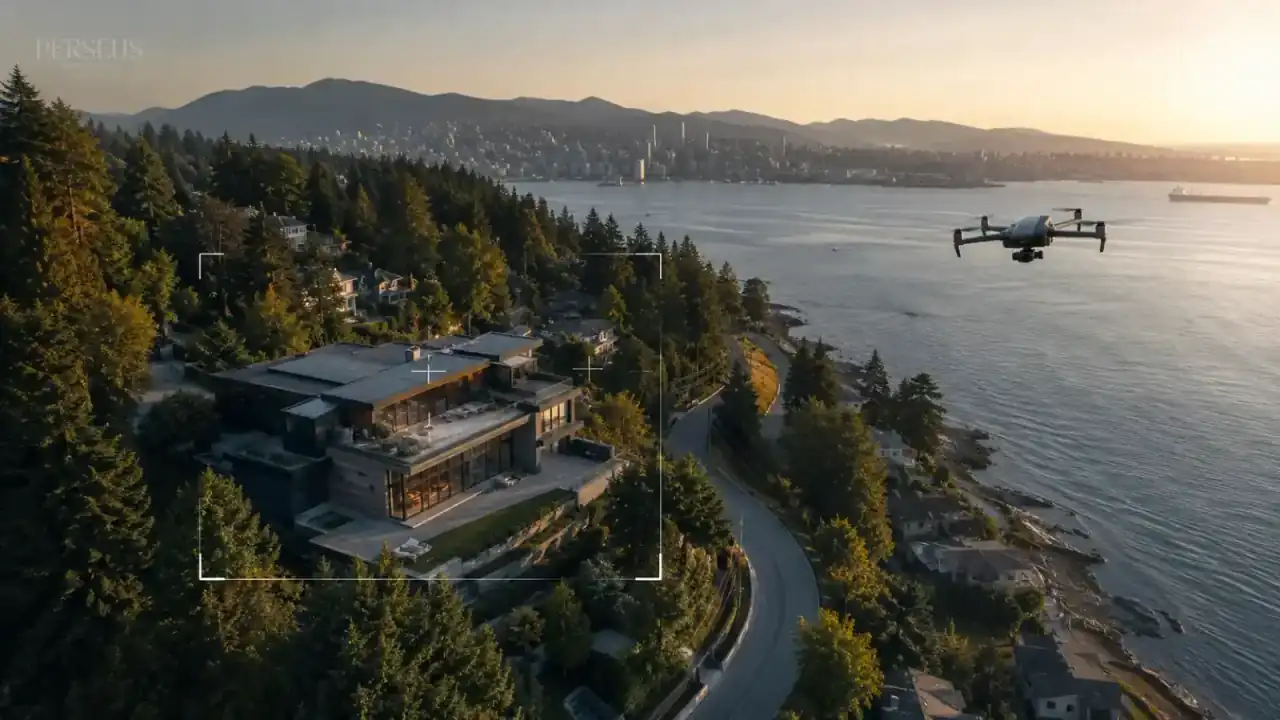
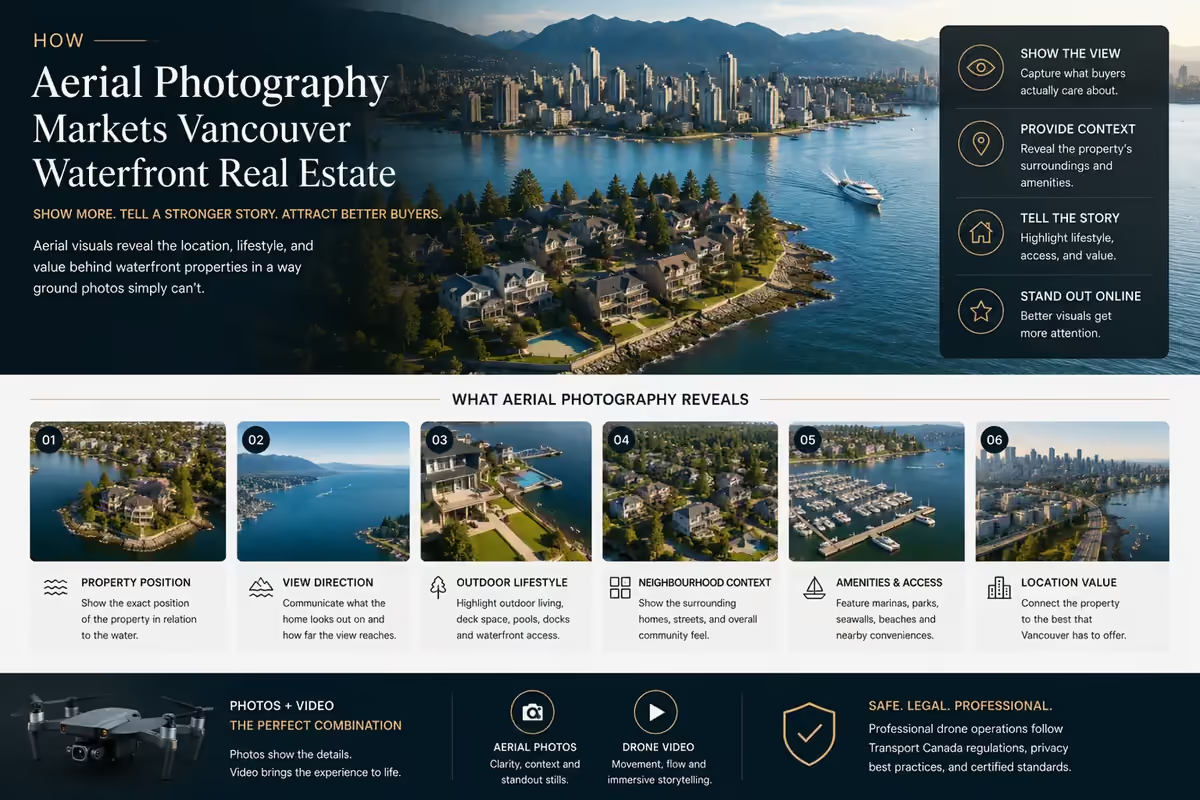
Aerial is one component of this package. It answers a narrow set of questions well: where the property sits relative to the water, how open the view is, and how the outdoor areas read from above.
Use it when the property's relationship to the water is hard to explain from the ground. Skip it when the view is blocked, the water proximity is too indirect to matter, or the property's real strength is inside.
Two guides cover the aerial side in full: when aerial photography is worth including for the decision, and drone videography for Vancouver real estate listings for how motion is used.
One planning note is specific to the waterfront. Shoreline and downtown properties often sit near dense buildings, public paths, marinas, boats and complex airspace. Drone operation in Canada is regulated, and Transport Canada publishes current guidance on safety, certification and where drones can fly. Work with a qualified operator and confirm requirements before the shoot is scheduled. The practical checklist is in our guide to planning a real estate drone shoot.
The Rest of the Waterfront Package
Photography and outdoor coverage do most of the work. The remaining assets each answer a specific question, and they are worth adding when that question is live for the property.
- Listing video: the reveal is what video does best, through the entry, the turn toward the window, the step outside. On a view property that sequence is the argument, and stills can only imply it.
- 2D floor plan: the plan carries what photos cannot, which rooms face the water, and how the outdoor space sits relative to them. Ask for orientation to be clear on the drawing.
- Matterport or a 360° tour: waterfront and view listings draw relocation and out-of-town buyers who may decide without visiting. A tour lets them stand at the window themselves.
- Twilight photography: worth planning where the view holds light late, which is most often Coal Harbour and elevated North Shore properties.
- Vertical social clips: a view reveal is one of the few listing moments that works in a few seconds on a phone.
Not every waterfront listing needs all of it. For the general question of what media a listing should include, see the best real estate media for Vancouver homes in 2026.
Sequence the Gallery So the Water Reads First
The lead image decides whether the listing earns a second click.
On a waterfront listing, the lead should communicate the property's strongest claim, which is usually its relationship to the water rather than its most attractive room. A beautiful kitchen leading a view listing buries the reason for the price.
A workable order:
- The image that establishes the water relationship
- The main living space, composed toward the view
- The primary outdoor space
- Remaining interiors
- Neighbourhood and shoreline context
- Detail shots
The gallery is a sequence, not a folder. For more on ordering images into a narrative, read our guide on real estate photography storytelling for Vancouver listings.
Where the Package Gets Used After MLS
A waterfront set has to serve more than the listing gallery: websites, property landing pages, social clips, email, paid ads, open house promotion and seller presentations.
Specify the crops during planning rather than after delivery. A horizontal view reveal re-cropped to vertical later usually loses the composition that made it work.
Google's video SEO guidance explains that video pages can be supported through structured data, thumbnails, previews and key moments. If a listing video is embedded on a property page, place it near the relevant text and keep the page context clear.
Mistakes That Weaken a Waterfront Campaign
- Showing the water but never the property's relationship to it
- Implying a stronger or more open view than the property has
- Leading the gallery with an interior image on a listing priced for the view
- Overexposing windows and losing the view inside the frame
- Photographing outdoor spaces without showing how they would be used
- Including neighbourhood images that answer no buyer question
- Treating aerial media as the campaign rather than one component of it
- Leaving orientation unexplained, so buyers cannot tell which rooms face the water
- Skipping vertical clips, so the view never reaches social platforms
The strongest waterfront campaigns are specific. They show why this property, in this location, with this setting, deserves attention.
How Perseus Creative Studio Helps Market Waterfront Listings
Perseus Creative Studio helps Vancouver real estate agents, brokerages and developers plan media for waterfront and view listings.
We start with the same questions this guide starts with: what the water does for this property, which rooms and outdoor spaces use it, how honest the view claim is, and what the neighbourhood adds. The shot list follows from that rather than from a standard package.
A campaign may include photography, videography, aerial production, drone video, 2D floor plans, 3D models, Matterport and short-form social content. The right mix depends on the property.
A Coal Harbour condo, a Kitsilano water-adjacent home, a False Creek view unit, a North Vancouver shoreline listing and a West Vancouver residence should not be marketed the same way.
Explore our real estate photography, videography, and aerial production services, view our real estate media projects, or contact Perseus Creative Studio to plan the media for your next Vancouver waterfront listing.
Key Takeaway
A waterfront listing is not a standard listing with a drone added.
Start from the neighbourhood, because the water means something different in False Creek, Coal Harbour, Kitsilano, North Vancouver and West Vancouver. Write down the honest view claim before booking. Compose interiors toward the water and cover outdoor space properly, because those two assets carry the campaign. Add video, floor plans and a tour where the property gives them a job. Lead the gallery with the relationship to the water.
Aerial media belongs in that plan. It is one component of it, not the whole of it.