Why the Right Photographer Changes the Listing Campaign
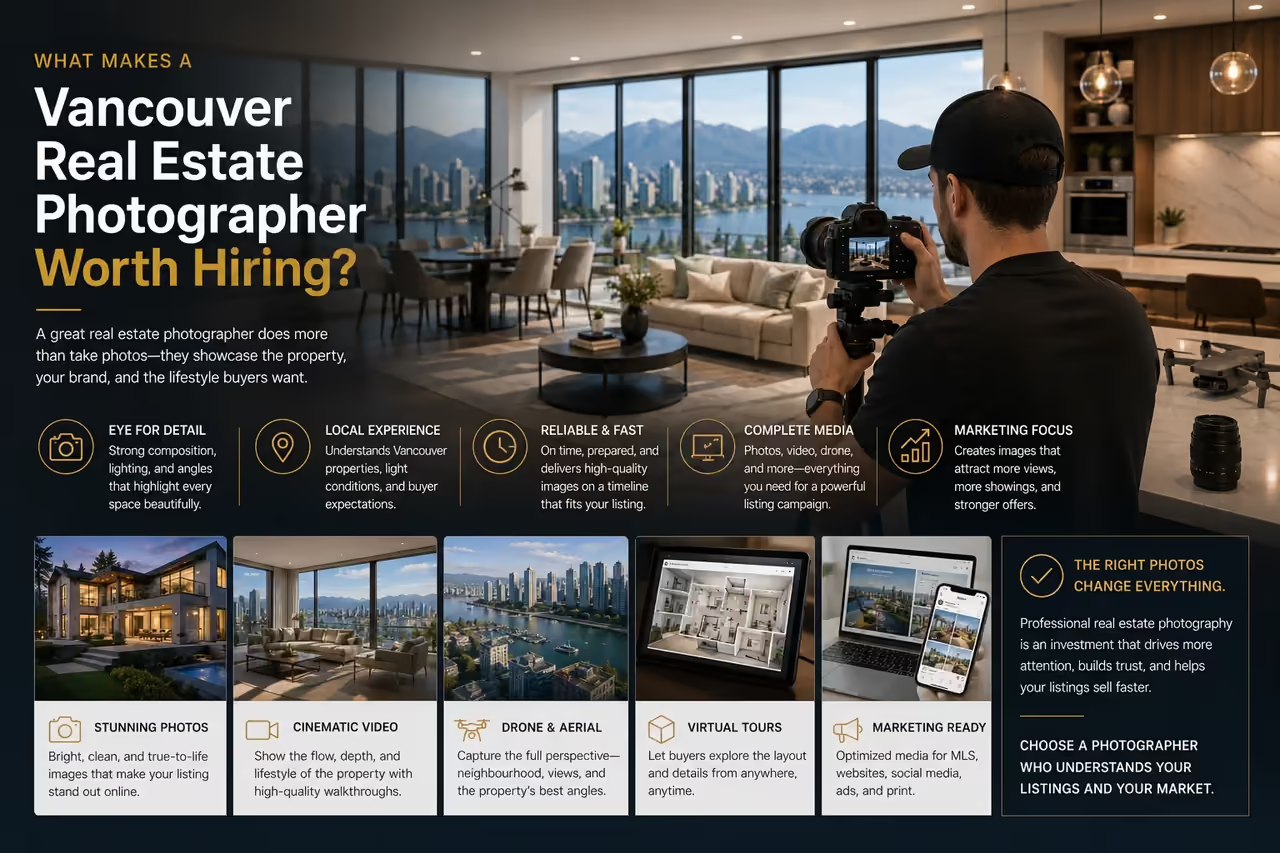
A Vancouver real estate photographer is not just someone who arrives with a camera, takes room photos, and delivers a gallery. For realtors and brokerages, the right photographer becomes part of the listing campaign.
The difference matters.
A basic photographer may document the property. A strong real estate photographer helps buyers understand the property. They know how to show space, light, layout, finishes, views, outdoor areas, and neighbourhood context in a way that works across MLS, websites, social media, email, open house promotion, and seller presentations.
For Vancouver listings, that requires more than technical camera skill. It requires local awareness, timing, composition, editing control, workflow discipline, and an understanding of how buyers evaluate homes online.
Professional real estate photography does not guarantee faster sales, stronger offers, or more showings. Pricing, market timing, property condition, location, and buyer demand still matter. But the right photographer can improve the quality of the listing’s presentation and reduce the friction buyers feel when evaluating the home online.
That is why choosing the right media partner is a strategic decision, not a small production detail.
Quick Answer
A strong Vancouver real estate photographer stands out by combining technical photography skill with local market understanding, consistent editing, clear room composition, reliable turnaround, and the ability to support broader listing media needs. The best photographers do not only make a property look polished; they make it easier for buyers to understand and easier for agents to market.
Local Knowledge Is a Practical Advantage
Local knowledge matters in real estate photography because Vancouver properties come with specific visual challenges.
A downtown condo may need careful window exposure to preserve city or water views. A North Vancouver home may need light handled around trees, mountains, and shaded streets. A West Vancouver luxury property may need slower, more refined visual treatment. A Burnaby townhome may need strong layout clarity. A Richmond property may need exterior and neighbourhood context. A Kitsilano or False Creek listing may need lifestyle images that show location value.
The photographer does not need to be a realtor. But they should understand how local property types photograph and what buyers need to see.
Vancouver-specific challenges can include:
- Cloudy or rainy weather
- Limited winter daylight
- High-rise window exposure
- Reflective surfaces and glass
- Smaller condo layouts
- Multi-level townhomes
- Basement suites
- Tree-covered streets
- Mountain, ocean, city, or marina views
- Dense urban surroundings
- Shared building amenities
- Parking and access limitations
A photographer with local experience can plan around these variables instead of reacting to them on shoot day.
Timing Can Make or Break the Shoot
Timing is part of local knowledge.
Some properties photograph better in the morning. Others need afternoon light. View properties may need clearer conditions. Luxury exteriors may benefit from golden hour or twilight. Condos with limited natural light may need a more controlled lighting approach.
A strong Vancouver real estate photographer should know how to think through timing before the shoot.
Questions that matter include:
- Which direction do the main windows face?
- Is the view a major selling point?
- Does the property need exterior light or interior balance?
- Will the weather affect the gallery?
- Does the listing need twilight or evening atmosphere?
- Are amenities or outdoor areas part of the story?
- Is the shoot also producing video or social content?
Bad timing can weaken otherwise strong media. Good timing can make the property feel more accurate, polished, and market-ready.
For listings where timing is constrained, the photographer should still know how to manage light and editing professionally.
Composition Separates Real Estate Photography from General Photography
Real estate photography is not the same as lifestyle photography, portrait photography, or event photography.
The main job is clarity. Buyers need to understand the space.
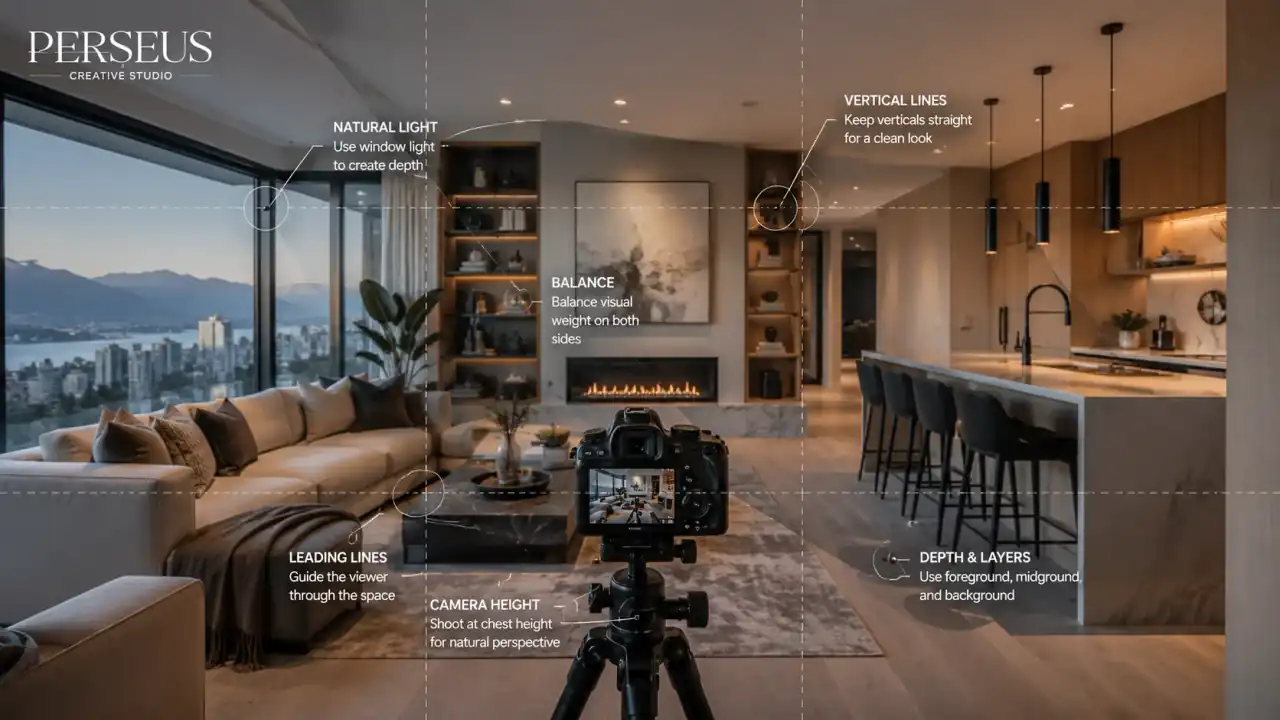
A strong photographer knows how to use composition to show room function, scale, flow, and selling features without making the property feel misleading. The goal is not to exaggerate. The goal is to make the listing easy to read.
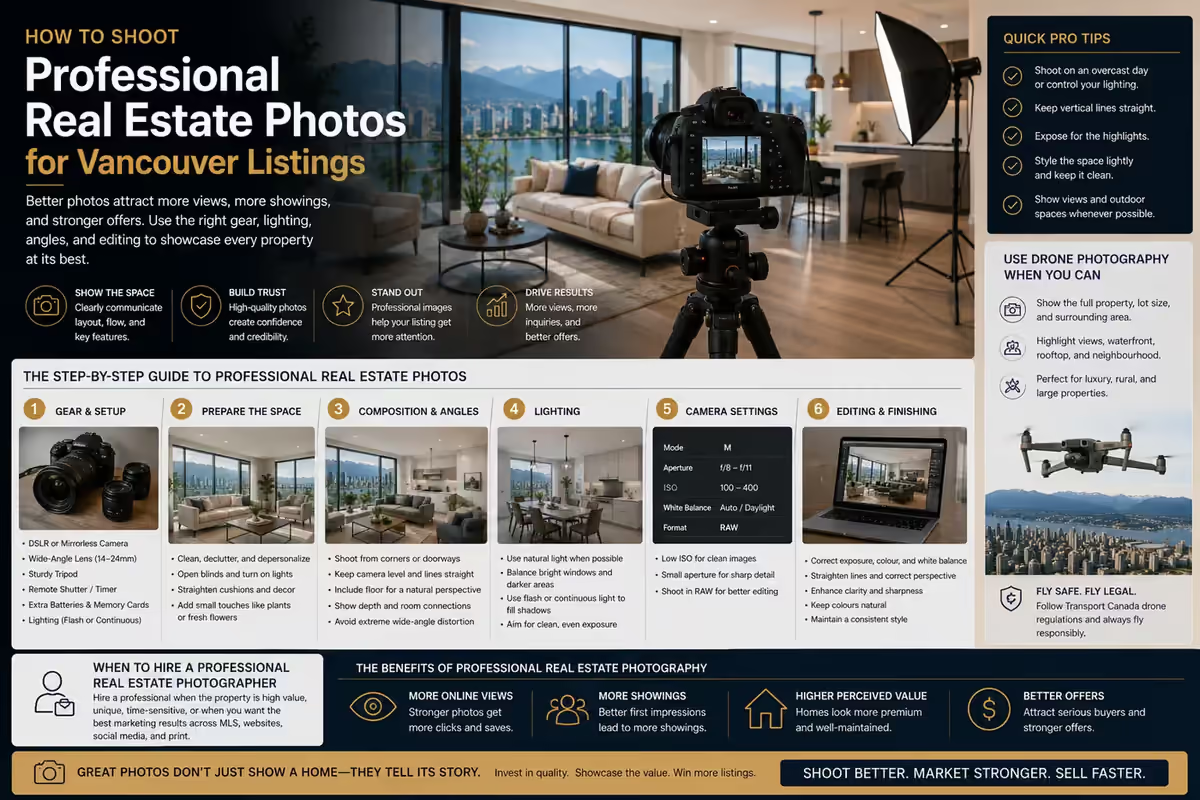
Strong real estate composition considers:
- Camera height
- Room angles
- Straight vertical lines
- Window placement
- Furniture balance
- Focal point
- Doorways and transitions
- Negative space
- How rooms connect
- How the photo sequence feels as a full gallery
This matters especially in Vancouver condos and townhomes, where space efficiency can be a major buyer concern.
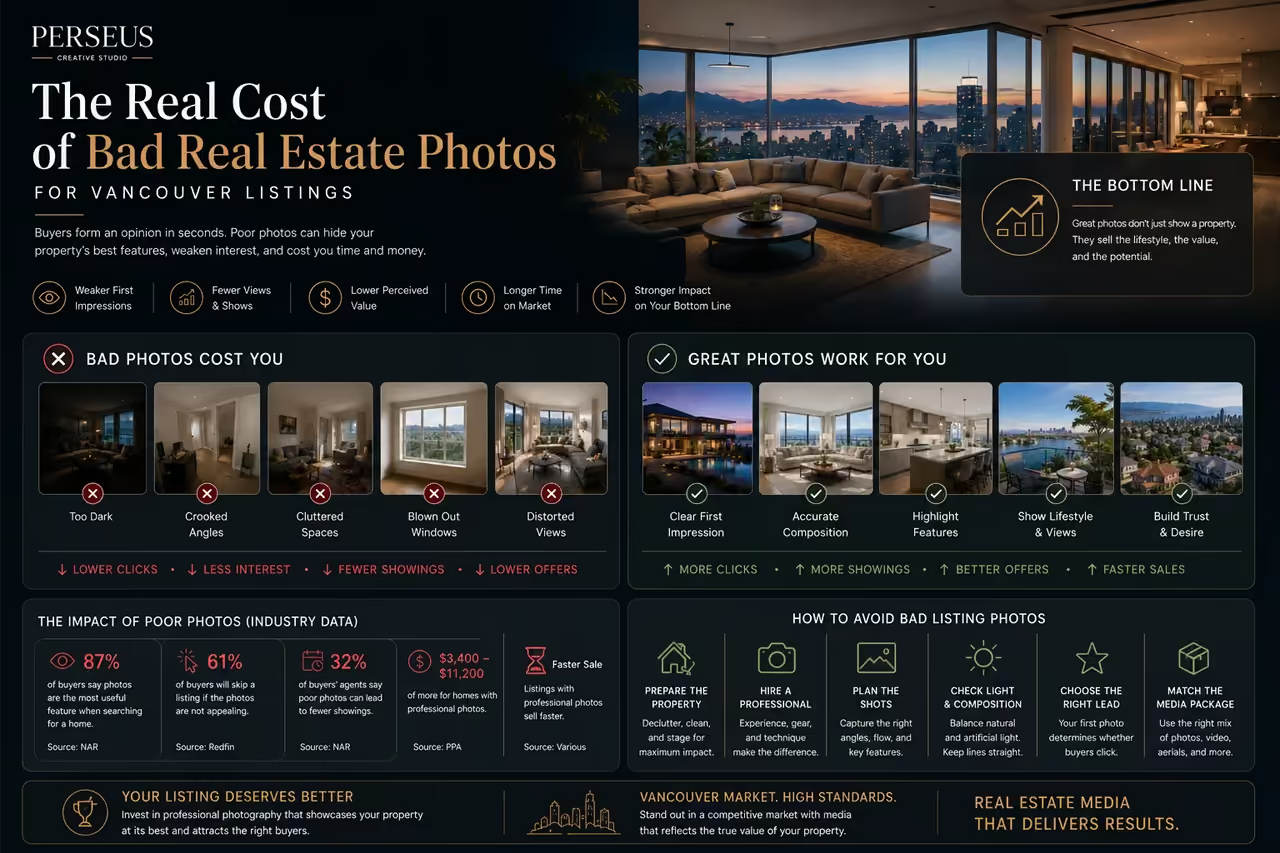
A poorly composed image can make a room feel smaller, flatter, darker, or more confusing than it is. A well-composed image helps buyers understand the room quickly.
For more detail, see our guide on real estate photo composition tips for Vancouver listings.
Lighting Control Is a Core Skill
Lighting is one of the clearest differences between an average listing photographer and a strong one.
Real estate interiors often involve mixed light, bright windows, dark corners, reflective surfaces, and rooms with different exposures. Vancouver adds seasonal daylight changes and frequent overcast conditions.
A strong photographer knows how to balance natural light, interior lights, flash, exposure blending, and editing so the final images feel clean and believable.
Good lighting should:
- Show rooms clearly
- Preserve important views where possible
- Avoid harsh shadows
- Reduce colour casts
- Keep interiors natural
- Show finishes accurately
- Make the gallery feel consistent
- Avoid unrealistic overprocessing
Lighting is not about making every room artificially bright. It is about helping buyers evaluate the property clearly.
For a deeper look at this issue, read our guide on real estate photography lighting for Vancouver listings.
Editing Should Be Consistent and Believable
Editing can strengthen or weaken a real estate gallery.
Professional editing should correct exposure, colour, perspective, contrast, and image consistency. It should not make the home feel artificial.
Common editing problems include:
- Overly saturated colours
- Unrealistic skies
- Excessive HDR
- Inconsistent white balance
- Over-sharpened images
- Distorted verticals
- Rooms that look brighter than reality
- Views that look artificially enhanced
- A gallery that feels mismatched from room to room
Buyers should trust the images. If the photos feel heavily manipulated, that trust can weaken.
The best editing style is polished but restrained. It helps the property look its best while keeping the presentation credible.
For Vancouver realtors, this matters because buyers may compare the listing online and then view it in person shortly after. The media should create interest, not disappointment.
Full-Gallery Consistency Matters More Than One Hero Shot
A photographer’s portfolio can be misleading if it only shows the best individual images.
Realtors should ask to see complete galleries.
A complete gallery reveals whether the photographer can maintain quality across the entire property: exterior, interior, bathrooms, dark rooms, small spaces, views, outdoor areas, and detail shots.
A strong full gallery should show:
- Logical photo order
- Consistent editing
- Clear room flow
- Strong lead image options
- Clean exterior images
- Well-handled bathrooms
- Good window exposure
- Usable small-room photography
- No major distortion
- Detail shots only where useful
A few beautiful images are not enough. The listing needs the full gallery to work.
This is especially important for agents who want repeatable quality across multiple listings.
Storytelling Turns Photos Into a Listing Strategy
A strong photographer understands that the gallery should tell a story.
Storytelling in real estate photography does not mean inventing drama. It means identifying what makes the property valuable and presenting that clearly.
The story may be:
- Natural light and city views
- Family-friendly layout and outdoor space
- Luxury finishes and privacy
- Efficient condo living
- Renovation quality
- Indoor-outdoor flow
- Waterfront or mountain context
- Neighbourhood lifestyle
The photographer should know how to build the gallery around that story.
This includes the lead image, room sequence, detail shots, exterior context, and supporting visuals.
A story-driven gallery helps buyers understand why the property matters. For more on this approach, see our guide on real estate photography storytelling for Vancouver listings.
Technology Should Support the Listing, Not Distract From It
Technology can improve a listing, but only when it serves the campaign.
A strong real estate media partner may offer:
- Professional photography
- Videography
- Aerial production
- 2D floor plans
- 3D models
- Matterport
- 360° tours
- Short-form social content
- Branded and unbranded versions
- Website and ad-ready exports
These tools are valuable when they solve a real marketing problem.
Aerial production helps when location, views, lot size, or exterior context matter. Matterport helps when buyers need interactive exploration. Floor plans help when layout clarity matters. Video helps when flow and atmosphere matter.
The right photographer or media team should not force every service into every listing. They should recommend the right mix.
For a wider framework, read our guide on the best real estate media for Vancouver homes in 2026.
Videography Can Extend the Value of Photography
Photography is the baseline, but many listings benefit from video as well.
Videography helps show movement, atmosphere, layout flow, and lifestyle. It also gives realtors more content for social media, YouTube, email, open house promotion, and paid campaigns.
A strong media partner can help agents decide when video is worth adding.
Video is especially useful for:
- View properties
- Luxury homes
- Multi-level layouts
- Open-concept spaces
- Indoor-outdoor flow
- Renovated interiors
- Waterfront or neighbourhood lifestyle
- Social media campaigns
If the photographer or media team understands both photo and video, the campaign can feel more consistent. The visual tone, editing style, and shot planning can work together.
For more comparison, see our guide on real estate photography vs videography for Vancouver listings.
Professionalism Shows Up Before and After the Shoot
A strong Vancouver real estate photographer is not only judged by the final images.
Professionalism shows up in the process.
A reliable photographer should communicate clearly, arrive prepared, understand access instructions, respect sellers and tenants, manage time well, and deliver files when expected.
Real estate shoots often involve many moving parts:
- Sellers
- Tenants
- Realtors
- Assistants
- Stagers
- Cleaners
- Building managers
- Strata access
- Parking
- Weather
- Keys and lockboxes
- Pets
- Open house timelines
- MLS deadlines
A photographer who communicates poorly can create unnecessary stress. A photographer who runs an organized process makes the agent’s job easier.
For brokerages and high-volume agents, workflow reliability can be just as important as creative quality.
Turnaround Time Affects the Listing Launch
Real estate marketing is time-sensitive.
If photos are delayed, the listing upload may be delayed. Social posts may be delayed. Email campaigns may be delayed. Open house promotion may be rushed. Sellers may lose confidence in the process.
A professional photographer should set clear expectations around:
- Shoot duration
- Editing time
- Delivery method
- Rush options
- Revision process
- File formats
- Web and MLS-ready versions
- Social media exports if included
Fast turnaround is valuable, but consistency matters more than unrealistic promises.
A reliable media partner should help the listing launch smoothly.
File Delivery and Usage Rights Should Be Clear
A strong real estate photographer should make file delivery simple.
Agents need images for different platforms: MLS, websites, social media, email, print, ads, and seller presentations. The photographer should explain what file sizes are included, how files are delivered, and where the images can be used.
Before hiring a photographer, clarify:
- Are MLS-ready files included?
- Are high-resolution files included?
- Can images be used on social media?
- Can the brokerage use the images?
- Can images be used after the listing sells?
- Can images be used in paid ads?
- How long are files available?
- Are revisions included?
- Are raw files included or excluded?
Usage rights are not the most exciting part of photography, but they matter. A listing campaign needs assets that can actually be used.
Image SEO and Website Use Matter More Than Many Agents Realize
Listing photos are not only for MLS. They often appear on agent websites, blog posts, project pages, landing pages, and social previews.
That means they should also be handled with website performance and image SEO in mind.
Google’s Image SEO best practices explain that image discoverability depends partly on helping search engines discover and index images, using relevant surrounding page context, and supporting images with useful optimization signals.
For Vancouver realtors, this means listing images should not only look professional. They should also be supported by:
- Descriptive filenames
- Useful alt text
- Relevant page copy
- Compressed file formats
- Proper image sizing
- Fast page performance
- Accurate page titles and metadata
This is one reason a photographer or media team with digital marketing awareness can be more valuable than a provider who only delivers a folder of images.
What to Ask Before Hiring a Vancouver Real Estate Photographer
Before choosing a photographer, ask questions that reveal both skill and workflow.
Useful questions include:
- Can I see a full gallery from a recent listing?
- Have you photographed similar Vancouver properties?
- How do you handle dark rooms and bright windows?
- What is your standard turnaround time?
- Do you provide MLS and web-ready files?
- Can you also support video or aerial production?
- Do you offer floor plans, 3D models, or Matterport?
- How do you handle building access and scheduling?
- What should the seller prepare before the shoot?
- What image usage rights are included?
- Can you create social-ready assets?
- How do you approach lead image selection?
The answers will reveal whether the provider is thinking like a listing partner or only a photographer.
Red Flags to Avoid
Not every photographer is the right fit for real estate.
Be cautious if you notice:
- No full listing galleries
- Inconsistent editing
- Poor lighting control
- Crooked vertical lines
- Overly wide distortion
- Weak communication
- Unclear pricing
- No turnaround expectations
- No property preparation guidance
- No experience with similar listings
- No ability to support broader media needs
- Heavy editing that makes spaces look unrealistic
The biggest red flag is inconsistency.
A realtor needs dependable media quality. One good shoot is not enough if the next listing looks rushed.
How Perseus Creative Studio Approaches Real Estate Photography
Perseus Creative Studio helps Vancouver real estate agents, brokerages, developers, and property-focused businesses create professional listing media for modern property marketing.
Our real estate photography approach combines visual quality with campaign thinking. We focus on how the property needs to be understood: layout, light, views, outdoor space, finishes, neighbourhood context, and buyer fit.
For some listings, professional photography may be enough. For others, the campaign may need videography, aerial production, 2D floor plans, 3D models, Matterport, social cutdowns, or website-ready creative.
The right approach depends on the listing.
A Vancouver condo, North Vancouver townhome, West Vancouver waterfront property, Burnaby family home, and pre-sale development should not all receive the same visual treatment.
Explore our real estate photography and listing media services, view our real estate media projects, or contact Perseus Creative Studio to plan professional media for your next Vancouver listing.
Key Takeaway
A Vancouver real estate photographer stands out when they understand more than photography. They understand property type, buyer perception, local conditions, lighting, composition, editing, workflow, turnaround, and how listing media supports a broader marketing campaign.
For realtors and brokerages, the right photographer can make listings easier to understand, easier to promote, and more professional across every buyer touchpoint.
The best choice is not simply the photographer with the nicest portfolio. It is the partner who can consistently help your listings launch with clarity and confidence.