Why Google Ads Are Different From Social Ads
Google Ads and social ads solve different problems.
Social ads interrupt attention. A buyer or seller may be scrolling Instagram, watching Reels, or browsing Facebook when a listing or agent ad appears. The person may be interested, but they were not necessarily searching at that moment.
Google Search Ads are different. They appear when someone types a search query. That query reveals intent.
A person searching “Vancouver realtor” is behaving differently from someone who sees a listing video in a feed. A person searching “sell my condo Vancouver” is showing a different level of commercial intent from someone casually watching a neighbourhood Reel. A person searching “home valuation Vancouver” may be closer to a seller conversation than someone who only liked a post.
That is the main reason Google Ads can be useful for real estate agents.
Search ads let Vancouver realtors appear when people are already looking for information, services, or help. The risk is that search clicks can become expensive quickly if the campaign is broad, poorly structured, or disconnected from a strong landing page.
Google Ads can support real estate lead generation, but it is not a shortcut. It needs clear intent, strong keyword control, useful landing pages, conversion tracking, and disciplined budget management.
Quick Answer
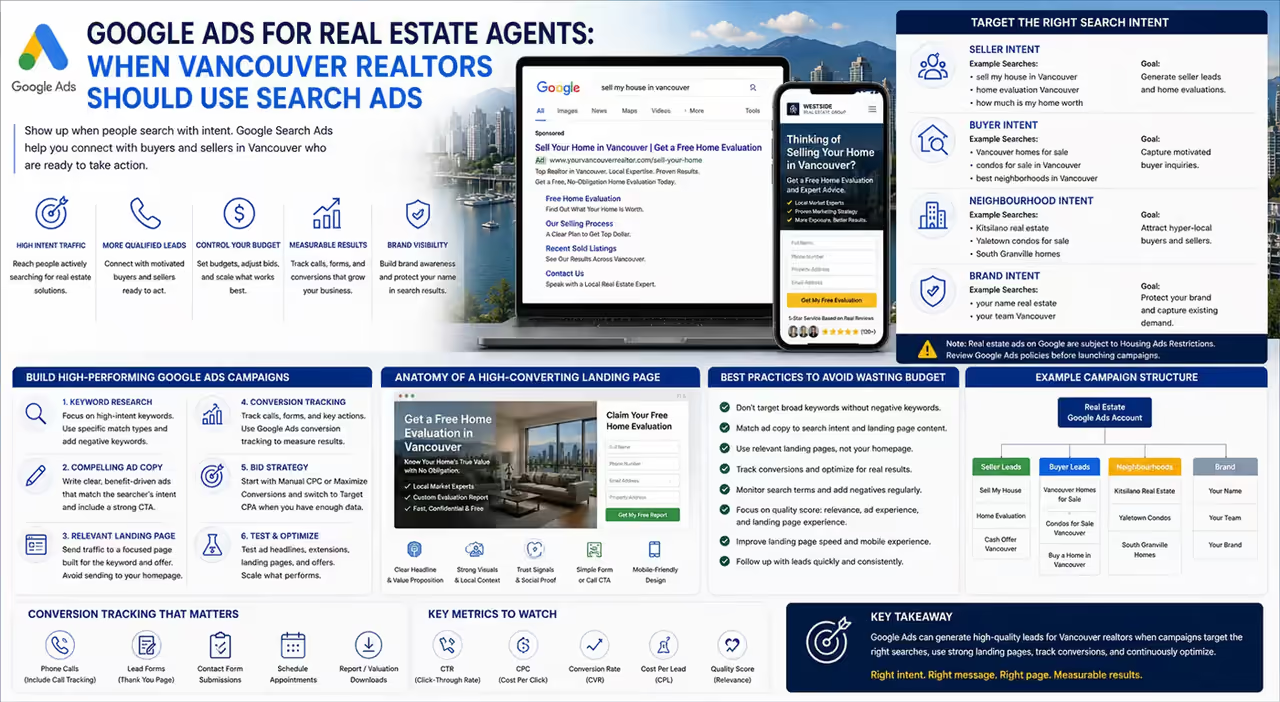
Google Ads for real estate agents are most useful when Vancouver realtors want to capture high-intent search traffic, such as people looking for a listing agent, seller consultation, home valuation, buyer help, neighbourhood information, or property-specific guidance. Search ads work best when each campaign has focused keywords, negative keywords, a relevant landing page, conversion tracking, and a clear follow-up process.
When Google Ads Make Sense for Realtors
Google Ads make sense when the search intent is clear and the campaign has a defined conversion goal.
A Vancouver realtor may use Google Ads to promote:
| Campaign Goal | Example Search Intent | Better Destination |
|---|---|---|
| Seller leads | “sell my condo Vancouver” | Seller consultation page |
| Buyer leads | “Vancouver buyer agent” | Buyer service page |
| Home valuation | “home value estimate Vancouver” | Valuation landing page |
| Local service | “Vancouver realtor” | Realtor service page |
| Neighbourhood intent | “Kitsilano realtor” | Neighbourhood-focused page |
| Pre-sale interest | “Vancouver pre-sale condos” | Pre-sale registration page |
| Brand protection | Agent or brokerage name | Branded landing page or homepage |
| Listing campaign | Specific property or area search | Property landing page |
The stronger the intent, the easier it is to build a relevant campaign.
A weak campaign starts with “we want traffic.”
A stronger campaign starts with “we want homeowners searching for selling help to request a consultation.”
That difference changes everything: keywords, ad copy, landing page, budget, tracking, and follow-up.
When Google Ads Are Probably Not the Right First Move
Google Ads are not always the best first investment.
Search ads may not be the right first move when:
| Situation | Why Google Ads May Struggle |
|---|---|
| No focused landing page | Clicks arrive but do not convert |
| No tracking | You cannot judge performance clearly |
| Weak offer | Searchers have no reason to act |
| Very small test budget | Data may be too limited |
| Generic homepage only | Poor message match |
| No follow-up process | Leads go cold |
| No clear service area | Local relevance becomes vague |
| Weak website trust | Visitors may hesitate before contacting |
In those cases, the better first step may be a website refresh, landing page build, Google Business Profile optimization, SEO foundation, or content strategy.
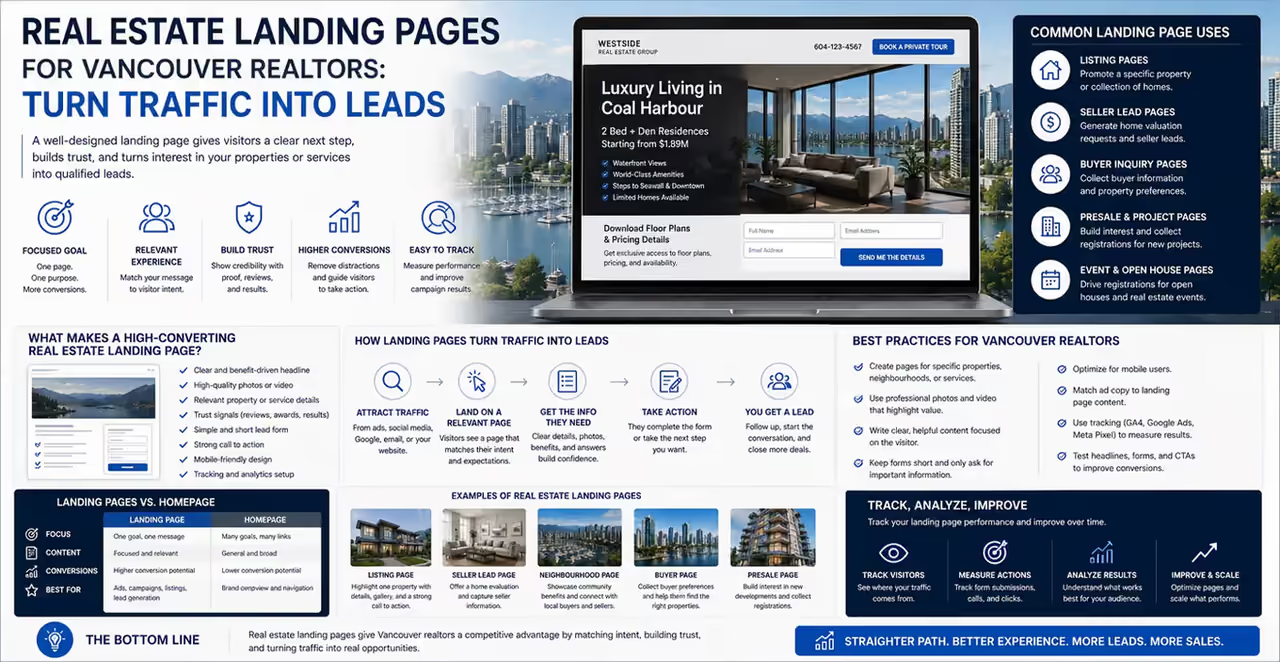
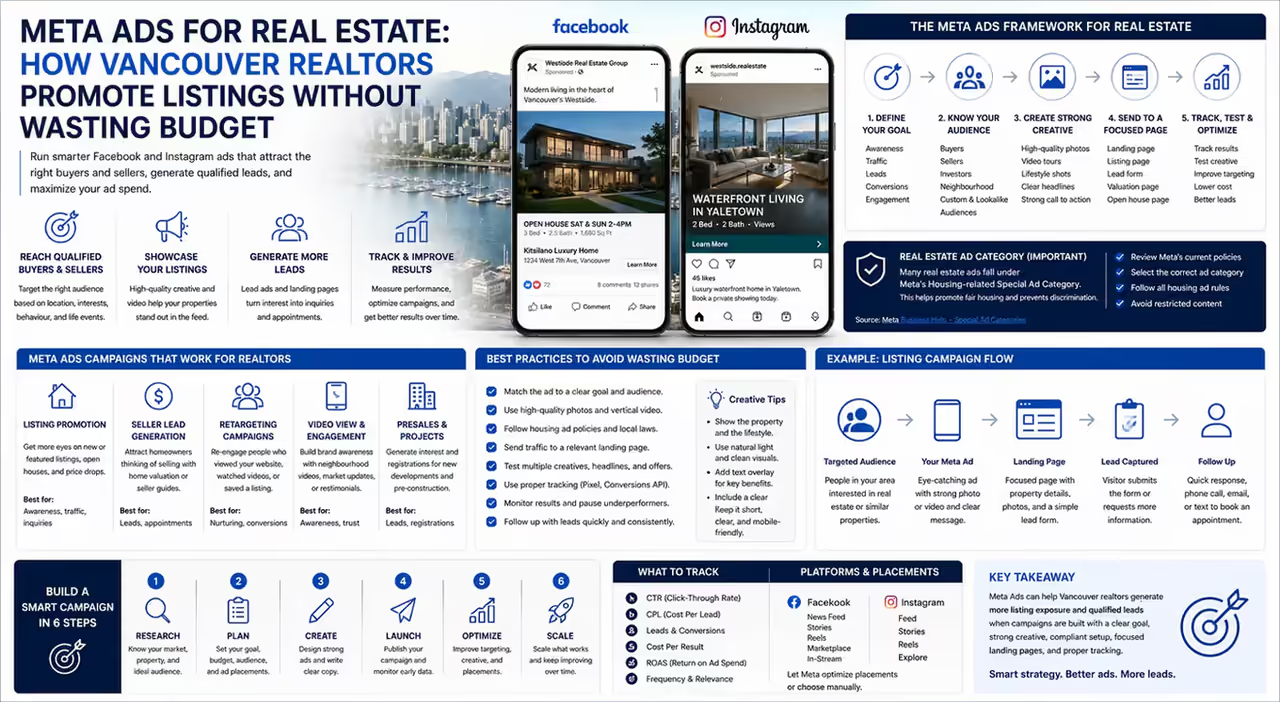
For broader digital planning, read our guide on digital marketing for Vancouver realtors.
Paid search can amplify a clear offer. It cannot fix an unclear business funnel.
Google Ads vs SEO for Vancouver Realtors
Google Ads and SEO are often compared, but they are not interchangeable.
| Channel | Main Strength | Main Limitation |
|---|---|---|
| Google Ads | Faster paid visibility for selected searches | Stops when budget stops |
| SEO | Long-term organic visibility | Takes time to build |
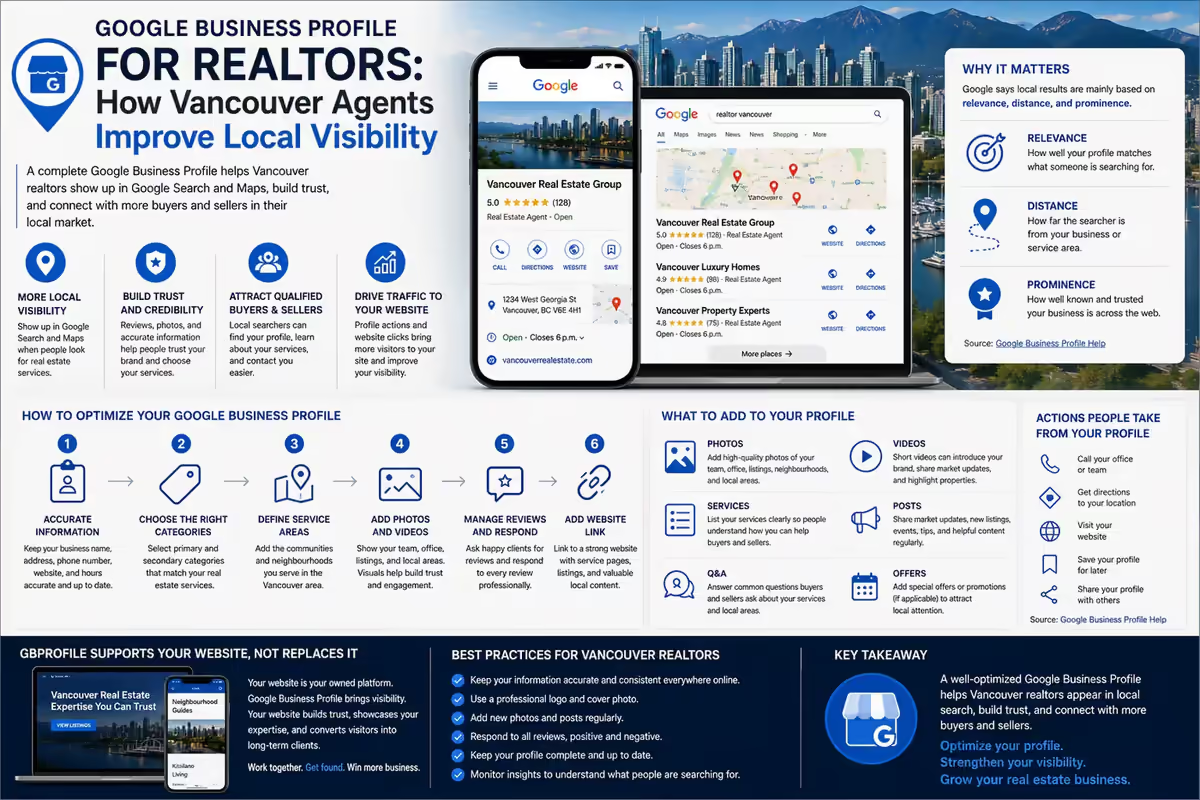
| Google Business Profile | Local trust and map visibility | Limited control over ranking |
| Meta Ads | Visual distribution and retargeting | Lower search intent |
| Nurture and repeat contact | Requires list quality |
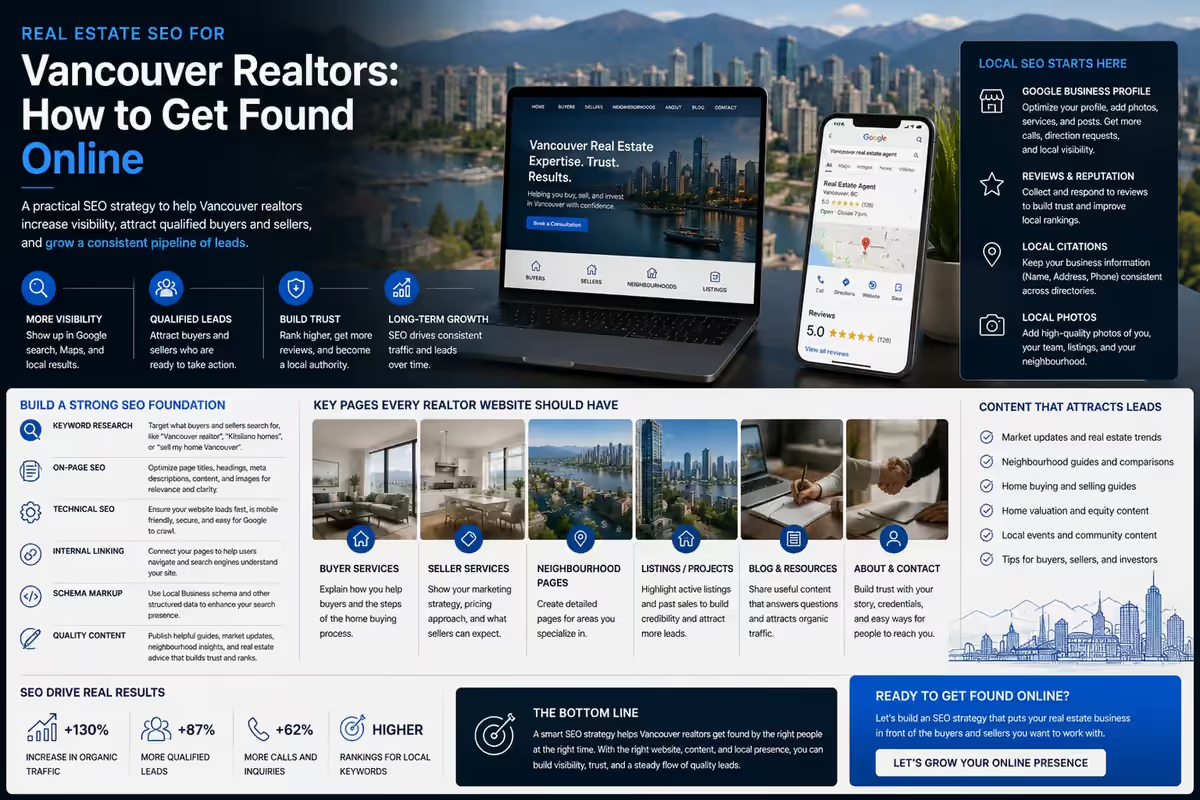
Google Ads can be useful when you need faster visibility for a specific search intent. SEO is useful when you want long-term discoverability through useful content, service pages, and local authority.
The best strategy often uses both.
SEO builds the foundation. Google Ads tests high-intent offers and captures demand faster. Landing pages improve conversion. Retargeting brings warm visitors back.
For the organic side, see real estate SEO for Vancouver realtors. For local visibility, see Google Business Profile for Vancouver realtors.
Search Intent: The Core of Google Ads
Search intent is the reason behind a search query.
In real estate, search intent can vary widely.
A person searching “Vancouver homes” may be browsing casually. A person searching “sell my house Vancouver realtor” is showing seller intent. A person searching “best realtor for condos in Vancouver” may be comparing agents. A person searching “how to prepare my home for sale” may be early-stage but relevant.
Google Ads perform better when the campaign matches the intent.
A useful way to categorize search intent:
| Intent Type | Example Query | Campaign Value |
|---|---|---|
| Informational | “how to sell a condo in Vancouver” | Good for guides and nurture |
| Commercial | “best Vancouver realtor” | Good for service pages |
| Transactional | “book real estate consultation Vancouver” | Strong lead potential |
| Local | “realtor near me” | Useful with local relevance |
| Branded | Agent or brokerage name | Protects brand demand |
| Property-specific | Address or listing search | Useful for listing campaigns |
Not every keyword deserves the same budget.
High-intent searches usually deserve more attention than broad curiosity searches.
Keyword Strategy for Realtor Search Ads
Keyword selection determines who sees your ads.
A realtor campaign should avoid dumping every real estate term into one ad group. Instead, keywords should be grouped by intent.
A cleaner structure might look like this:
| Campaign | Example Keywords | Landing Page |
|---|---|---|
| Seller leads | sell my house Vancouver, listing agent Vancouver | Seller page |
| Condo sellers | sell condo Vancouver, condo listing agent Vancouver | Condo seller page |
| Buyer leads | buyer agent Vancouver, help buying home Vancouver | Buyer page |
| Neighbourhood | Kitsilano realtor, Yaletown real estate agent | Neighbourhood page |
| Home valuation | home value Vancouver, property valuation Vancouver | Valuation page |
| Brand | agent name, brokerage name | Branded page |
| Pre-sale | Vancouver pre-sale condos, new condos Vancouver | Pre-sale page |
This keeps the campaign more relevant.
A person searching “home value Vancouver” should not see the same ad or landing page as someone searching “buyer agent Vancouver.” Their intent is different.
Match Types and Budget Control
Keyword match types influence how closely a search needs to match your keyword before the ad can show.
In practical terms:
| Match Type | Role | Risk |
|---|---|---|
| Exact match | More control | Lower reach |
| Phrase match | Balanced control and reach | Still needs monitoring |
| Broad match | Wider reach | Can spend on weaker searches if unmanaged |
Broad match can be useful in some mature accounts with strong conversion data and smart bidding, but for many real estate campaigns, it can create wasted spend if launched too early.
Phrase and exact match often give more control during early testing.
The campaign should also use search terms reports to identify irrelevant queries and add negative keywords.
Negative Keywords: The Budget Protection Layer
Negative keywords tell Google what searches you do not want to show for.
For real estate agents, negative keywords can be essential because many searches include irrelevant intent.
Examples might include terms related to:
- Jobs
- Courses
- Licensing
- Free templates
- Rentals if you do not handle rentals
- Commercial if you only do residential
- Property management if not offered
- DIY legal topics
- Unrelated cities
- Research-only queries
The exact negative list depends on the campaign.
A seller lead campaign should not waste money on people looking for real estate jobs. A buyer campaign should not pay for property management searches. A luxury campaign may need to filter out unrelated low-intent terms.
Negative keywords should be reviewed regularly, not added once and forgotten.
Landing Pages Decide What Happens After the Click
The ad earns the click. The landing page earns the lead.
Google Ads Help defines a landing page as the webpage people end up on after clicking an ad, and notes that landing page experience can help determine keyword Quality Score. Google describes landing page experience through factors such as usefulness and relevance of information, ease of navigation, links on the page, and user expectations based on the ad creative.
For real estate campaigns, that means message match matters.
If the ad says “Sell your Vancouver condo with a stronger listing strategy,” the landing page should be about selling Vancouver condos. It should not be a generic homepage.
A strong Google Ads landing page should include:
| Element | Why It Matters |
|---|---|
| Specific headline | Confirms the visitor is in the right place |
| Local relevance | Shows Vancouver-specific context |
| Clear offer | Explains the next step |
| Trust signals | Reduces hesitation |
| Strong visuals | Supports credibility |
| Simple form | Lowers friction |
| Phone CTA | Captures high-intent visitors |
| Tracking | Measures performance |
For a full landing page framework, read real estate landing pages for Vancouver realtors.
Search Ads for Seller Leads
Seller campaigns are often one of the strongest Google Ads opportunities for realtors because the intent can be commercially valuable.
A homeowner searching for selling help may be closer to action than a general buyer browsing listings.
Seller campaign themes may include:
| Campaign Theme | Visitor Need |
|---|---|
| Listing agent | Wants representation |
| Home valuation | Wants to understand property value |
| Condo selling | Wants property-type-specific help |
| Luxury selling | Wants premium positioning |
| Listing marketing | Wants stronger property promotion |
| Downsizing | Needs process guidance |
| Neighbourhood seller | Wants local expertise |
A seller landing page should focus on trust, process, marketing strategy, and next steps.
It should explain how the realtor helps with pricing, preparation, media, launch, digital marketing, showing strategy, negotiation, and communication.
Do not send seller-intent traffic to a buyer-focused page.
Search Ads for Buyer Leads
Buyer search campaigns can work, but they need careful qualification.
Many buyer searches are broad. A person searching “homes for sale Vancouver” may only want listings and may not be looking for an agent yet. A person searching “first-time home buyer realtor Vancouver” may show stronger service intent.
Buyer campaigns can target:
- Buyer agent searches
- First-time buyer searches
- Neighbourhood buyer searches
- Condo buyer searches
- Relocation searches
- Pre-sale buyer searches
Buyer landing pages should help the visitor understand the process and provide a clear reason to contact.
Possible CTAs include:
Book a buyer consultation
Ask about available homes
Get neighbourhood guidance
Request pre-sale updates