An AI SEO agency helps a Vancouver business make its services, coverage and expertise easier for search engines to find and use in AI-generated answers. That might mean making it clear which municipalities you serve, what kinds of jobs you take and what a customer should expect when they call. We look at three projects to explain which pages matter for different businesses and what a Google Search impression can tell you about their visibility.
For the technical, content and local search work behind that approach, see our SEO services in Vancouver.
Generative engine optimization, or GEO, is the part of AI SEO focused on how a business appears in answers that search tools generate. It builds on familiar work like making pages crawlable, explaining services in plain language and keeping important facts up to date. A customer asking who can do a specific job needs an answer grounded in those details.
Perseus Creative Studio’s GEO Case Studies
We’re Perseus Creative Studio, and we’re reporting on our own work, including our own website. Our website project portfolio documents the two client redesigns in 2026. The live sites show what customers can find today. For the search portion of each case, the evidence needs to connect dated changes to a named report and a defined measurement window.
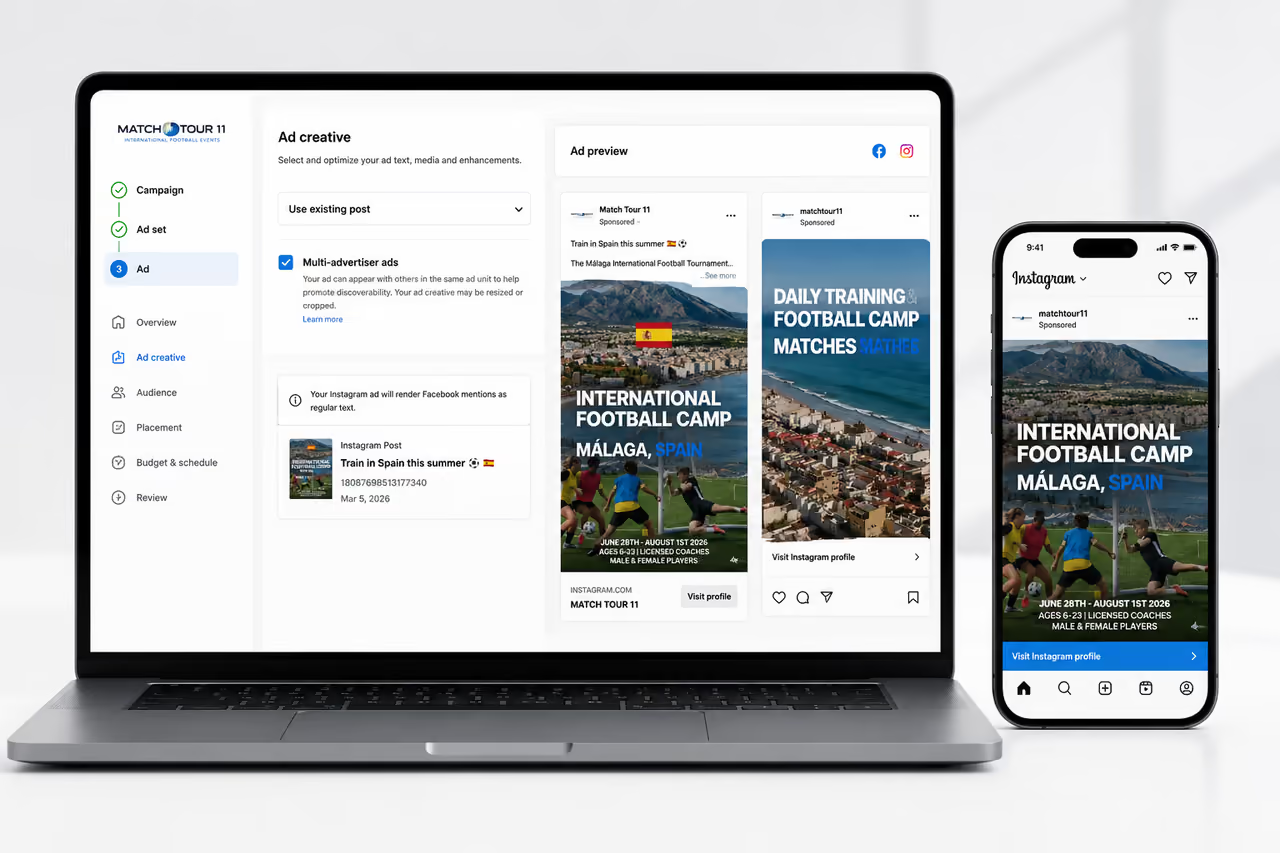
Case Study 1: Match tour 11
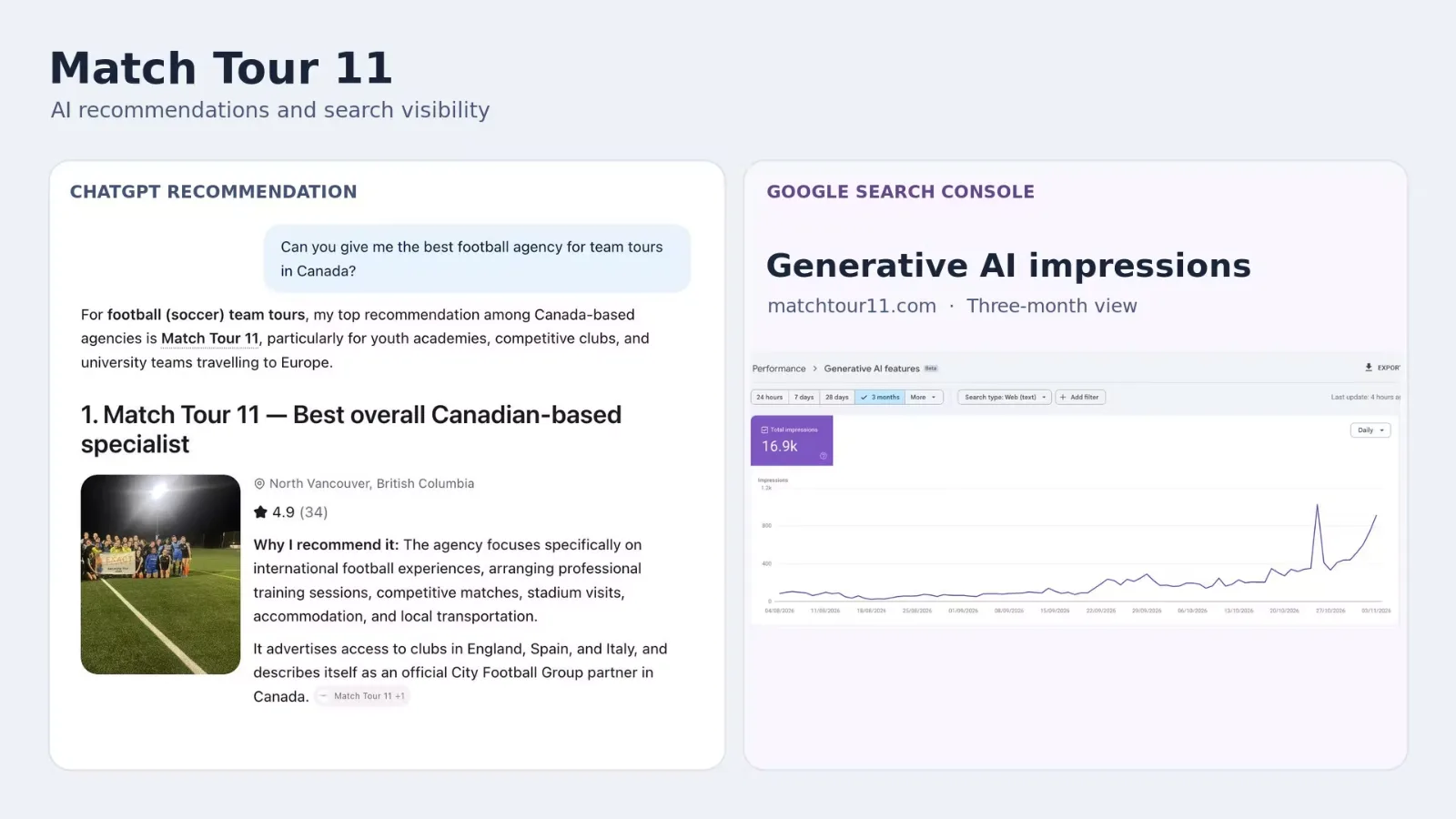
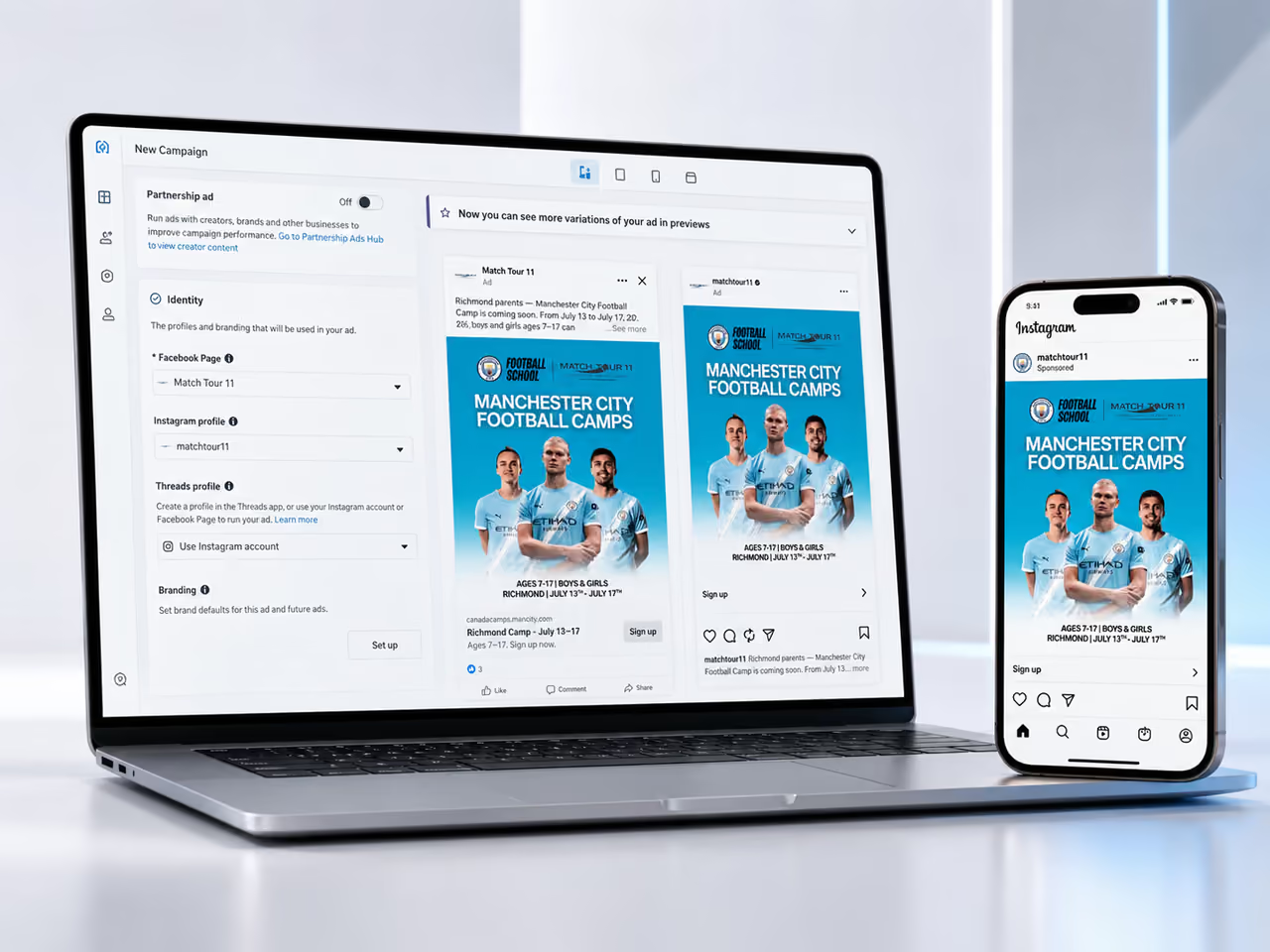
Match Tour 11 organizes football tours, training camps and trials for players and teams. Its business spans North America and Europe, and its Canadian camps include sessions in British Columbia. We redesigned its website to present tours, trials and professional camps more clearly. The current site gives those offers distinct paths so a parent looking for a camp and a club organizing a tour can find the relevant information.
Our Manchester City camps case study documents a related campaign with web and registration work. Families needed to find the right session in West Vancouver, Richmond or Kelowna and understand how to register. If the search objective was to help families discover those sessions, the relevant comparison would focus on the camp pages. A Canadian sitewide total could also reflect interest in overseas tours and other offers. That same distinction matters to a Vancouver business that serves several markets.
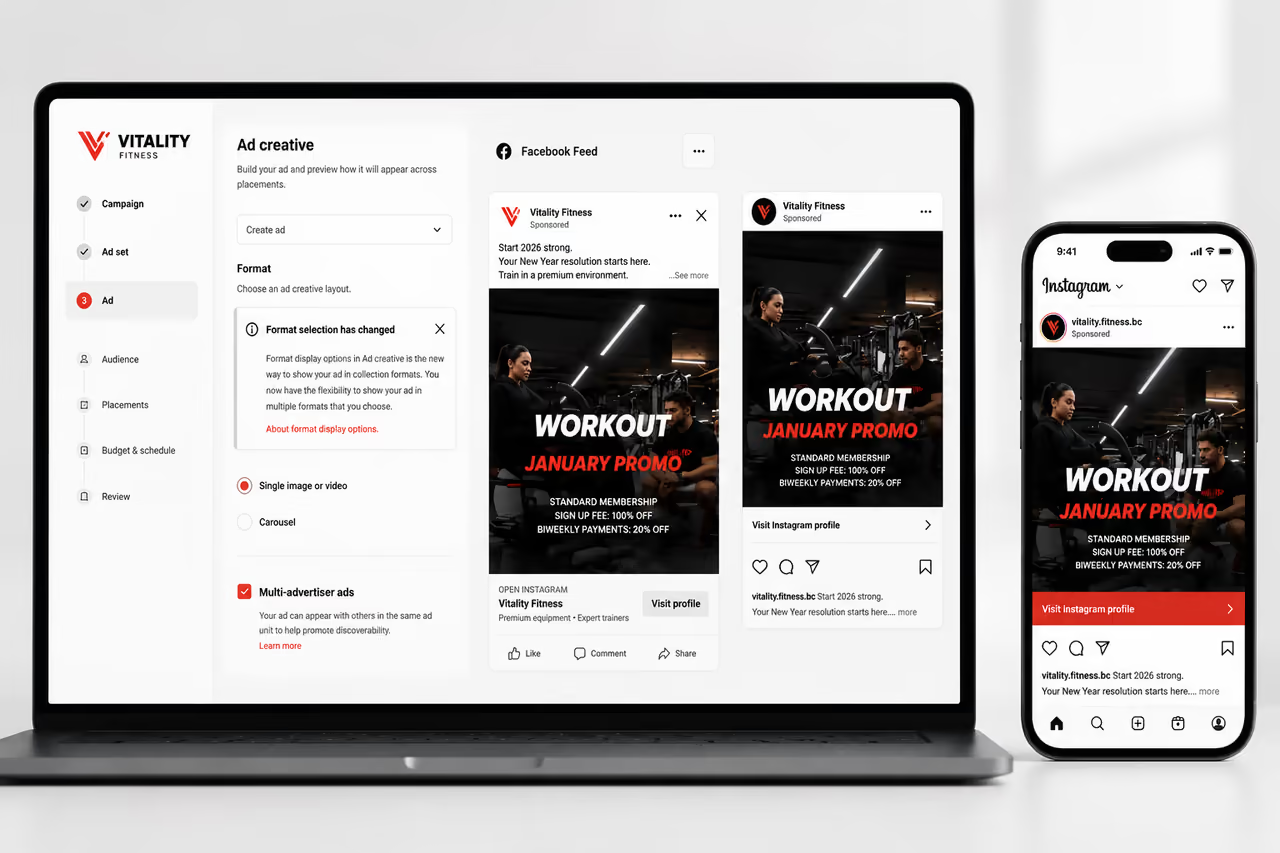
Case Study 2: Phantom Pest Control
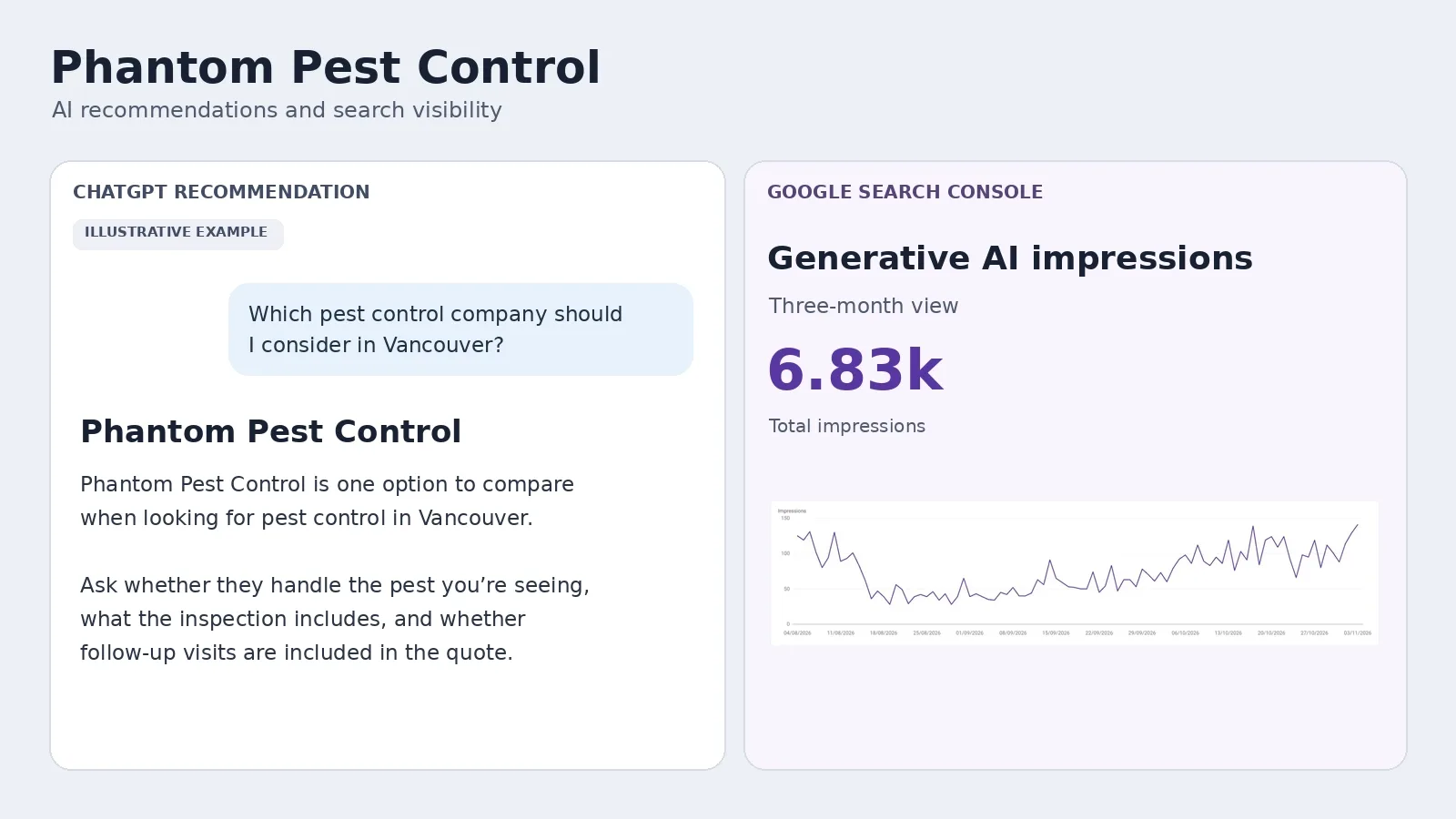
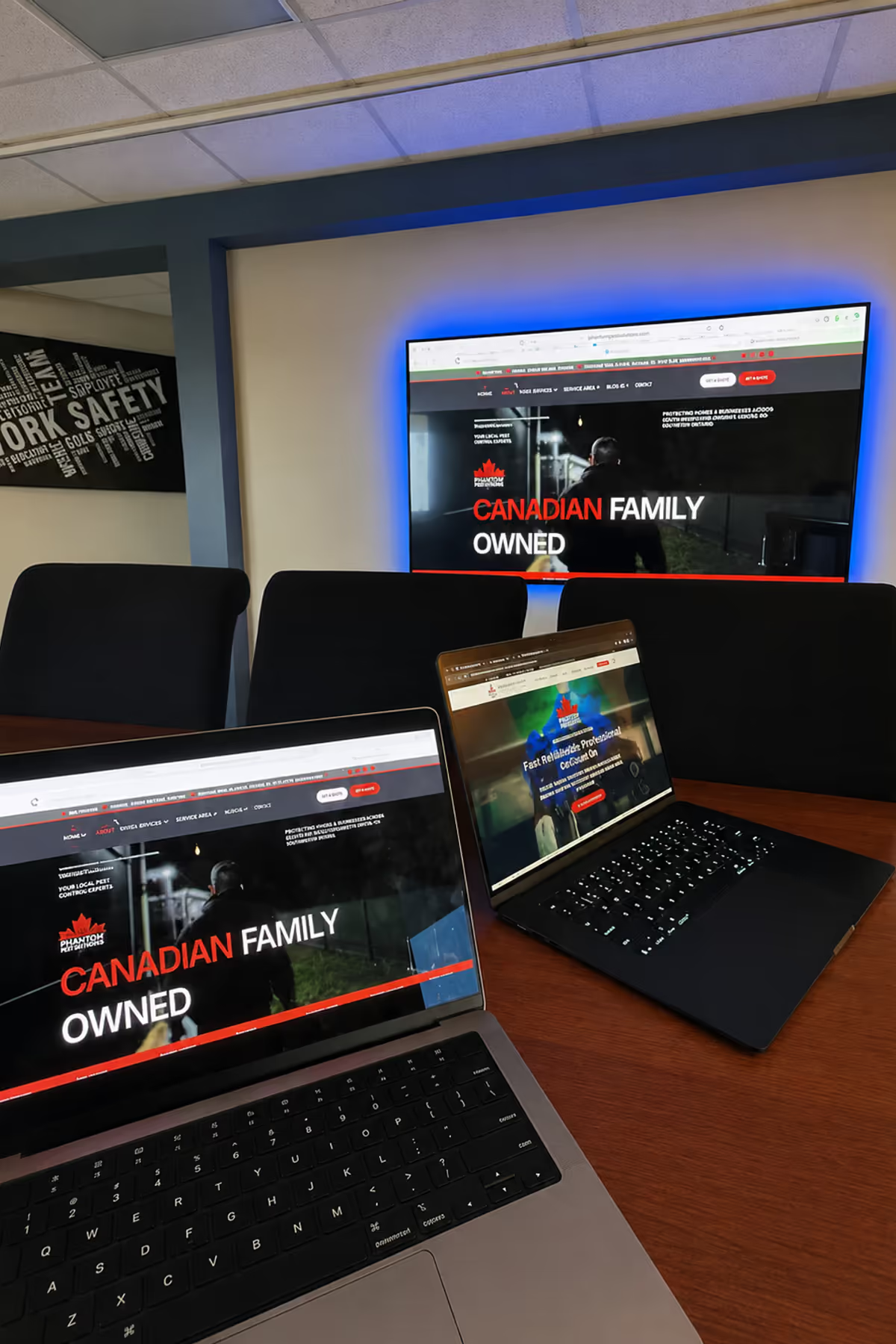
Phantom Pest Control serves homes, businesses and managed properties across the Lower Mainland and Fraser Valley. We redesigned its website to make pest types, service areas and booking easier to find. The live site lists rodent control and publishes coverage for Vancouver, Burnaby and Richmond, among other locations. A homeowner looking for help with mice may need to know whether the company covers their address, handles their type of property and can explain what happens after the first call. The service and location information help that person decide whether to get in touch.
A useful search comparison would identify whether the reporting covers rodent-control pages, location pages or the whole website. Those scopes answer different questions. For example, a seasonal rise in rodent enquiries could coincide with more search impressions. To report calls, quote requests or booked work, we would need the relevant analytics or intake records and a way to identify the source.
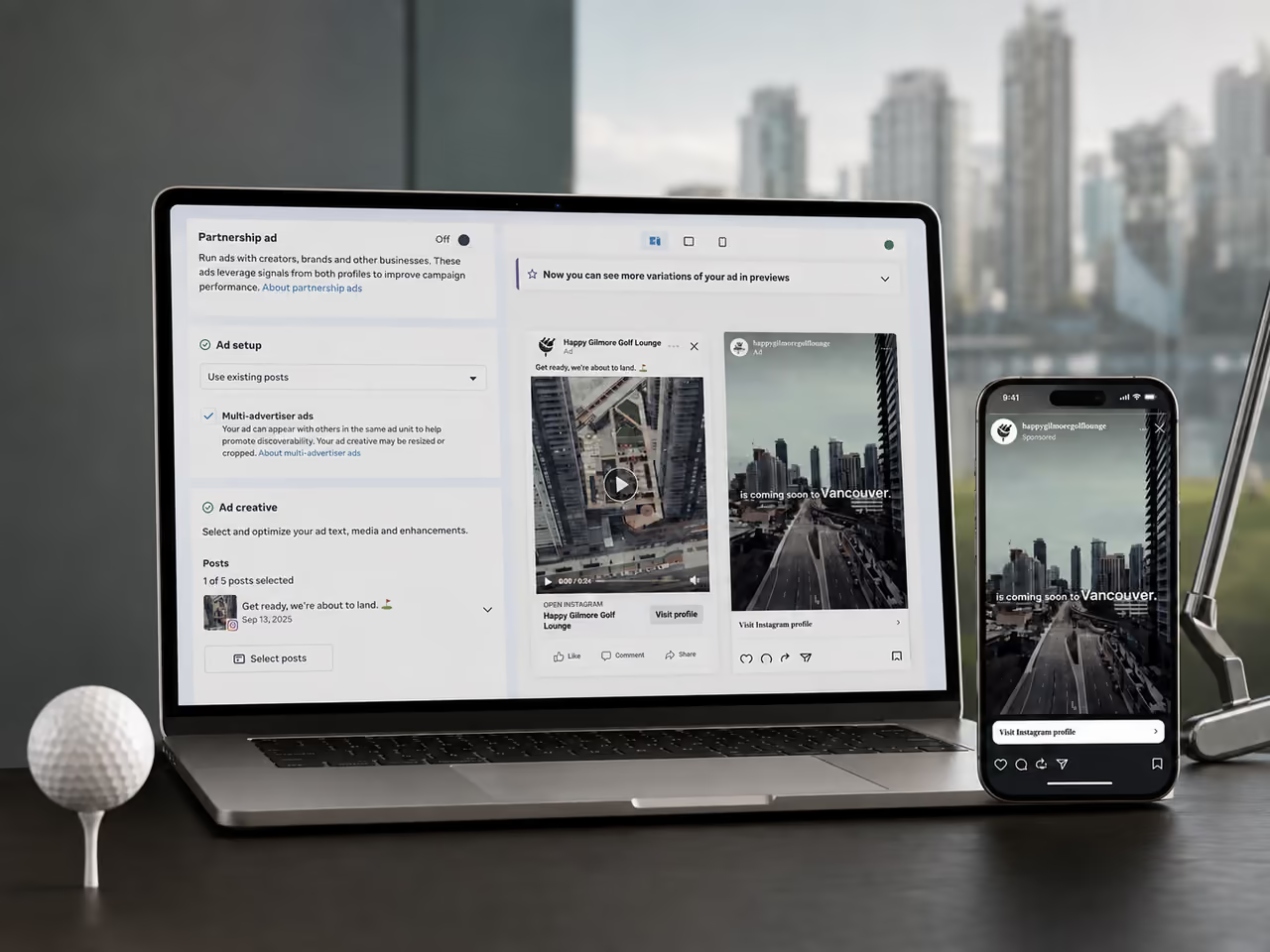
Case Study 3: Perseus Creative Studio
This is our agency-owned site. We publish service pages for prospective clients, project records that describe our work and articles that answer more specific questions. Our inquiry form also lets people say they heard about us through an AI assistant. That optional answer is self-reported, so it measures something different from a site visit with an identifiable referral source.
Scope matters on a site with several service lines. If a report covers our entire property, its total includes whichever pages qualified within that scope. To say how an SEO service page performed, we would need a page-filtered comparison for that URL. A sitewide change could come from a project, an article or a page in a different service category.
Measuring GEO in Google Search Console
AI Overviews and AI Mode Impressions
Google says its Generative AI performance report (Search) rolled out worldwide on August 31, 2026. A property may still lack the view if it has too few impressions in those features. The report excludes Search Labs experiments, and Google Discover has a separate report.
The dedicated Search report combines link impressions from AI Overviews and AI Mode. Its documented breakdowns cover page, country, device and date, and it offers a search-type filter for text-based or multimodal Web searches. To identify a specific AI feature, query or city such as Vancouver, you’d need evidence beyond this combined view. The ordinary Search results report still includes eligible AI-feature activity within its broader Web totals.
An impression records a link to the site being shown under Google’s counting rules. Depending on the result, a user may need to scroll or expand it into view. The count alone gives no record of the exact wording of an answer, an unlinked brand mention or a person clicking through. A click is a separate action on Google. A referral is an incoming visit identified by the destination site’s analytics or logs.
Comparing Baselines and Reporting Periods
Use the same Search Console property, report and filters for two complete periods of equal length. Keep country, device, search type and any URL scope consistent. Compare equivalent weekdays where possible and record the rollout date and other changes in the same period. Exclude preliminary days. If a launch coincides with a busy season or a migration, explain how that affects the comparison.
In the dedicated AI report, two links from one property in the same generative result can count as one impression in the property chart. A URL filter changes the chart to URL-level aggregation. Adding individual page rows can therefore give a different total from the property chart. Export the chart and table, and keep a full screenshot of the settings so someone else can repeat the comparison.
In a hypothetical comparison of 10 and 20 impressions, report both counts and the increase of 10. The 100% change starts from a small baseline. With a zero baseline, report the absolute change alone. The timing can establish that a change followed a rollout. A redesign, new content or a shift in demand can also affect the same period.
GEO vs. Traditional Local SEO
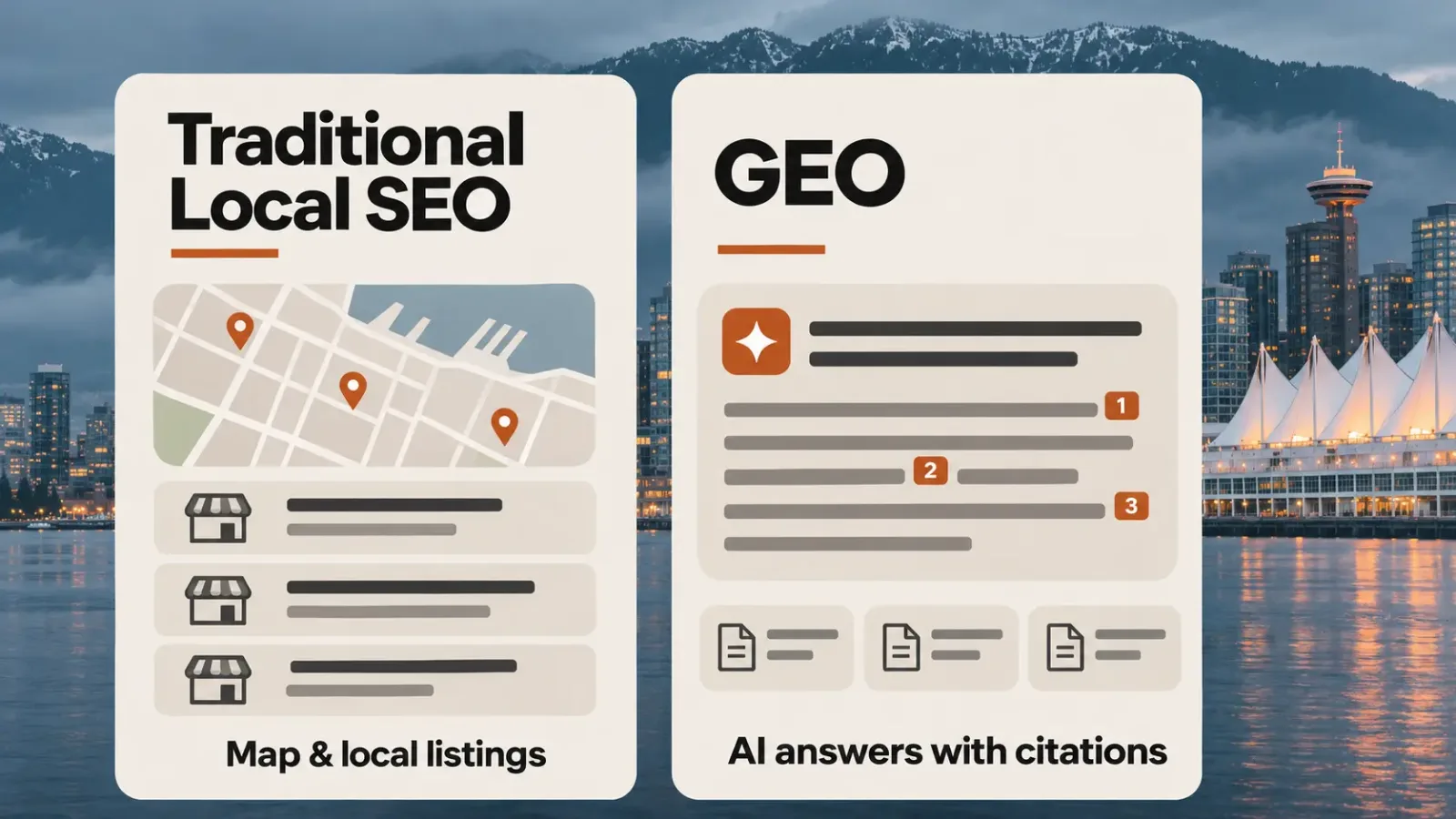
Both depend on crawlable pages, clear service details and consistent business information. The distinction is where someone discovers you. In a generative answer, a tool may show a link to a page explaining a service. In organic local results, a searcher may choose a website from the list. In Google Maps or the local pack, someone can evaluate a Business Profile, request directions or tap to call.
Use the dedicated Search Console report for supported Google AI impressions and the broader Search results report for overall website search performance. Business Profile performance shows profile views and actions across Search and Maps. A call-button tap is an action on the profile. To count conversations or jobs booked, check call or intake records. Our Vancouver guide to Google Business Profile walks through the profile side for real estate businesses.
AI Search Opportunities in Metro Vancouver
The City of Vancouver is one municipality in Metro Vancouver. Burnaby, Richmond and the City and District of North Vancouver have their own boundaries. If coverage, scheduling or job requirements vary across them, put the relevant details where a customer will look for them. A general regional service claim can leave someone unsure whether you serve their address.
High Intent Local Service Queries
These examples illustrate different hiring decisions:
- Urgency. “Who can inspect for mice in a Burnaby townhouse this week?” Explain the inspection process and how to confirm current availability.
- Eligibility. “Does this Vancouver junk removal company take appliances from a condo?” State which appliances you accept and what the customer needs to arrange for building access.
- Coverage. “Can a mobile bike repair service come to my home in Richmond?” List the service boundary and any travel or booking conditions.
City and Neighbourhood Service Pages
A separate page earns its place when it helps a customer make a decision they couldn’t make from the main service page. A Richmond page might explain an actual dispatch schedule or building-access requirements your crew frequently encounters. Within Vancouver, a neighbourhood page needs similarly useful information specific to that area. If the service and booking process are the same throughout the region, a single service page with a clear coverage section can answer the question.
Conclusion
A useful GEO audit starts with the visibility you can measure today, the pages that answer priority customer questions and the gaps in tracking visits or enquiries. If you’d like to discuss a GEO audit for your business, get in touch with Perseus Creative Studio.