To market your small business, start with one ideal customer and one offer. Then build a website that asks for the inquiry, get found on Google, show your work on video, and use paid ads to reach people who don't know you yet. Do these in that order and measure what each one brings in. That way a small budget turns into sales and doesn't get spread across every channel at once.
Each of those channels works better when one team plans them together. For example, the video you film for your website can also become your best ad. Perseus plans digital marketing services in Vancouver around that idea, and this guide follows the same order.
Start With a One Page Marketing Plan
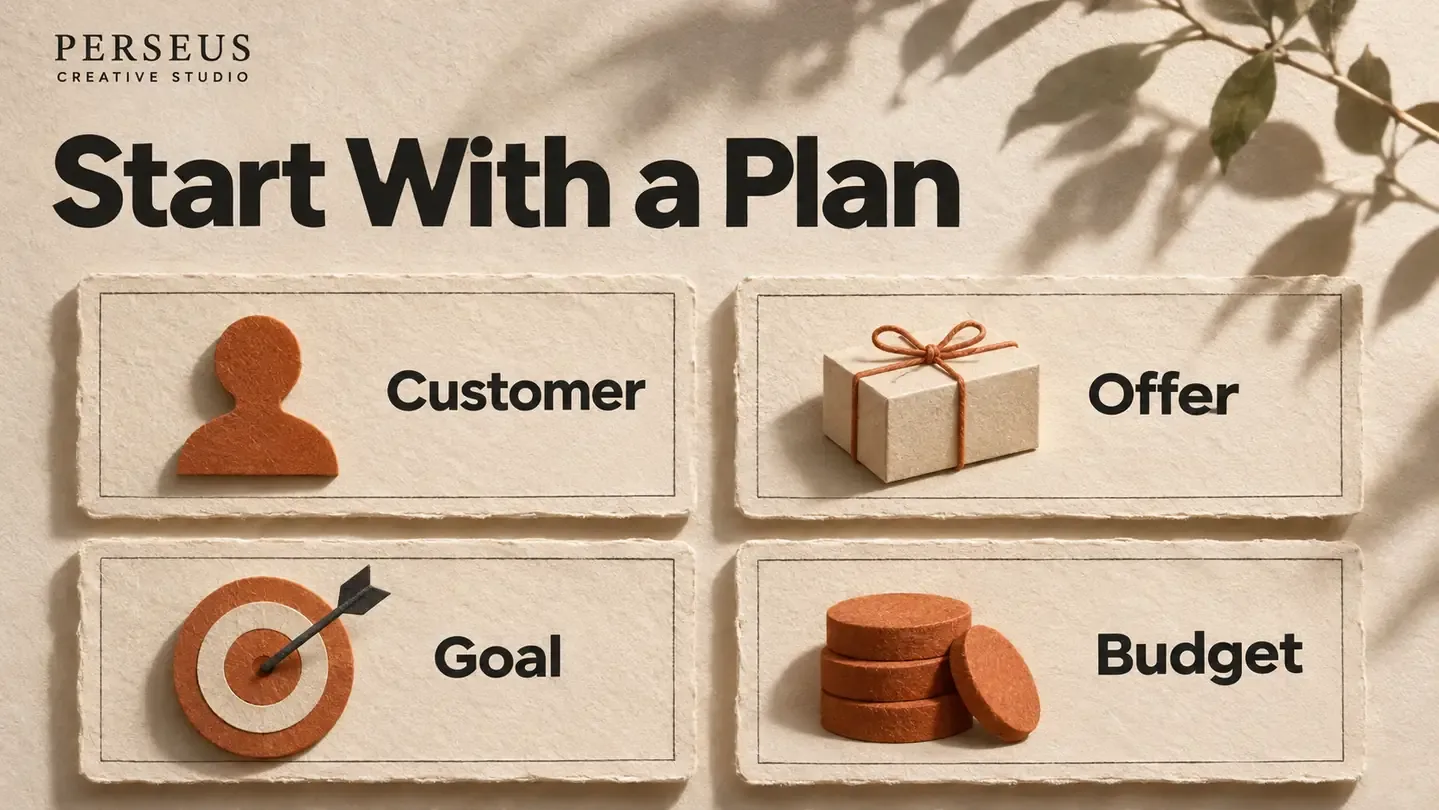
Working out how to market your small business starts with a plan that fits on one page. The plan answers four questions: who you sell to, what you sell them first, what result you want this quarter, and how much you can spend to get it. If you can't answer those four, every channel below will cost more than it should.
Your Ideal Customer and Core Offer
Your ideal customer is the person who buys often, pays on time, and sends you friends. Describe one of them in a single sentence: where they live, what problem they have, and what they type into Google when that problem shows up. A North Vancouver renovation company might write "homeowners in houses built before 1990 who want a new kitchen within six months."
Your core offer is the one service you lead with. Even if you sell ten things, pick the one with the best margin and the clearest result. A single offer gives every page, video and ad the same message. People remember one message much more easily than ten.
Your First Marketing Goal and Budget
Set one goal you can count, such as 20 inquiries a month or 15 booked consultations. Then work backward to a budget. Say a new client is worth $2,000 to you and one in four inquiries becomes a client. Each inquiry is then worth $500, and paying $80 for one through ads still leaves plenty of room.
Split the budget into two parts. One part is a fixed amount for things that last, like the website and a video library. The other is a monthly amount for things that stop when you stop paying, like ads. Write both numbers on the plan and compare them with your results each month.
Design a Website That Turns Visits Into Leads
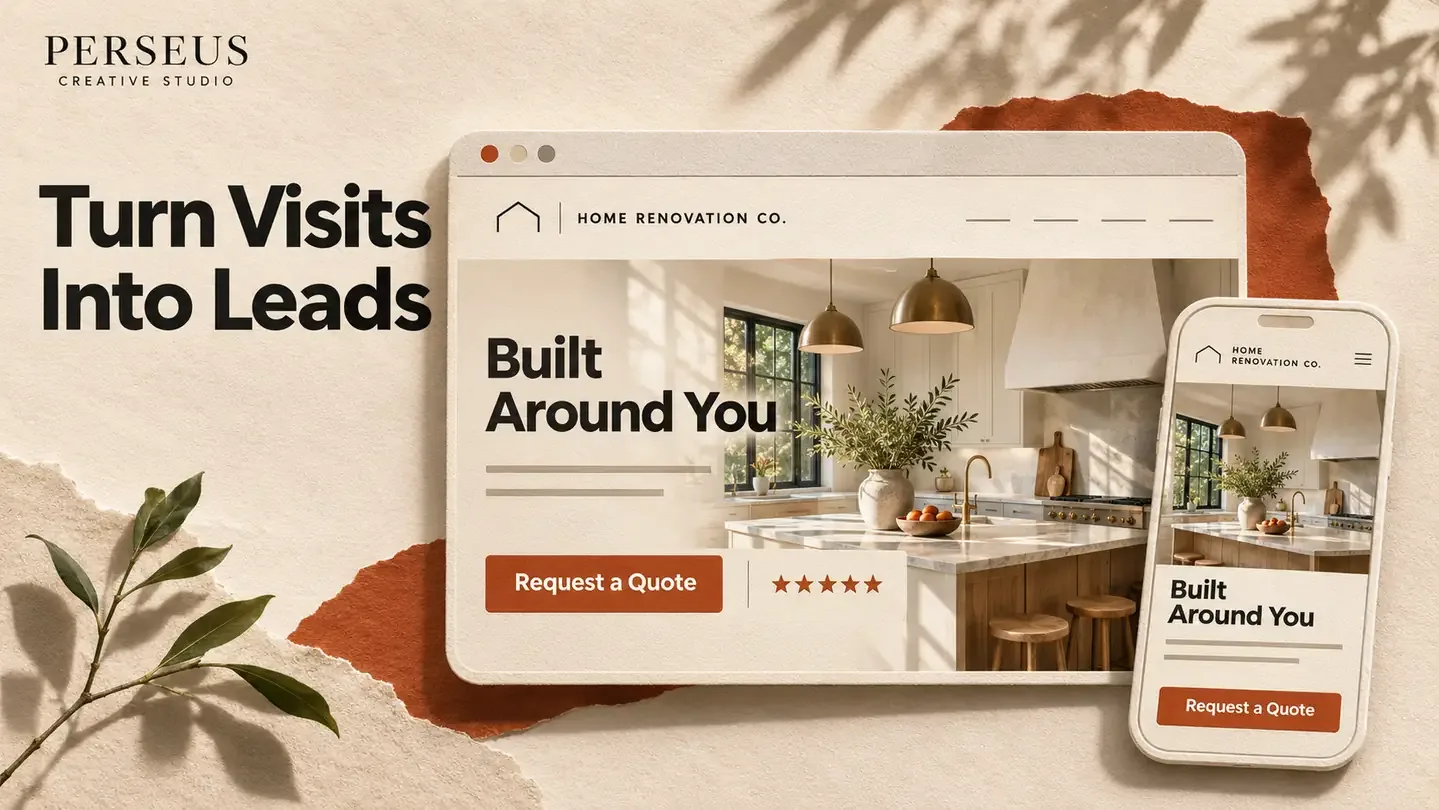
Your website is where visitors from Google, social media and ads all land. It decides how much of that attention becomes inquiries. Within a few seconds, a visitor should know what you do, who it's for, where you work, and what to do next.
Small changes here have a big effect. Suppose 1,000 people visit your site each month and 1% contact you. That's 10 leads. Raise the rate to 3% with a clearer page, and you get 30 leads from the same traffic and the same ad spend.
Give every page one main action: call, book, request a quote, or buy. Show proof next to that button, such as reviews, project photos or a short video. Keep forms short. Name, email, phone and one question about the job is enough for most service businesses. Check the site on your own phone too, since many local customers will find you there first.
If you hire a studio for website design in Vancouver or in your own city, ask them to start with the inquiry you want and plan each page around it.
Use SEO to Reach Customers on Google
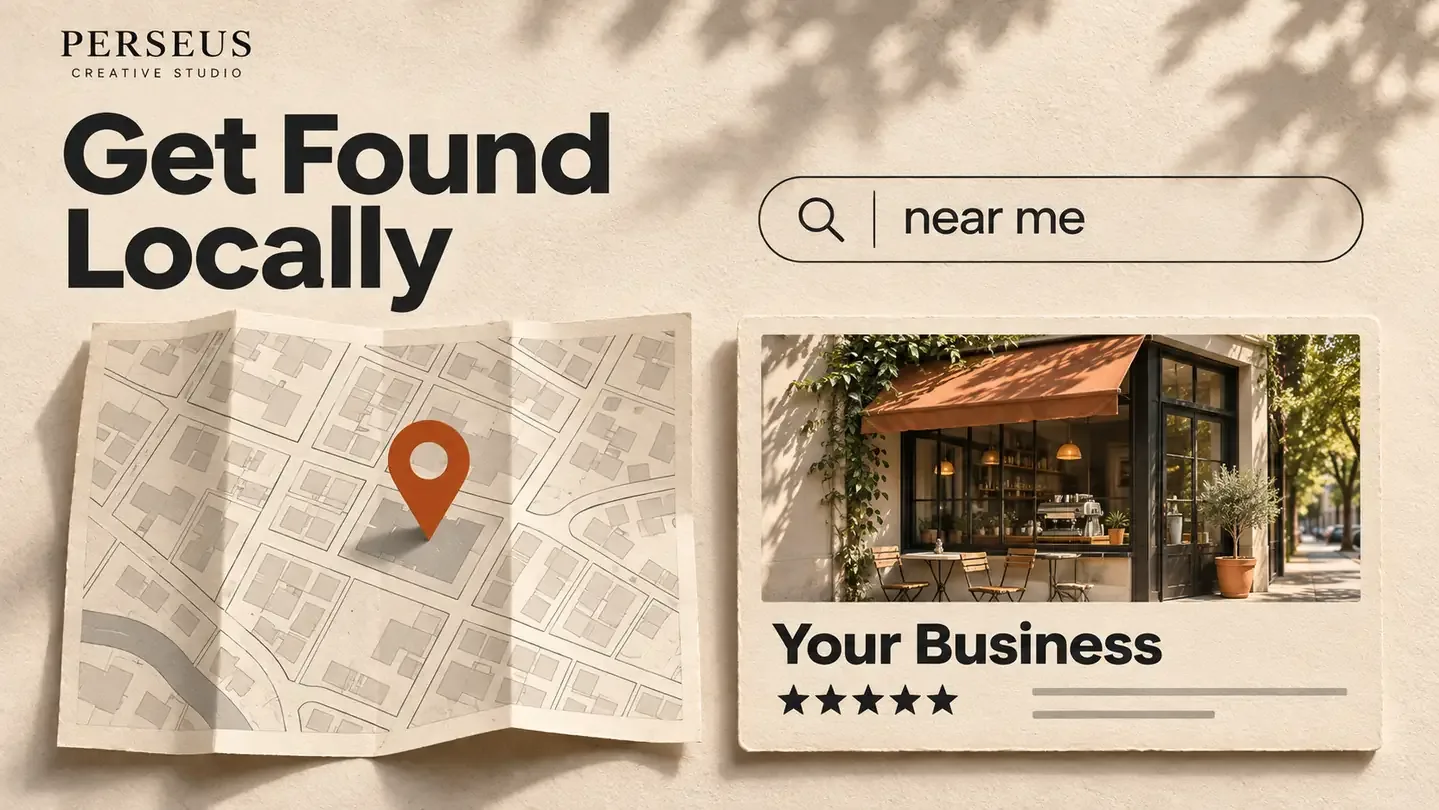
SEO (search engine optimization) is the work that helps your business appear when people search Google for what you sell. Unlike ads, SEO keeps bringing visits after the work is done. It is slow to start, which is why it belongs in your plan from the first month. For a small business, SEO has two parts: your listing on Google Maps and the pages on your own website.
Local SEO and Google Business Profile
Google Business Profile is the free listing that shows up in Google Maps and in the map results for searches like "plumber near me." For a local business, this listing is often the first thing a new customer sees. Claim and verify the profile, choose the most accurate main category, and add your service area, hours, phone number and photos of real work.
Reviews make a big difference in the map results. Ask every happy customer for one, and reply to each review, good or bad. Say you finish 10 jobs a month and half of those clients leave a review. After a year you have 60 new reviews, and each one gives a searcher another reason to call you.
Keep your business name, address and phone number the same everywhere online. If you can't find your listing at all, go through the checks for a business not showing up on Google before you spend money on anything else.
SEO for Your Service Pages
Each service you sell needs its own page, and each page should aim at one search phrase. Take a roofer with one "Services" page that lists repairs, replacement and gutters. That page will struggle to rank for any of the three. Three separate pages, each with its own title, photos and questions, give Google a clear match for three separate searches.
Write each service page for the customer first. Explain what the service includes, who it's for, how long it takes, what affects the price, and which areas you cover. Link related pages to each other. If you get help with this, a good provider of SEO services in Vancouver or anywhere else will start by giving each keyword one page.
Use Video Production to Show Your Work
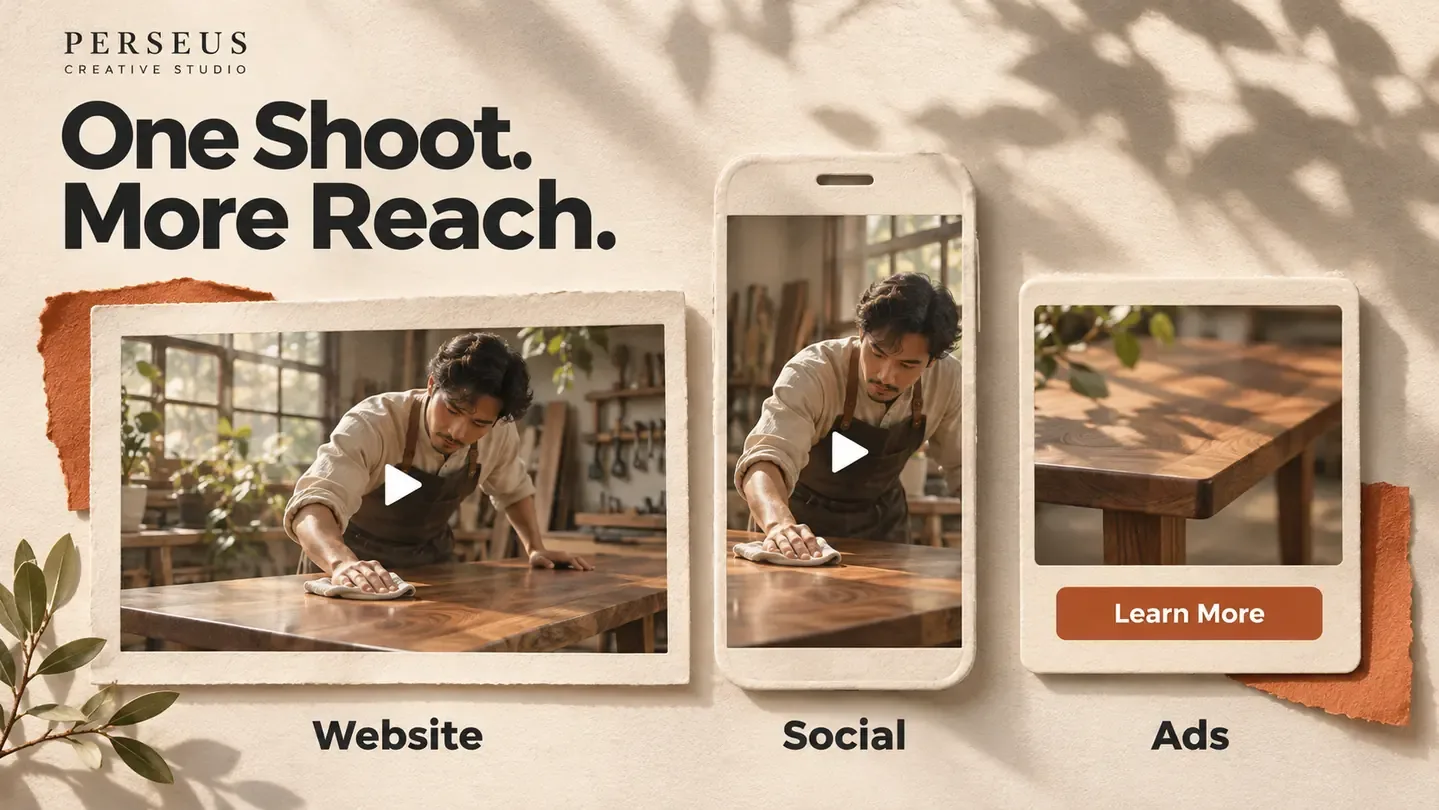
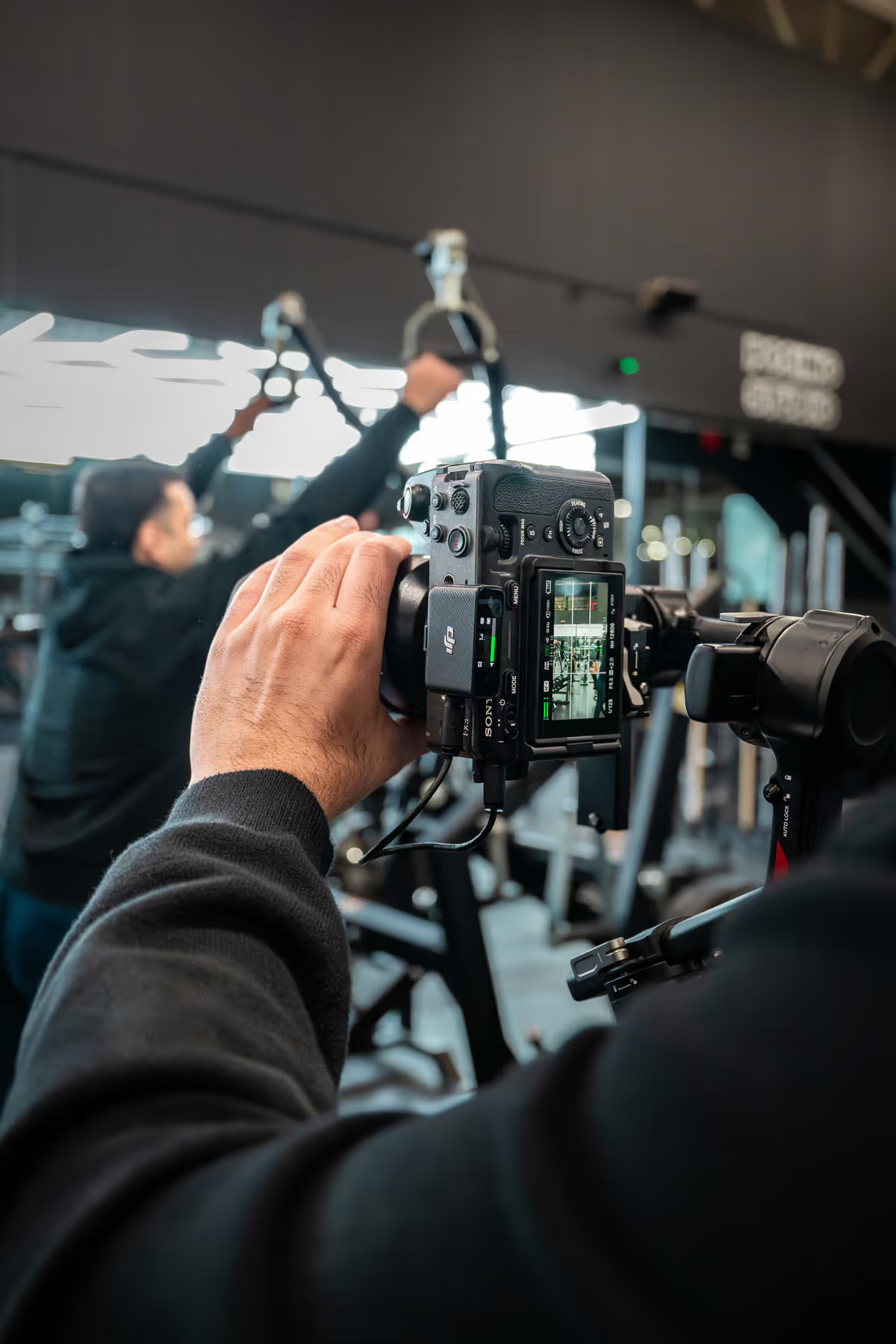
Video lets a customer see what it's like to work with you before they call. A 60 second clip of a finished project or a client describing the result answers questions that a page of text can't. One day of filming can also give you material for the website, social media and ads for months.
Plan the shoot around your sales questions. Write down the five questions customers ask most before they buy, and film an answer to each one. If you hire a crew for videography in Vancouver or in your area, give them that list. A shoot planned this way gives you clips you can actually use in sales.
Customer Testimonials and Project Videos
A testimonial video is a real customer describing the problem they had, what you did, and what changed. It works because the praise comes from someone other than you. Keep it to one or two minutes and film at the customer's home or business if you can. Let them speak in their own words, because a script makes people sound stiff.
Project videos show the work itself. A landscaper might film a yard on day one, the crew at work on day three, and the finished garden on day ten. Put each video on the matching service page, where a visitor sees proof right next to the button.
Short Form Video for Social Media
Short videos for Instagram Reels, TikTok, Facebook and YouTube Shorts are vertical clips, often 15 to 60 seconds long. They need to catch attention in the first two seconds. Short videos help people find you and remember you, even when they aren't ready to buy today.
Post on a schedule you can keep. Two or three clips a week for three months will do more for you than 20 clips in one week and then nothing. Cut short clips from your longer shoots. One 10 minute interview can give you eight or more short clips. Watch which ones people save and share, and make more like those.
Run Meta Ads to Reach New Customers
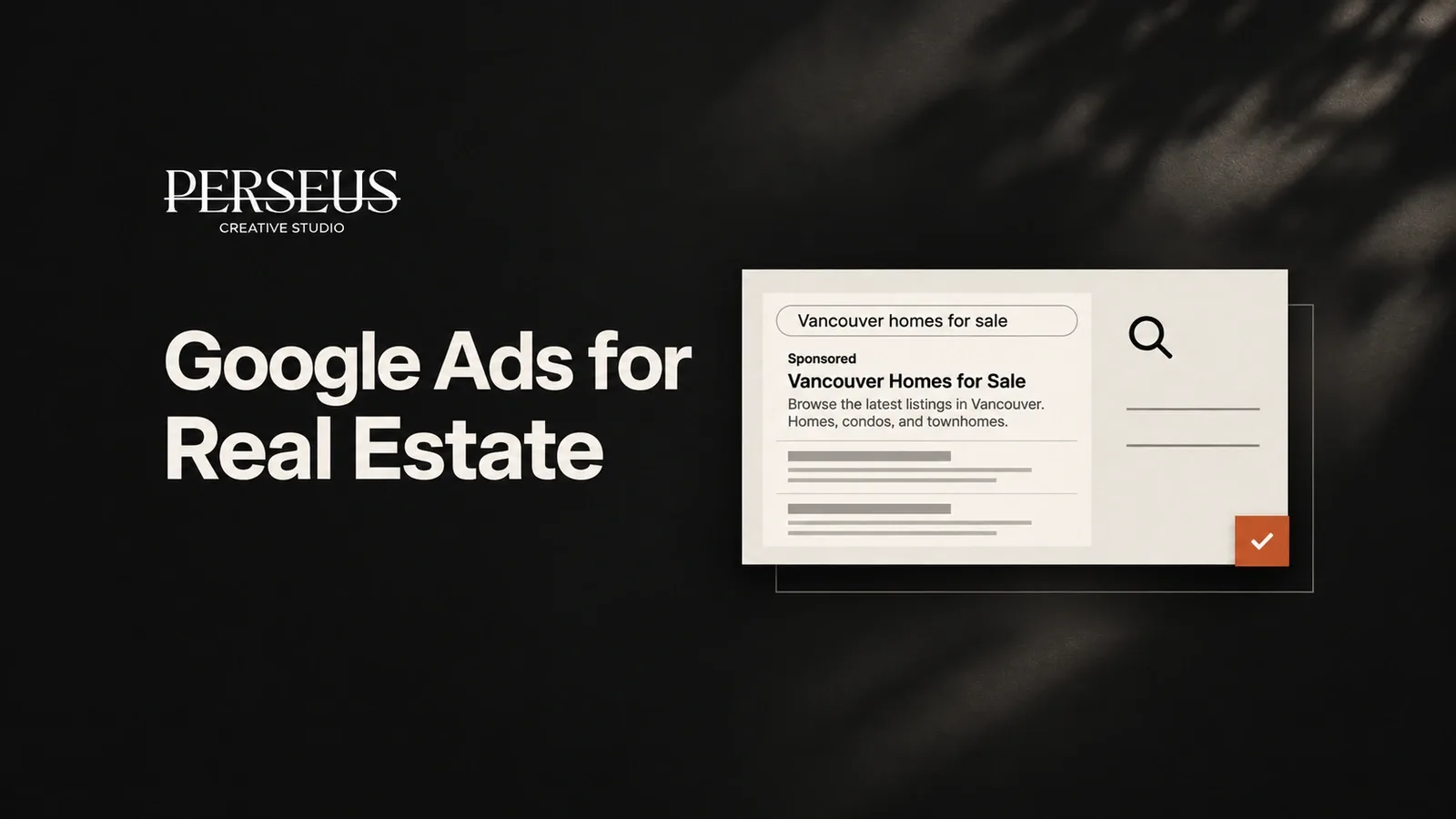
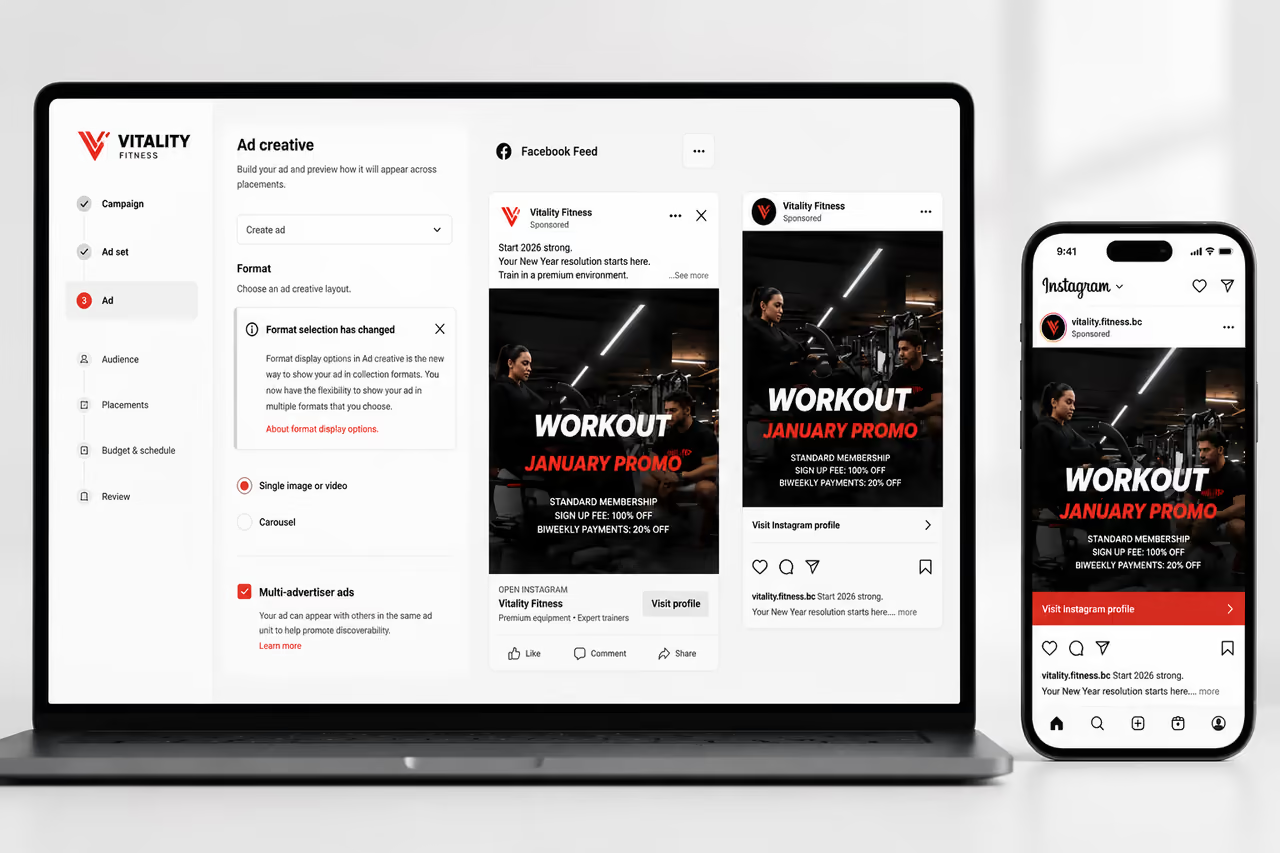
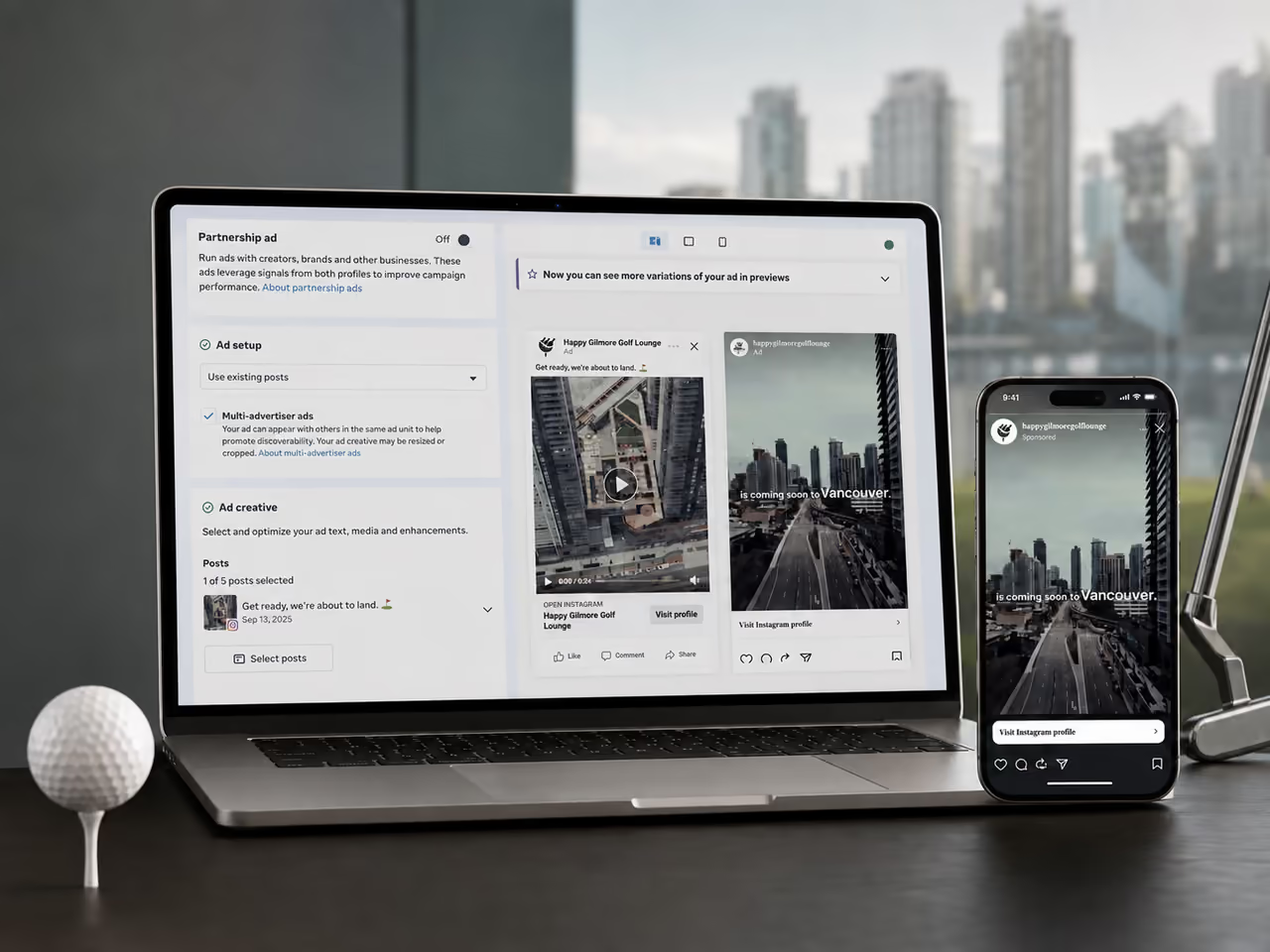
Meta ads are paid ads on Facebook and Instagram. They show your offer to people who match your ideal customer by location, age, interests and past contact with your business, even if those people have never searched for you. SEO reaches people who are already searching. Meta ads reach the people who will need you soon but haven't started looking.
Start small and test. Say you set $30 a day for two weeks, which comes to $420. Run two or three versions of the ad, keep the one with the lowest cost per lead, and move the budget to it. If you hand this off, compare providers of Meta Ads management in Vancouver or your area by asking how they will count the leads each ad brings in.
Video Ads for Facebook and Instagram
Video gives an ad more time to explain your offer and show your work. Use the clips from your shoot. Open with the result or the problem in the first three seconds. Add captions, because many people scroll with the sound off, and end with one clear action.
Test different openings with the same middle and end. For example, run one version that opens on a finished kitchen and another that opens on the homeowner talking. After a week, your cost per lead tells you which opening to keep.
Landing Pages and Conversion Tracking
A landing page is a single page built for one campaign, with one offer and one action. If you send ad traffic to your homepage, people have to hunt for the next step. A focused landing page answers the questions the ad raised and puts the form in plain view. Compared with a full website, landing page design is a small project, and it affects the result of every ad you run.
Conversion tracking tells you which ads bring leads. Install the Meta Pixel, add the Conversions API if you can, and set a form submission or booking as the event you count. Without tracking, Meta can only see clicks. You can't tell a $20 lead from a $200 one.
How Perseus Marketed Match Tour 11's Soccer Camps
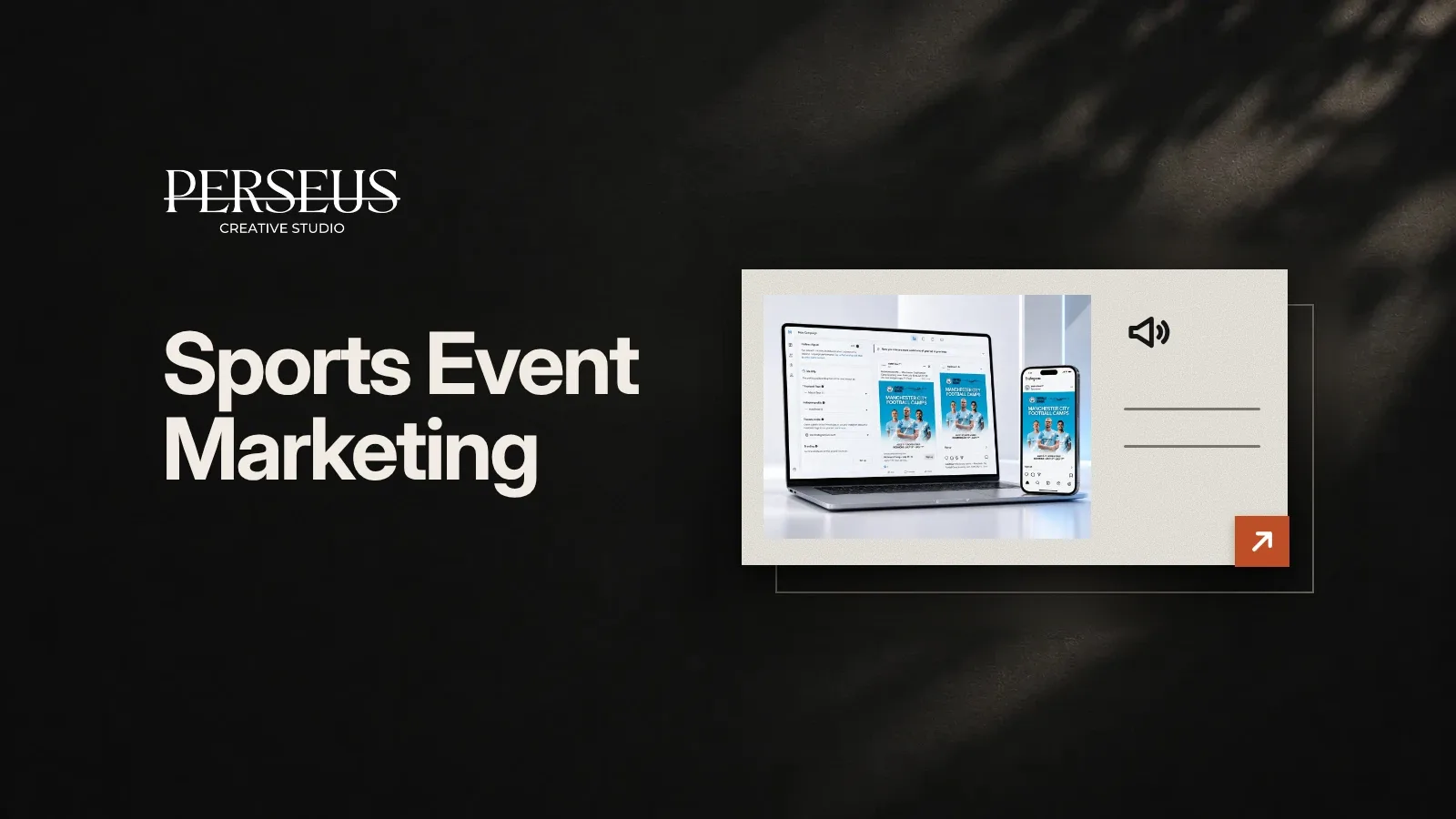
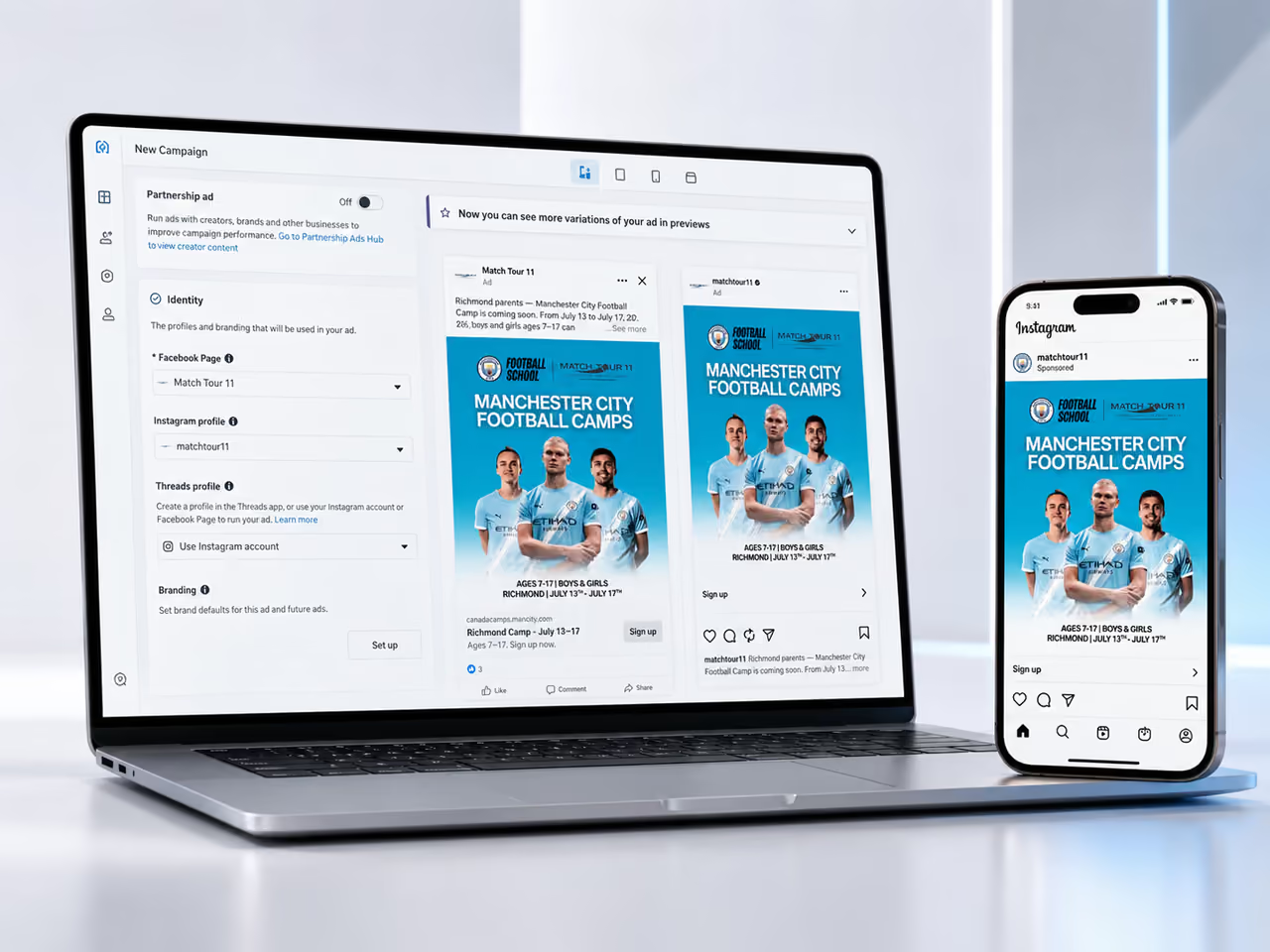
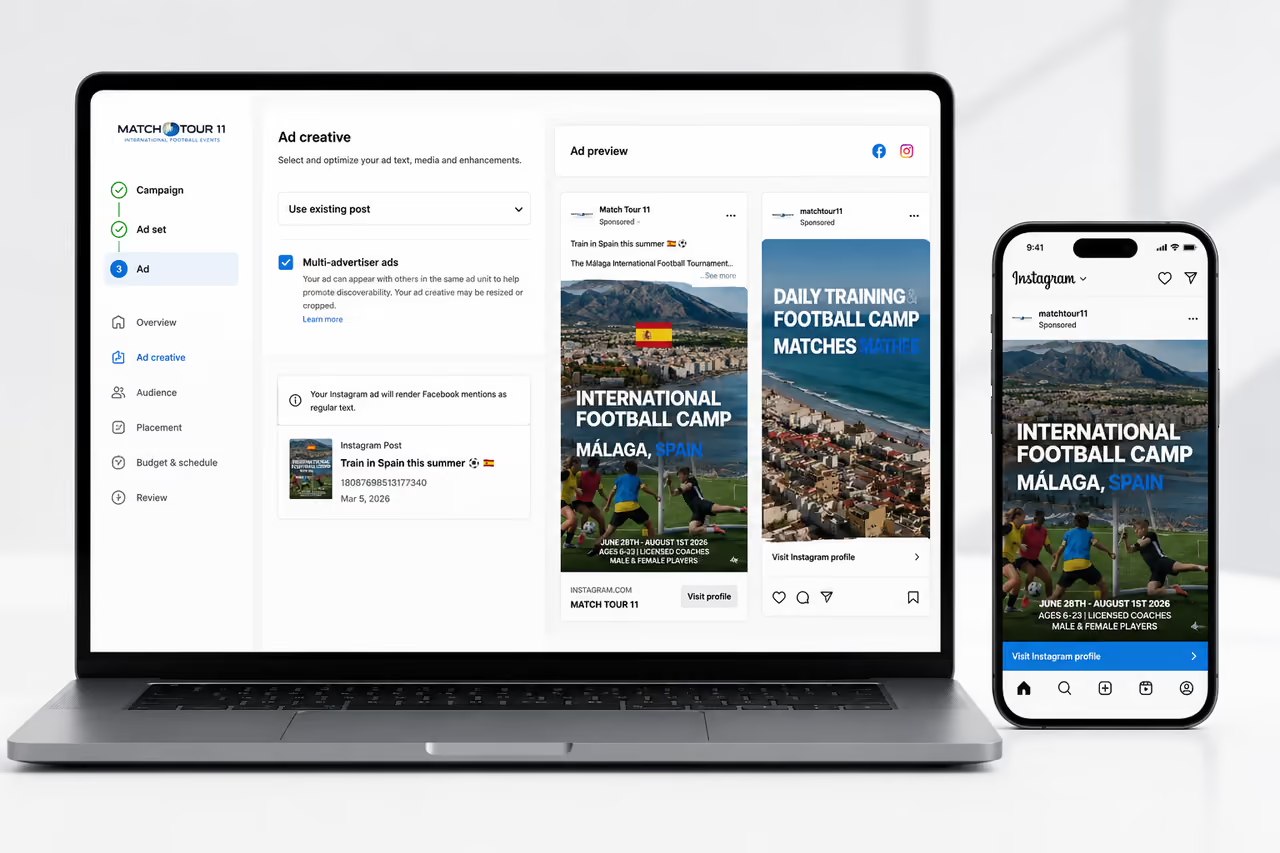
Match Tour 11 brought Manchester City soccer camps to British Columbia. There were six camp sessions in West Vancouver, Kelowna and Richmond, with about 380 places to fill. Perseus Creative Studio handled the paid ads, the website and registration, event branding, photography and video. More than 360 places were filled, and five of the six sessions sold out.
Families needed to choose a session and sign up without confusion. That's why the landing page answered their questions in order: what the camp offers, who it's for, where and when each session runs, what players receive, and how registration works. Ads sent parents to that page. During the registration window, the ad messages shifted to locations, deadlines and the spaces left in each session.
The photo and video team covered players, coaches, training and the camp atmosphere. Match Tour 11 now has an original media library for social posts, ads, its website and future events. The results aren't split by channel, since the ads, page and content worked together. You can read the full sports event marketing case study for the details.
What to Prioritize in Your First 30 Days
Your first month is for the basics that every other channel depends on. Start ads only after tracking works, since an ad you can't measure is hard to improve. Here is a simple order for the first four weeks:
- Week 1: write your marketing plan on one page, with your ideal customer, core offer, goal and budget.
- Week 2: claim and complete your Google Business Profile, and ask your last 10 customers for a review.
- Week 3: fix your website's main button, form and phone layout, and set up conversion tracking.
- Week 4: film answers to your top five customer questions, post your first short clips, and launch one small Meta ad test.
On day 30, look at your numbers. Count how many inquiries came from Google, social media and ads, and what each one cost. Then move more of next month's budget to whatever brought the cheapest good leads. If you want one team to plan the website, video, SEO and ads together, Perseus Creative Studio works with businesses across Metro Vancouver in person and with clients elsewhere remotely.